There’s a museum in London where the real stars aren’t paintings, sculptures, or archaeological artifacts, but shampoo bottles, hairspray cans, cookie packages, and boxes of detergent. It might seem like a bizarre idea, but once you step inside the Museum of Brands, you’ll realize that packaging is much more than just a wrapper—it’s a mirror of its time. Tucked away in Notting Hill, this small museum houses over 200 years of consumer culture history, told through thousands of objects that have found their way into our homes. From food products to toys, including cosmetics, cleaning products, magazines, advertisements, and personal care items, every shelf is a journey through collective memory. Because just a glimpse of the design on an old package is enough to bring back a scent, a kitchen, your grandparents’ bathroom, or the supermarket where you used to shop as a child.
The idea came from British collector Robert Opie, who in the 1960s began preserving what everyone else considered mere packaging destined for the trash. His insight was as simple as it was brilliant: everyday objects tell the story of society at least as much as the great masterpieces housed in museums. Today, his collection includes thousands of items, and the famous Time Tunnel—the museum’s main exhibition route—takes visitors from the Victorian era to the present day through the evolution of branding and graphic design. It’s impossible not to stop and admire the beauty products. Shampoos, hair dyes, hairsprays, and hair mousses almost form a chronology of the aesthetic evolution of recent decades. The austere, almost pharmaceutical packaging of the postwar era gives way to the psychedelic colors of the 1970s, the exuberant shapes of the 1980s, the hyper-polished designs of the 1990s, and finally the minimalist simplicity that dominates the shelves today.
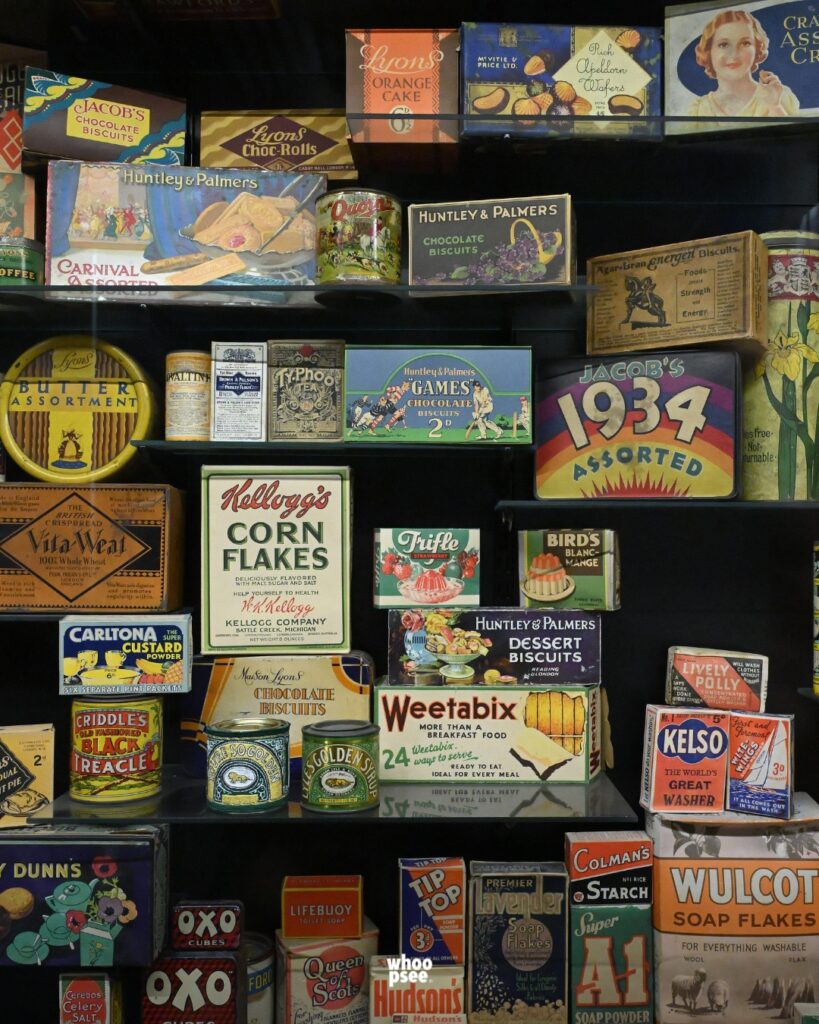
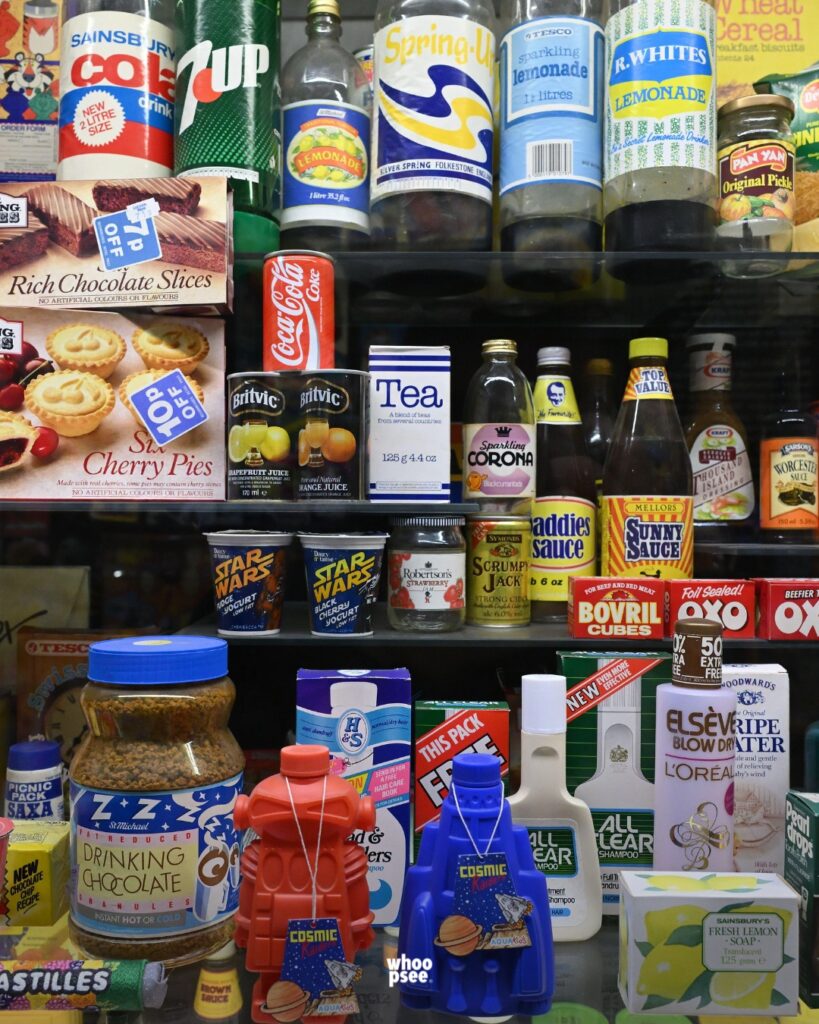
When you look at them side by side, one thing becomes clear: packaging follows trends just as closely as clothing does. Colors, proportions, typefaces, visual language, and even the way a product promises to improve our lives are all changing. While in the 1950s design conveyed reliability and scientific rigor, today it focuses entirely on experience, well-being, and “Pinterest-approved” bathroom aesthetics. The packaging has become an integral part of the product. And this is where the Museum of Brands becomes much more than a museum dedicated to consumer culture. It’s a massive lesson in visual culture. Walking among the display cases, you can see how brands have learned to seduce the public, how people’s tastes have changed, and just how much design has contributed to shaping the identity of products we now consider iconic.
At a time when every brand is investing millions to redesign its logo or make its packaging more minimalist, sustainable, and recognizable on social media, this place reminds us that no redesign comes out of nowhere. Every new package is the result of decades of experimentation, trends, and cultural shifts. And this is perhaps the most interesting message of the Museum of Brands: the objects we consider most ordinary are often the ones that best tell the story of who we are. A bottle of shampoo, a can of hairspray, or a box of cereal don’t just tell us what we used to buy, but how we lived, what we desired, and the image we had of ourselves. After all, packaging has never been just packaging. It’s design, marketing, and culture. But above all, it’s memory.
[📷 IPA]