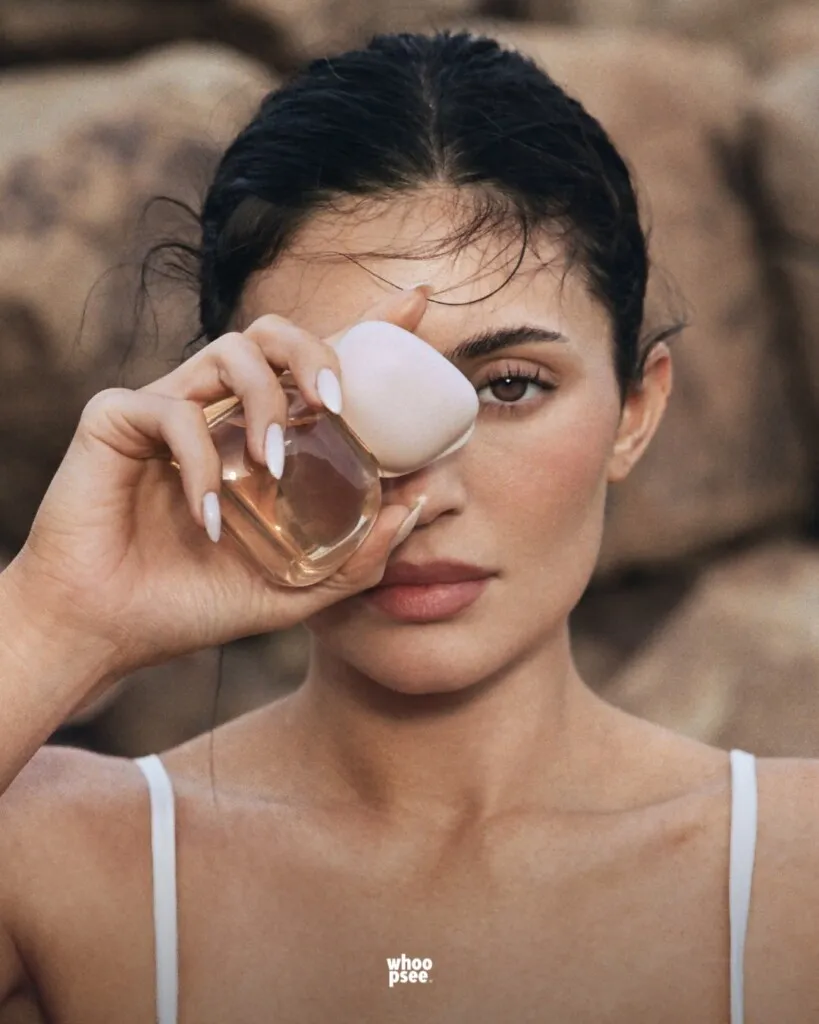
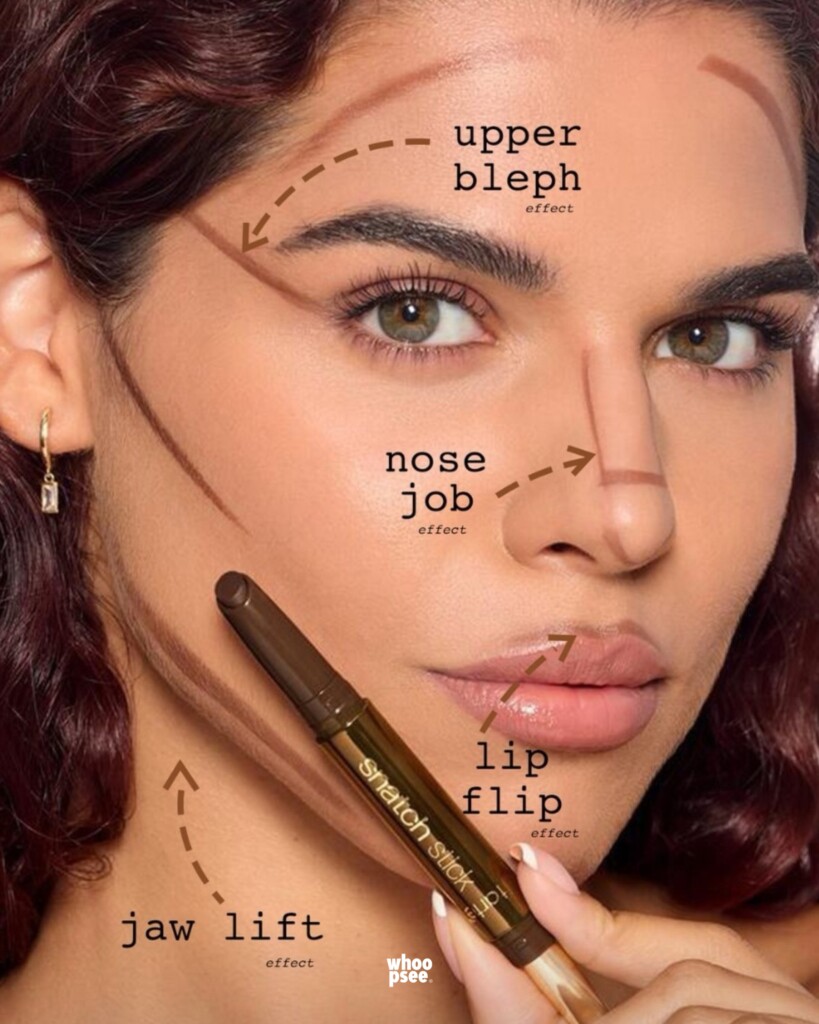
Tarte’s new contouring product is called Snatch Stick. It’s a stick designed to sculpt the face—and it might seem like just another beauty trend in a market already flooded with products that promise more defined cheekbones, more sculpted jawlines, and optically reshaped features. What really got people talking about the product, however, wasn’t so much its formula as the marketing campaign built around its launch, which inevitably sparked a broader discussion about the increasingly close relationship between makeup and cosmetic surgery.
Contouring, after all, is nothing new: it has been used for years to redefine facial features, emphasizing the cheekbones, jawline, nose, eyes, and face shape through light and shadow. Tarte has decided to take this concept to the extreme, presenting the Snatch Stick as a sort of beauty alternative to cosmetic procedures. In fact, the campaign uses terms like blepharoplasty, brow lift, nose job, and lip filler to describe the various effects the product is supposed to recreate on the face. Essentially, the brand has borrowed the vocabulary of cosmetic medicine and applied it to makeup, promising an “instant facelift” effect without the need for needles.
A deliberately provocative choice that quickly sparked reactions. Some accused the brand of turning insecurities about physical appearance into a marketing tool, normalizing the idea that every part of the face needs to be corrected. Criticism also focused on the PR package sent to several American influencers: the shipment arrived in a vehicle resembling an ambulance, fully branded, and inside, the influencers found the product accompanied by images of their own faces marked with annotations suggesting various cosmetic surgery procedures.
@mydlvz1 Thank you for this! @tarte cosmetics #tartecosmetics #snatchstick #contourstick #facecontour ♬ original sound – Mariana
There was no shortage of criticism, ranging from those who found the use of the ambulance imagery—which in the United States is associated with a healthcare system and services that not everyone can afford—questionable, to those who saw the problem in the way the campaign seems to suggest that there is always something to fix about our faces.
Criticism aside, getting upset solely about this campaign may risk oversimplifying a much bigger issue. Tarte’s campaign is certainly deliberately over-the-top and designed to generate buzz, but it didn’t invent the connection between makeup and cosmetic surgery. It simply made it explicit, bringing together in a single message two worlds that have long been intertwined. Earlier this year, just to give one example, TikTok was full of tutorials on prompts to give ChatGPT to generate, starting from a photo of oneself, an “enhanced” version of one’s face—complete with a list of cosmetic procedures needed to achieve that look. And in that case, there wasn’t even a product to buy—just our own image and the possibility of modifying it until it more closely resembled an aesthetic ideal.
@creativelyange Here are the exact prompts I used to get a complete glow-up guide from ChatGPT. Give this a try and let me know your results in the comments👀 #GlowUp #chatgpt #makeuptips #techtok #glowuptips ♬ original sound – Angel | Tech + AI
The beauty industry—and Tarte certainly wasn’t the first to start this trend—is no longer just selling us products; it’s selling us alternative versions of ourselves. Makeup, filters, artificial intelligence, cosmetic treatments, and plastic surgery belong to different worlds, but on social media they increasingly end up coexisting. You may or may not like the campaign, but it has sparked a conversation that goes far beyond a simple contouring stick.
[📸 tartecosmetics.com]