I think everyone can agree that when you go to see a movie, you more or less have an idea of what to expect. Here, The Drama was one of the few times when I still had no idea what direction that movie was going to take. A rom-com? A drama film? I didn’t understand it right away, and maybe I didn’t fully understand it later either. Or maybe it’s a little bit of all those things together. With Zendaya and Robert Pattinson as the leads, either way, I thought something interesting would be there anyway.

And in fact there is much more to the film than had been communicated prior to its release, including trailers and synopses that hinted at a rather linear story: Emma (Zendaya) and Charlie (Pattinson), one step away from marriage, forced to face an unspecified drama capable of calling everything into question. A conflict encapsulated in the film’s subtitle “how well do you know the person you love?” which perhaps should be rephrased as “how willing are you to accept and forgive the person you love after you really know them? And above all, is it right to do so ethically as well?”-but I realize that this would have been a bit too long and definitely not catchy.
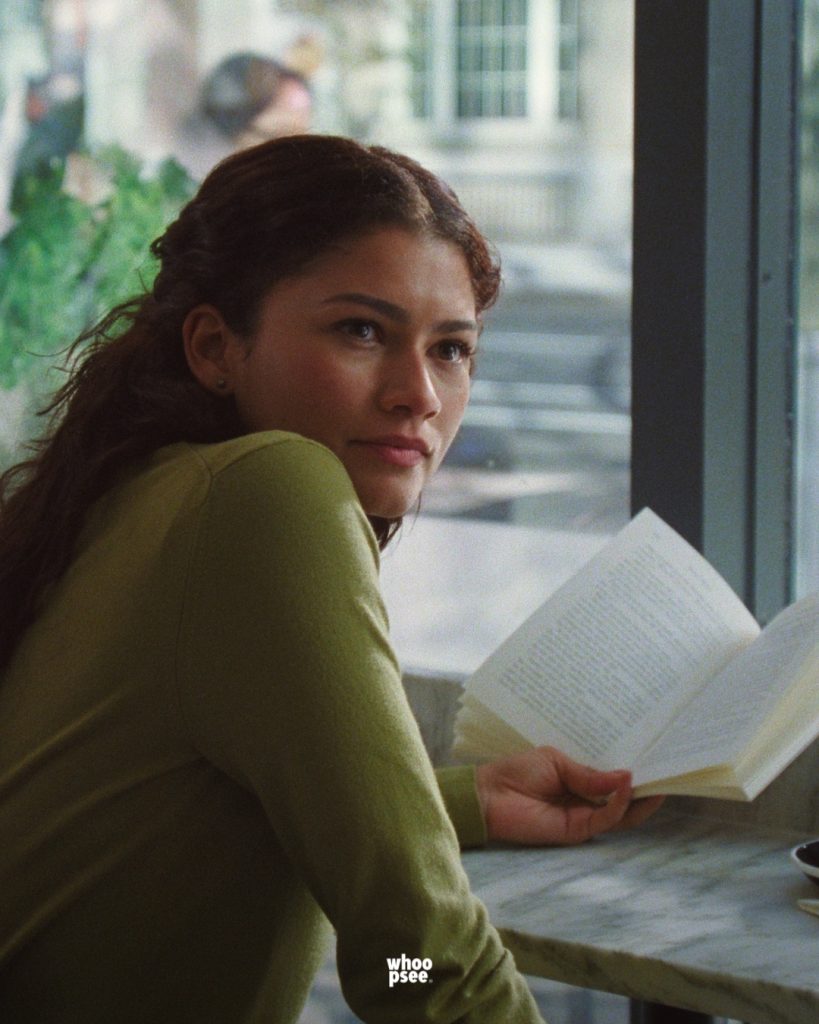
The answer to this question is up to us to decide, following as spectators an affair that, in much less extreme forms, belongs to just about everyone: to find oneself coming to terms with the other person’s past, at some point in the relationship, and to discover that that look, while it may be the same as ever, is no longer the same. Yet that person has not changed. Why then does the way we see her change? It is a universal question, with no definitive answer, which inevitably also depends on the nature and severity of what we discover. In Emma’s case, the secret Charlie discovers one night at dinner after a few too many drinks is far from negligible. Indeed, it is something deeply problematic on a social level, so much so that it has generated controversy even before the film’s release, accused by some of having “reduced” such a sensitive issue to a mere plot twist. We do not know why the director chose this very theme-which we will not reveal here to avoid spoilers-but what remains is the feeling that we are witnessing something more complex than a simple love story.

Watching the ups and downs of this relationship from the outside, listening to the unspoken, obsessions, fears and frailties of both, leaves us in a kind of emotional limbo made up of questions that are never really answered. Questions that go beyond “how well do you really know the one you love?” and reach into even more ambiguous territory: is the truth, when it concerns the past-if indeed overcome- always necessary? It is inevitable, given the seriousness of Emma’s revelation, not to empathize with Charlie, but regardless this film is to be credited with one merit: that of showing an obsessive and manic side of a relationship, which finally breaks with the glossy rom-com aesthetic to showcase even the darkest and most uncomfortable sides of a love affair.

Those emerge when you feel lost, when the certainties you had are still there and yet they are no longer the same. And then you can no longer call them certainties. Charlie gets to imagine Emma in those situations, lets that thought consume him, until a gesture that is both revenge and pain and that marks the point where he stops being a victim of history and becomes, inevitably, a victim of himself. And when you get to that point, all you can do is decide whether to stay or go.
[📸 Courtesy of I Wonder Pictures]