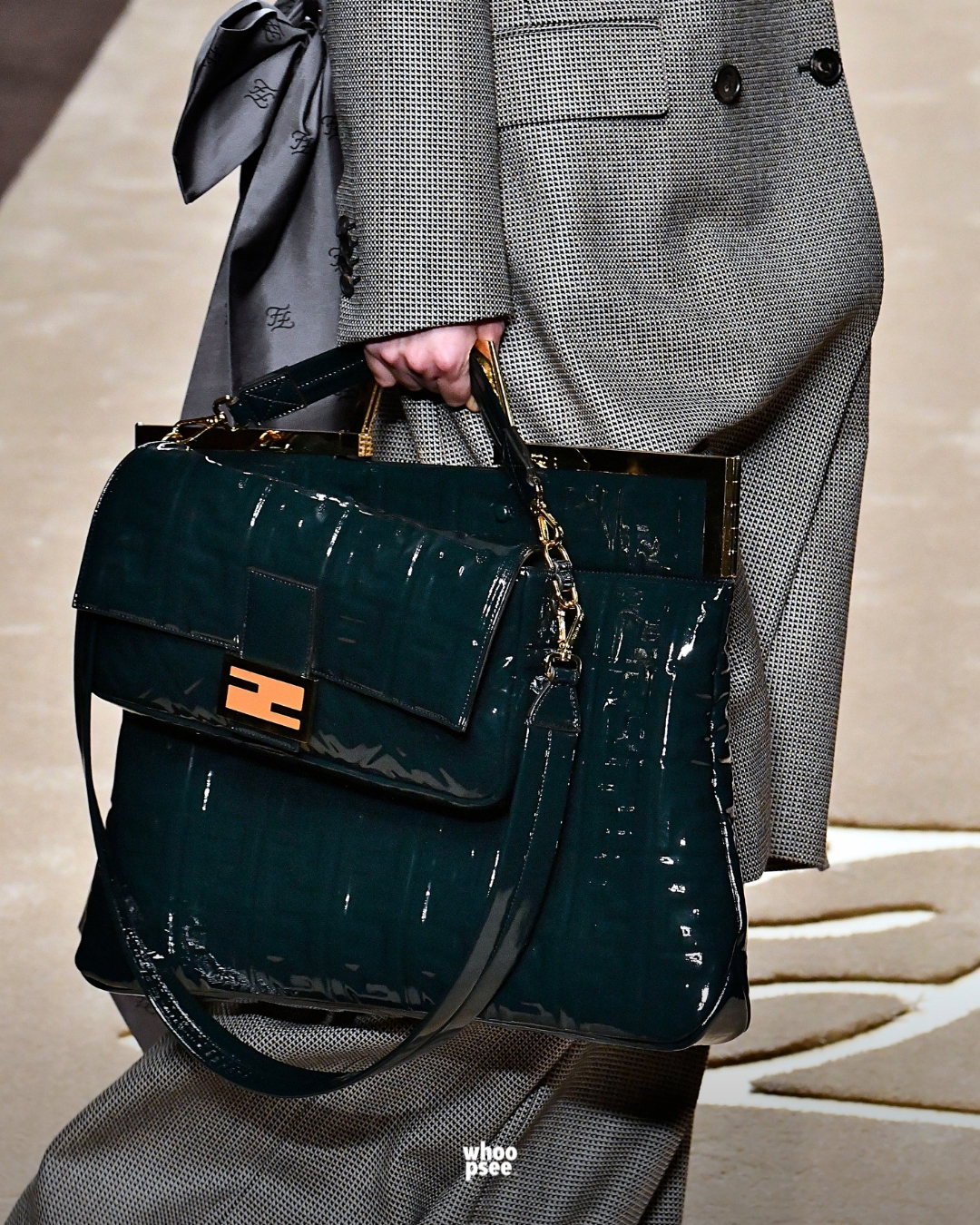
Fendi arrives at Milan Design Week with a project dedicated to its iconic Baguette, which in 2027 will celebrate 30 years since its creation, focusing on two pillars of the maison: creativity and craftsmanship. “It was a revolutionary bag. For the first time, it combined the techniques of leather goods with those of embroidery proper to clothing,” creative director Maria Grazia Chiuri explained to MFF at the launch of an ad hoc installation in the via Montenapoleone flagship.
Here, twenty Baguettes from the 26424 Re-edition project, unveiled during the fall-winter 2026/27 show, were previewed and sold, along with wooden cases designed like those intended for works of art. Six models were displayed exclusively in Milan, while others will enter a traveling tour with stops in New York, in mid-May, and Shanghai. On the fourth floor, the maison’s artisans, along with the Chanakya team, showed the public the process of assembling the creations, recounting the values of savoir-faire that have always distinguished the LVMH brand and Chiuri’s own work.
MFF interviewed Chiuri about the relationship between Baguette and Design Week: the designer emphasized that this context is ideal for talking about craft in fashion as well, because there are rarely opportunities to showcase the atelier and what lies behind a product. “From my point of view even more so on accessories, which historically are seen more as an element of luxury. In recent years they have always been promoted simply as an expression of a purchase that somehow places one on a certain social scale, leaving the innovative and craftsmanship elements in the background. In my opinion, the baguette expresses this best, because it encompasses the skills that are typical of a clothing atelier, of couture, along with skills of a leather atelier. That’s why the baguette was really revolutionary, because there is the element of fabric, of embroidery, and no one can imagine how complicated it was to bring these two worlds together. It’s kind of a dressed bag. So in my opinion it was a nice way to explain how much of a design project it is.” Said Chiuri.
On her path at Fendi, which has just begun, the creative director says she feels particularly stimulated by the idea of reworking and reinterpreting the brand’s iconic elements, which in a complex context for fashion run the risk of being sacrificed in favor of purely commercial logic or overly targeted strategies. His is a project in the making, he emphasizes, still in its early stages. The focus, however, is already clear: craftsmanship. As she herself states, “I only work on that, basically everywhere I go. Obviously it’s different here, also because the DNA of the company, its size, is different. But it’s nice to be able to work with the whole supply chain, which is what I like. I work on the project, on the whole. A fashion show is a fashion show. One can come good, one can come bad. The project is something that has to be observed in its complexity.”
Finally asked about her own path in fashion and the differences from the past, Chiuri highlights a greater focus on the founding principles of creative work, as well as a more mature awareness of the impact of her choices on the fashion ecosystem – an awareness built through experience.
“There is so much work always, in fact maybe more than in the past, because you have to do with less as well. So it’s a huge challenge. It is more stimulating, though. Maybe it’s more stimulating to do with less.” As for consumer desire, a crucial element that large groups are constantly trying to feed, Chiuri is clear: to cultivate it, you first need a product that is intact in its manufacture. Quality and durability remain the essential starting points.
[📷 Getty Images]