This morning I had the pleasure of getting lost among hundreds of fragrances, being guided by a continuous trail of ingredients, stories and creative insights. It is one of those rare contexts in which curiosity is constantly rewarded: just stop in front of a booth, stretch a mouillette and a world opens up. This is thanks to Esxence, which is now much more than just a trade show. Born in Milan in 2009 as an exhibition dedicated to artistic perfumery, it has become over the years the main European reference point for niche perfumery, the place where historic brands, new independent realities, noses and enthusiasts meet to tell the present and imagine the future of perfume. Now in its sixteenth edition, the event has reconfirmed itself above all for a quality that is rarely emphasized enough: the pleasure of the visit. Trade shows are, by their very nature, commercial spaces, places where the need to show off and stand out coexists with the need to optimize every available square meter. This usually results in congested aisles, endless lines and a general feeling of breathlessness. At Esxence the opposite happens: the spaces are large, well-kept, traversed by a natural circulation that makes the stay surprisingly pleasant. The stands breathe, telling their own character without appearing compressed into a predetermined and constrained formula. One gets the feeling that there is still room for curiosity and the slow time of discovery, an essential element when it comes to perfume. And of discoveries there have been many. From historic Italian houses to young companies from Asia and the Middle East, the panorama proved to be rich, varied and connoted by a flavor that smacks of the future.

Among the most significant presences is undoubtedly Nobile 1942, a historic name in Italian perfumery that continues to stand out for an increasingly rare quality: the ability to grow without losing that familiar warmth that tastes like home. A precious example of passion, dedication and rigorous craftsmanship, qualities that are found intact in its creations. Each fragrance is born from a story, an image, a memory, and succeeds in the uncommon feat of being both complex and sincere, refined yet deeply human. The novelty presented at Esxence is Sine Gloria, a fragrance that I find deeply vital in its courage. A fragrance that speaks of life lived, restless youth, daring nights, and that irresistible drive toward experience that precedes all wisdom. The fragrance appears as a eulogy of the anti-hero, of imperfection and the intensity of living: an invitation, made of hashish, petroleum, cognac and rum, to consume one’s time with courage rather than prudence.

Staying in Italy, one of the most pleasant discoveries was Avau. Founded by three young brothers and divided between Rome and Milan, the brand builds its imagery around the idea of home, memory and conviviality. It is therefore not surprising that the booth was set up as a kitchen, a symbolic place par excellence of sharing. A choice that tells well of a perfumery that finds inspiration in everyday gestures and the most lived-in spaces.
Also particularly interesting is Neydo, a project based on a premise that is as unusual as it is poetic. A small percentage of people are indeed able to perceive smells and tastes during dreams and remember them once they wake up. Neydo collects these precious testimonies and translates them into fragrances, transforming dreamlike experiences into olfactory tales, all accompanied by a fresh and contemporary aesthetic, made up of bottles with a minimalist design and vibrant color, which fits well with a forward-looking, romantic yet light-hearted proposal.

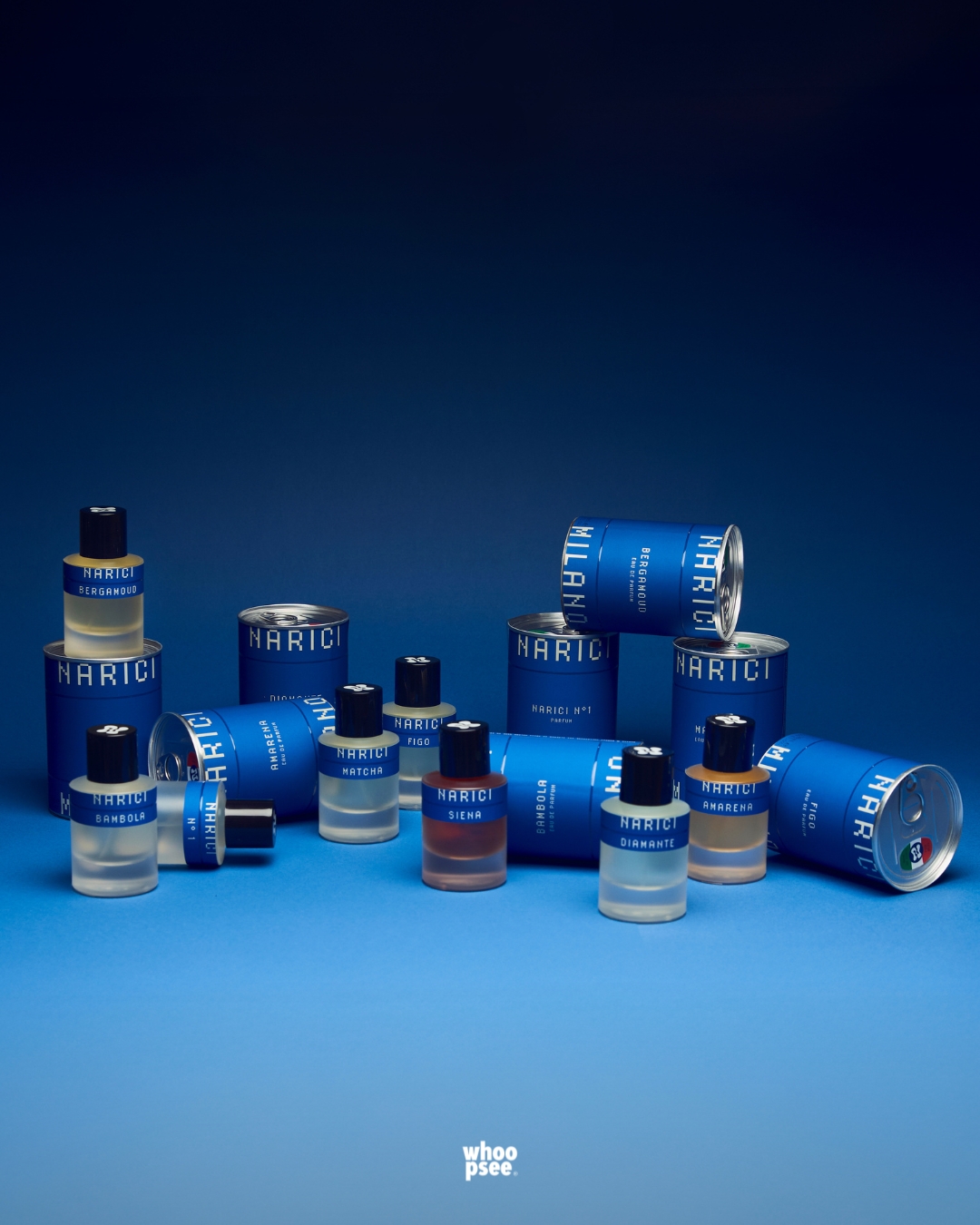
Also new to this edition is Panna Cotta, by Narici Milano. The brand founded by Alessandro Commisso, instantly recognizable for its iconic blue milks and youthful, straightforward approach to artistic perfumery, presents a gourmand built around Tuscan pale iris absolute, accompanied by notes of milk and vanilla. The result is reminiscent of the famous Piedmontese dessert without, however, falling into excessive sweetness. A particularly successful exercise in balance.

Of a different register is Filippo Sorcinelli, a decidedly special figure in the contemporary artistic perfumery framework. An artist, musician and creator of sacred vestments for the Vatican, Sorcinelli continues to develop an olfactory poetics deeply linked to the spiritual and liturgical dimension. His fragrances, often built around incense and materials with a strong evocative character, are rooted in an imagery that takes place elsewhere.
Looking beyond the borders of Italy, one of the realities that most surprised me was Jorum Studio. Born in Edinburgh in 2019, the Scottish brand encapsulates in its name the idea of a container capable of holding suggestions, landscapes and stories. Behind the apparent simplicity of the colorful bottles lie some of the most enigmatic compositions encountered during the event: scents that are difficult to decipher, eluding immediate classifications and inviting to be explored quietly.
Straightforward, and perhaps because of this very effective, Fugazzi’s proposal. The Dutch brand, founded by Bram Niessink, has built its success through a seemingly simple formula: essential packaging, dry communication, and fragrances that focus everything on the raw material. In an industry often prone to narrative excess, its transparency goes against the grain and pleases.
Instead, from Hong Kong comes TOBBA, a project that already merges the words “tobacco” and “art” in its name. A synthesis that well reflects the brand’s identity: contemporary and visually strong, the aesthetic language is immediate, graphic, while the fragrances tell an urban and international vision of perfumery.
Finally, the debut of IDMAN is interesting. Born between Dubai and Europe from the vision of Joelle Sakkal, a founder trained at Central Saint Martins in London, the brand combines artistic sensibility and olfactory experimentation. The bottles, embellished with quartz caps, are precious but do not trespass on easy ornamentation as an end in itself, while the compositions explore a fresh animalism with a strongly expressive artistic matrix.
In conclusion, Esxence appeared to me, yes, as a showcase, but above all as a container. A place capable of welcoming and enhancing differences, contradictions and distant sensibilities. Profoundly different cultures, aesthetics and olfactory philosophies coexist here: from the celebration of raw materials to the most conceptual research, from the most rigorous craftsmanship to experimentation. Fragments of a complex panorama that find a rare harmony in a gesture that is as simple as it is universal: bring a mouillette close to your nose and let the scent guide you.
[📷 Courtesy of Nobile 1942; Courtesy of Narici Milano; Courtesy of Neydo]