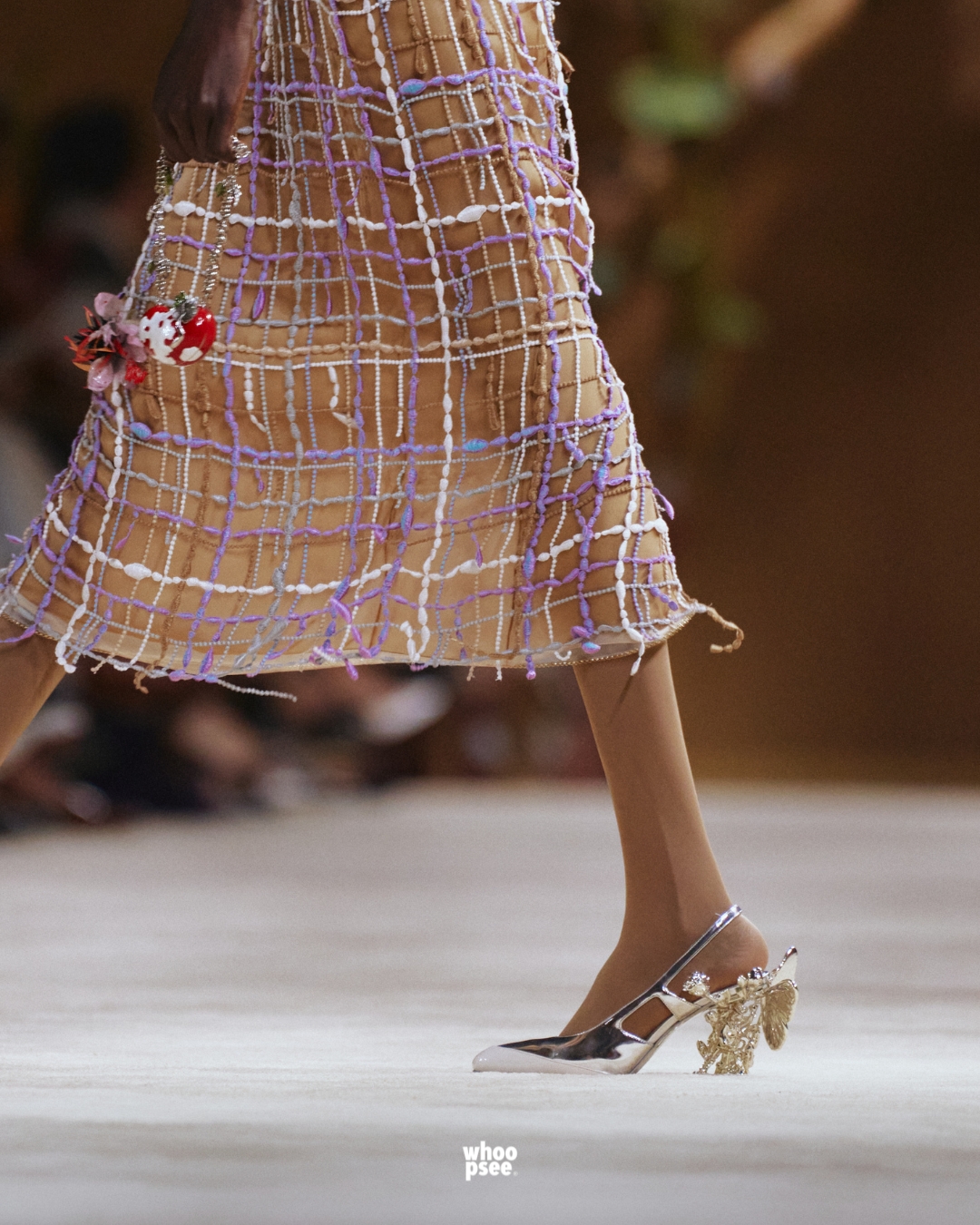
Chanel and Dior held their Haute Couture fashion shows in recent days. Matthieu Blazy and Jonathan Anderson, two of the most influential creative directors in contemporary fashion, presented collections of extraordinary refinement, in which creative innovation was intertwined with the highest level of craftsmanship. These two fashion houses—profoundly different in history, spirit, and aesthetic—continue to express their own distinct identities.
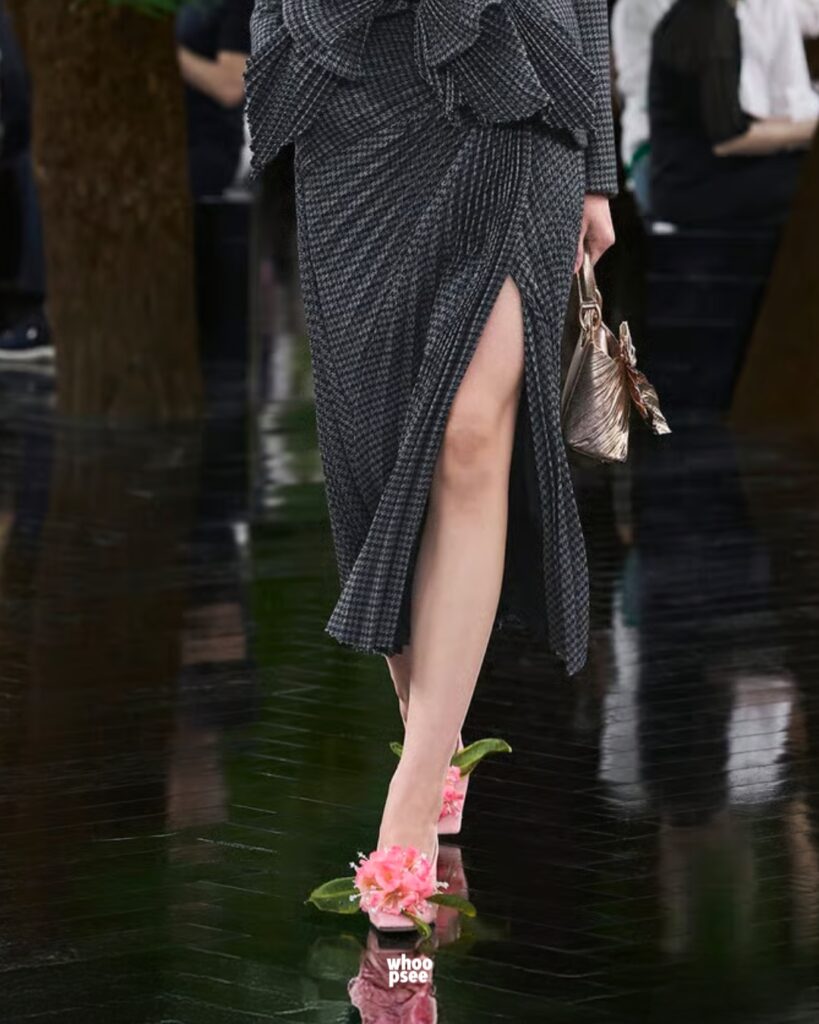
Precisely for this reason, it is surprising to observe how—especially in accessories—an unexpected affinity emerges. It is curious that two of the most influential designers on the contemporary scene seem to have drawn on the same imagery. Nature, of course, is not an unprecedented reference. As the sacred matrix of all life and the origin of every symbolic system, it is the place to which art cyclically returns when seeking a vocabulary capable of transcending the contingent. What is striking, however, is not the inspiration itself, but the closeness of the language through which it is rendered. Leaves, ears of grain, corollas, branches: organic elements that cease to be mere botanical references and are transformed into sculptural objects—presences with a highly ornate, realistic, and fairy-tale quality, suspended between relic and ornament.

Perhaps this convergence reveals something that goes beyond individual collections. In fact, it has always been the case that very different artists, when living in the same era, end up tapping into the same cultural tensions: rather than influencing one another, they seem to be responding to the same questions—or the same underlying themes—of their historical moment. It is difficult not to see, in this return to the organic, a desire to rebuild a relationship with matter at a time when everything seems increasingly immaterial, accelerated, and replicable. Not so much a nostalgia for nature as a search for a principle of permanence, for a form of sacred purity, beautiful in its eternity. Because nature, even before it is landscape, is time: growth, sedimentation, transformation, rebirth. All of which, if we think about it, luxury in its highest form has always sought to preserve. And reflecting on this, I am tempted to say that it is perhaps no coincidence that this reflection focuses precisely on accessories. While clothing continues to engage with the body and function, the accessory is the realm where couture can indulge in excess, symbolism, and even the superfluous: it is here that luxury definitively frees itself from necessity and returns to the construction of imaginaries. Eccentricity, then, does not appear as mere extravagance, but as a gesture of distancing oneself from reality—a form of escapism that does not reject the present, but rather attempts to transcend it.

In this sense, those botanical jewels—those corolla-shaped jeweled handbags sculpted from precious metals, those heels that evoke vegetable shoots and golden ears of grain—do not seem to speak merely of nature, but of an idea of luxury that today seeks less and less to demonstrate wealth and more and more to construct an “elsewhere.” A luxury that is not measured by the rarity of the object, but by its ability to evoke a world, an archetype, a universal and true origin. And perhaps this is precisely the most contemporary form of Haute Couture: not to represent reality, but to offer it—at least for a moment—a chance to escape toward a different meridian, one that precedes and anticipates us all.
[📷 Courtesy of Chanel; dior.com]