An architect and designer, but also a man of culture and an aesthete in the fullest sense of the term, Carlo Scarpa throughout his career never stopped experimenting: not only with design, but also with the material itself, constantly pushing the limits of creativity. Born in Venice, a city that has profoundly influenced his vision, he is known for works such as the Fondazione Querini Stampalia or the Museo di Castelvecchio, interventions in which architecture, layout and detailing come together in a unique language.
Today, however, we will not talk about his most famous designs, but about a lesser-known and surprisingly fascinating chapter of his work: that of perfume bottles, objects in which his aesthetic research finds an intimate and precious form. Scarpa was neither the first nor the last designer to confront the world of fragrances, just think of Salvador Dalí’s creations for Elsa Schiaparelli or Frank Gehry’s projects, but in his case this foray seems to take on an almost identity value.

After training at the Academy of Fine Arts in Venice, where he would teach for years, Scarpa made a name for himself in the post-World War II period through important installations, especially in the exhibition field. These include the Paul Klee exhibition for the XXIV Venice Biennale, the 1950 Art Book Pavilion and the Italian Pavilion at the XXVI Biennale. A key moment in his career, however, came in 1932, when he began his collaboration with Venini, a historic furnace in Murano, of which he became artistic director until 1946. It was here that Scarpa developed radical research on glass, experimenting with techniques and languages that would profoundly mark the history of design.

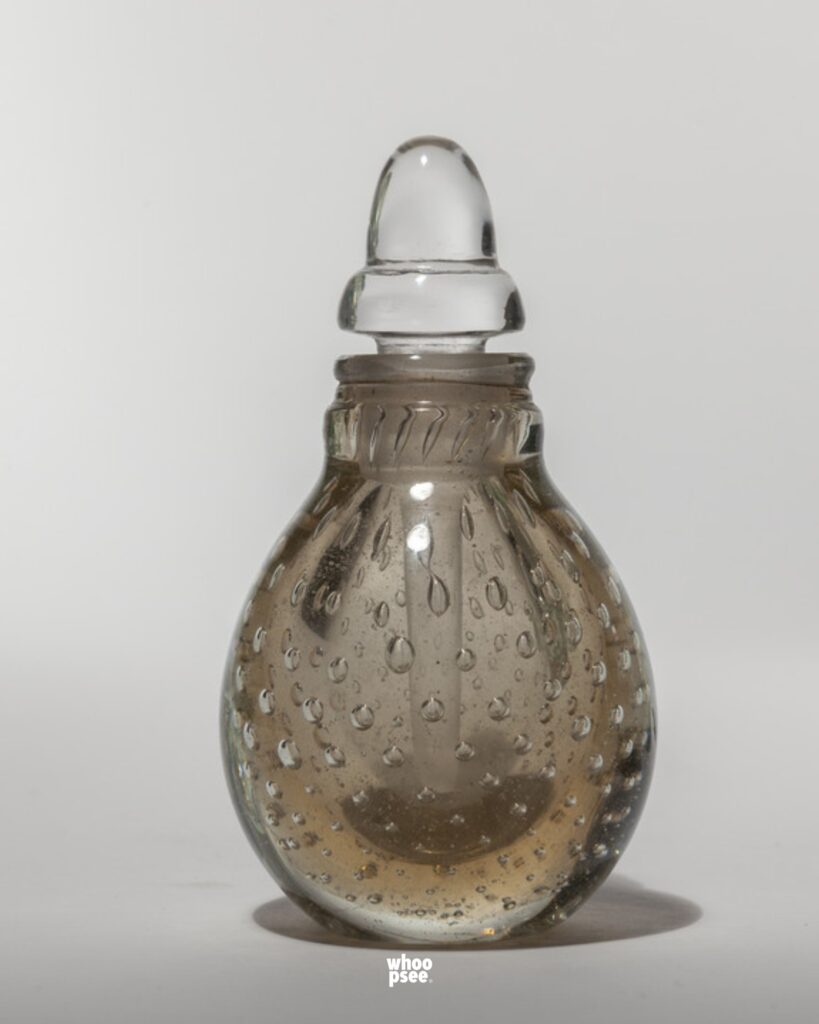
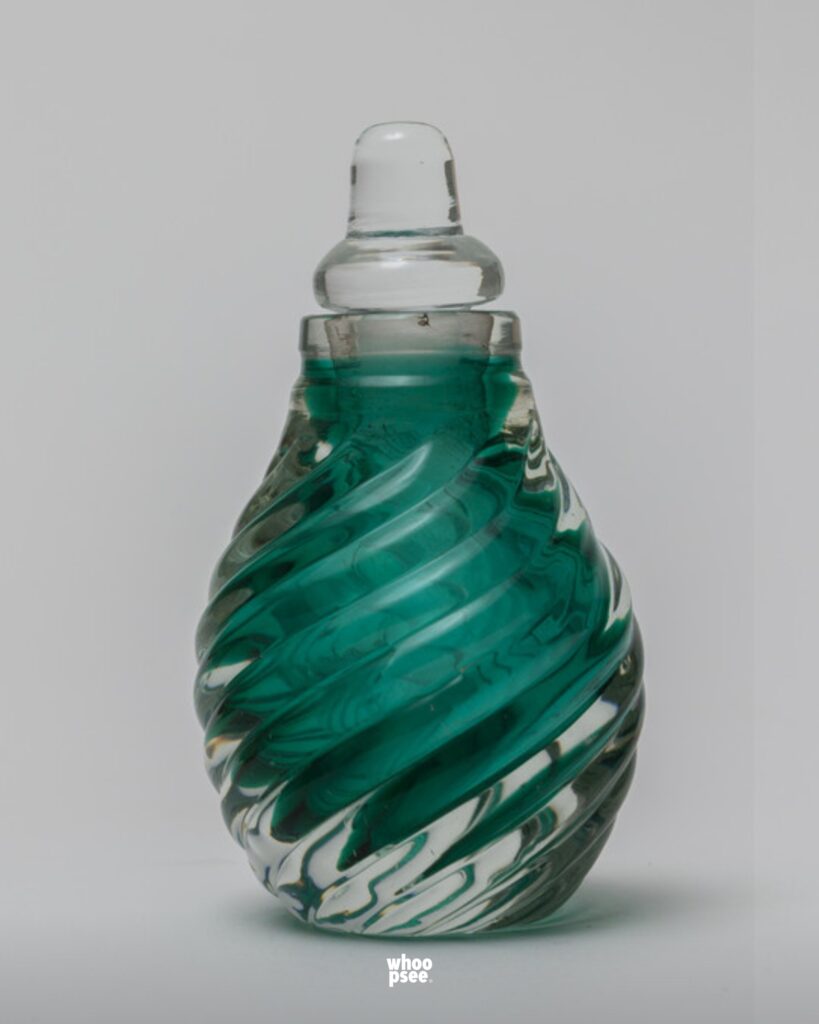
Alongside vases and chandeliers, his production also includes exquisite perfume bottles made for various brands. Real objects of art in miniature, in which function and aesthetics come together: containers that enclose not only a fragrance but also a vision. In these creations, glass becomes a narrative surface, capable of visually translating the essence of the fragrance. Among the most significant techniques developed between the 1930s and 1940s are “bubble” glass, characterized by small air inclusions that create a vibrant, organic effect; “half filigree,” which weaves thin strands of milky glass into delicate patterns; and the famous “submerged” glass, obtained by superimposing layers of colored glass to create intense chromatic depths, presented at the 1934 Venice Biennale.

To these are added further experiments: the “lattimi,” opaque glassware inspired by porcelain; the Roman murrine, developed together with Paolo Venini, which take up ancient decorative mosaic techniques; the “corroded” surfaces, intentionally irregular and textural; up to the dotted, banded and striped glass, which anticipate the dynamic textures of “woven” glass, real three-dimensional patterns on the surface. Among the most interesting creations are the flasks made for Felce Azzurra by Paglieri, as well as those designed for Giviemme: examples in which technical research meets sophisticated aesthetic sensibility, transforming an everyday object into a collector’s piece. Also foregrounding his ability to elevate even the smallest of objects to a complete aesthetic experience and to demonstrate how the world of fragrances is not only an olfactory matter, but also a visual and cultural one. And the bottles that contain them are, in effect, their first form of storytelling.
[📸 IPA; museodelprofumo.it; arsvalue.com; cambiaste.com]