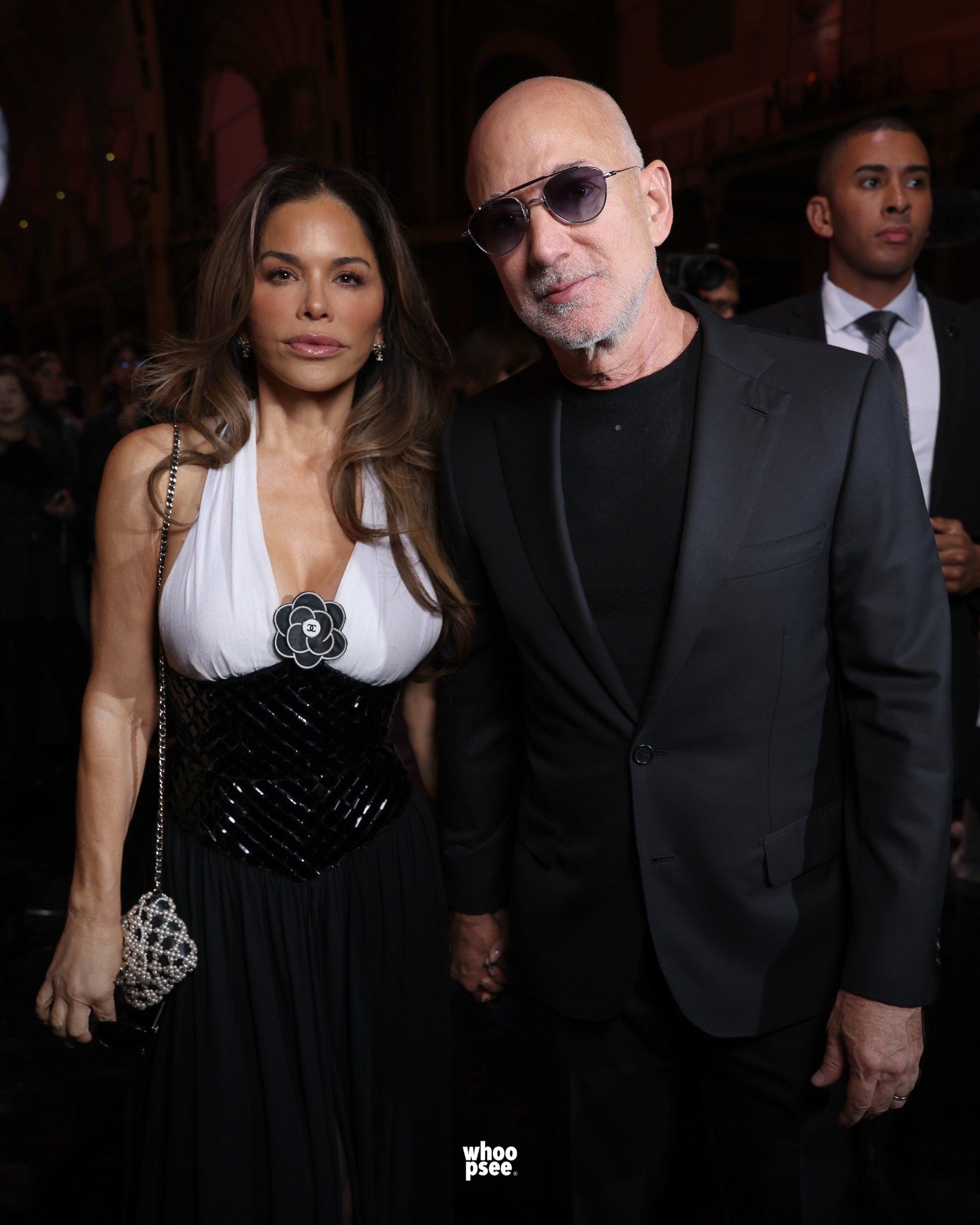
For months now, Jeff Bezos and Lauren Sánchez Bezos’ interest in the fashion world has seemed increasingly evident. Numerous appearances at fashion shows and runway shows, along with collaborations with high-fashion houses for personal occasions-such as the custom-made Dolce&Gabbana gown made for Lauren on the occasion of their exclusive wedding-and support for the Met Gala, confirm an increasingly obvious involvement. Indeed, the Bezos-Sánchez couple is among the main sponsors of this year’s edition of the Met Gala, a charity event benefiting the Costume Institute of the Metropolitan Museum of Art in New York. Their donation supports both the evening and the new exhibition “Costume Art,” mounted in the Condé Nast Galleries, opening on May 4, 2026 during the gala, and then opening to the public on May 10, with a preview for members from May 5-9. The theme explores the relationship between fashion and visual art, with a “Fashion is Art” dress code and about 400 pieces on display, including historical garments and artistic works.
Their philanthropic commitment thus appears to be strongly linked to the fashion industry, but it seems to go even further. In fact, it is news today that this passion is also translating into investment: as anticipated by The Wall Street Journal, Bezos, through the Bezos Earth Fund, has announced $34 million (about 29 million euros) in funding for institutions engaged in the development of sustainable textiles and environmentally friendly alternatives to materials such as polyester and cotton, which are known to have a high impact on natural resources. Researchers are working on biodegradable fibers and a plastic-free synthetic silk that, although still expensive to produce, could significantly reduce the fashion industry’s environmental impact. As reported by MFF, “we are supporting scientists who are reinventing the future of fashion,” said Sánchez Bezos, vice president of the foundation. The Bezos Earth Fund, created in 2020 with a $10 billion commitment to combat climate change, had already launched initiatives in the industry: in late 2025, for example, it partnered with the Council of Fashion Designers of America with a $6.25 million project to promote sustainable fashion.
However, the use of fossil fuels in the fashion industry remains a major concern. Synthetic materials such as polyester and viscose are widely used in both fast fashion and luxury goods due to their lower costs and ease of processing. However, being derived from petroleum and coal, they have a high carbon footprint and are not biodegradable. They also release microplastics and persistent chemicals that can contaminate water, with increasingly worrying environmental and health consequences. It should be emphasized, however, that the materials represent only one part of the complex global fashion supply chain. Activists have also long criticized large logistics players, including Amazon. In this context, Bezos Earth Fund ceo Tom Taylor recalled the group’s commitment to achieving net zero emissions by 2040, pointing out that in 2024, emissions per shipment are already down by a third compared to 2019.
Research into innovative materials-from mushroom skins to crustacean-derived fabrics-is not new: companies and institutions have been investing in this area for more than a decade, as evidenced by the efforts of the Kering group. However, significant obstacles to large-scale deployment remain: high production costs and the difficulty of attracting consumers and designers, who are still oriented toward cheaper materials. As noted by Steven Kolb, president and ceo of the Council of Fashion Designers of America, the sustainable textile sector is still undervalued and underfunded, and lacks the industry synergies needed to accelerate its development. In this context, Bezos-Sánchez’s economic support is an auspicious bellwether on a trajectory that we hope will be emulated by many.
[📷 Getty Images ]