“I like the idea of carrying a luxury item with me, even when I travel.”
After an evening in Milan that brought together leading talents and personalities from around the world of KILIAN PARIS, one distinct feeling remains this morning: that of having witnessed not just a launch, but the definition of a new way of experiencing fragrance. The meeting with Kilian Hennessy, founder of the French haute parfumerie house, which took place yesterday in the splendid boutique on Corso Matteotti in Milan, already foreshadowed it all. Charming, elegant, and extremely open about sharing his story, he naturally conveyed the vision that guides each of his creations—a vision rooted in memory, emotion, and devotion.
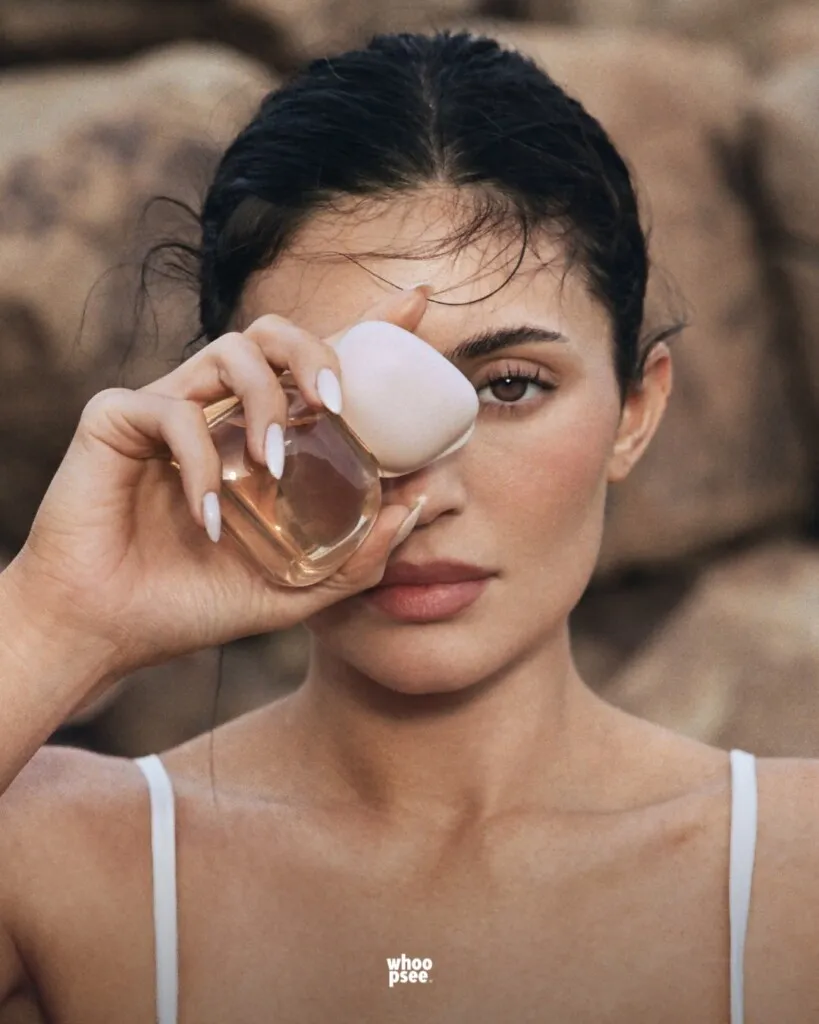
The occasion marks the debut of KILIAN PARIS’s new 30 ml Collection, a reinterpretation of the iconic Carafe in a refillable spray format. Designed to be a part of everyday life without compromising on style, this compact, refined piece is destined to become part of a true olfactory wardrobe. Born into one of France’s most illustrious dynasties of fine spirits, Kilian Hennessy brings an inherited and deeply personal sensibility to the world of perfumery. The cognac cellars of his childhood—with their rich notes of wood, sugar, and alcohol, and the famous “angels’ share”—continue to live on in his fragrances, alongside memories of travel, encounters, and images that are transformed into olfactory experiences. In his vision, perfume is much more than an accessory: it is an extension of the self, an invisible presence, a daily choice.
“I believe in having a wardrobe of fragrances. I choose my scent for the day based on my mood, what I’m wearing, and the personality I want to convey.” The 30 ml Collection was born precisely from this idea: freedom of choice, the possibility of combination, and an identity in motion. A luxury that doesn’t stand still, but accompanies you. And it is precisely this tension between tradition and modernity, between roots and vision, that makes Kilian Hennessy’s story so fascinating.
Below is the full interview.
Q: I’d like to start by talking about the brand’s new launch, the 30 ml Petit Carafe. Personally, I think it’s a great idea, especially for those who like to carry their fragrance with them at all times, whether during the day or while traveling. What connection do you see between perfume and travel?
A: Travel is a fundamental source of inspiration for me. Many places have influenced my creations: Istanbul inspired me to create “Intoxicated,” Bangkok inspired “Moonlight in Heaven,” and the Middle East is an extraordinary source of inspiration, with its notes of musk, incense, food, and amber. Coming back to Le Petit Carafe, what I love is precisely the idea of being able to travel with something that remains a luxury item. Very often, people travel with practical but not particularly attractive sizes. You arrive at the hotel, set them down in the bathroom, and you have these small, functional objects—but they lack aesthetic appeal. I wanted to offer something different: an object that remains precious even while traveling. Besides, these days, no one uses just one perfume anymore. We all have at least one fragrance for the day, one for the evening, one for winter, and one for summer. That means having four fragrances, and it’s nice to be able to carry them with you easily. I also like the idea of having two fragrances in your bathroom, even when you’re traveling. It’s not cumbersome, it’s beautiful, and it gives you the feeling of carrying a little piece of your world with you. It’s a gesture of pleasure, of personal luxury, and I think that’s important today.
Q: Your family’s legacy is rooted in the world of spirits. Does this heritage influence your creative process in perfumery?
A: Creating a liqueur is very different from creating a perfume. With perfume, inspiration often comes from a place or an emotion. For example, we launched Her Majesty, a fragrance I created after a trip to Kyoto two or three years ago. I was there for my birthday in March, during cherry blossom season. I was walking along the Philosopher’s Path, a car-free area with a small stream surrounded by cherry trees in bloom. At one point, the wind picked up and all the petals began to fly through the air. It looked like snow, but it was spring.
That vision, that emotion, guided me in creating Her Majesty. And when people ask me why I chose this name, the answer is simple: for me, the sakura blossom is the queen of flowers. People from all over the world travel to Japan to see it bloom. When I work on a fragrance, I always start with an emotion. Once I have that emotion and that vision, I very quickly know which four or five ingredients will make up the main accord. Then the work begins, which can take up to two years. For Her Majesty, it took two years to arrive at the final version. Crafting a fragrance is like putting together a puzzle: you have a general idea, but you don’t yet know exactly what the final result will be.
I like to quote Mozart, who said that when he composed, he looked for “little notes that love one another.” That’s exactly what we do, too: we look for notes that work together, that complement each other. But I always keep that initial emotion in mind. Sometimes an ingredient might be interesting, but if it strays from that emotion, I eliminate it. When I’m working on a blend inspired by spirits, however, it’s different: I’m not trying to recreate a cognac or a whiskey exactly. I want to create a fantasy, an illusion. For example, for Old Fashioned, I used wheat absolute, rum, vanilla, and cedarwood. Together, they create the impression of a whiskey. It’s not a copy; it’s an interpretation.
Q: Do you remember the moment you decided to become a perfumer?
A: Very clearly. It happened more than thirty years ago, during my fifth year of college, when I had to write my thesis. I had just finished an internship at Kenzo Perfumes, in the communications department, so I had already worked on some aspects related to perfume. But in French universities, you have to start with a question left open by previous research. The question was: How can we communicate a scent if there is no common vocabulary for it?
There is a shared language for sound and color. But not for smell. We often use metaphors, such as “the smell of freshly cut grass,” but these aren’t precise descriptions. A perfumer would use specific technical terms, but that language isn’t accessible to everyone. That’s why the world of perfumery is so closely tied to metaphors. This led me to place great importance on the names of fragrances: they must express the emotion or vision one experiences. While working on my thesis, I started a course in perfumery. On the first day, when I smelled the raw materials, I immediately realized that this would be my world. And I’ve never changed my mind.
Q: Your brand is based in Paris. Has Paris been a source of inspiration for you?
A: I wouldn’t say Paris specifically, but France as a whole. It’s a country with an incredibly rich tradition of craftsmanship: from glassmaking to cognac production. This diversity and richness are part of my identity. France has also created many fragrance families throughout the history of perfumery. Being French also means having a responsibility: not to copy the past, but to invent the future. Our predecessors have always looked ahead, and this is something I feel very strongly.
Q: Layering—that is, combining multiple fragrances—is very popular these days. What do you think about it?
A: This isn’t anything new. Some brands have been working on this concept for more than thirty years. Personally, when I finish a fragrance, I consider it complete. My perfumes are already very structured; they aren’t simple compositions. That said, sometimes I meet customers who combine two of my fragrances, and the result is surprising. Other times, not so much. It depends a lot on individual sensibilities. It’s also a cultural issue. In the Middle East, for example, people use multiple scented products at the same time: shampoo, body lotion, shower gel, multiple fragrances, and even oils. It’s a way to build their own olfactory identity. Fragrance becomes an invisible message, a way to stand out.
Q: What does “luxury” mean today in the world of perfumery?
A: Luxury comes from the ingredients. It’s not the longevity or sillage that defines a luxury fragrance. In fact, the demand for very high performance can limit creativity, because it forces you to use the same ingredients over and over again. For me, luxury lies in the quality of the raw materials. I always try to use rare or very expensive ingredients. It’s also a way to protect my creations, because they’re harder to replicate.
Q: If you had to choose one of your fragrances to represent Milan? (He addresses his Italian team enthusiastically, and everyone agrees with his idea.)
A: I’d say *Good Girl Gone Bad*.
Q: One word to describe Kilian?
A: Heritage.
[📷 Courtesy of Kilian]