In the Lancetti subway station in Milan, amid the daily flow of people and the rapid comings and goings, a space opens up that functions as both a laboratory and a threshold. SpazioSERRA inserts itself with a discreet yet active presence into the urban flow: a glass pagoda whose transparent architecture becomes an exhibition space and a continuous connection between interior and exterior—two conditions that mirror and mutually define each other within the same perceptual field. “SpazioSERRA is the name of the physical space, but today we identify more as collettivoSERRA,” says Massimiliano, one of the association’s members. The project emerged within the Artepassante network, an initiative that since 2012 has been transforming the infrastructural voids of Milan’s railway system into widespread cultural hubs. Former newsstands and transit spaces become exhibition venues inhabited by collectives and hybrid artistic practices.
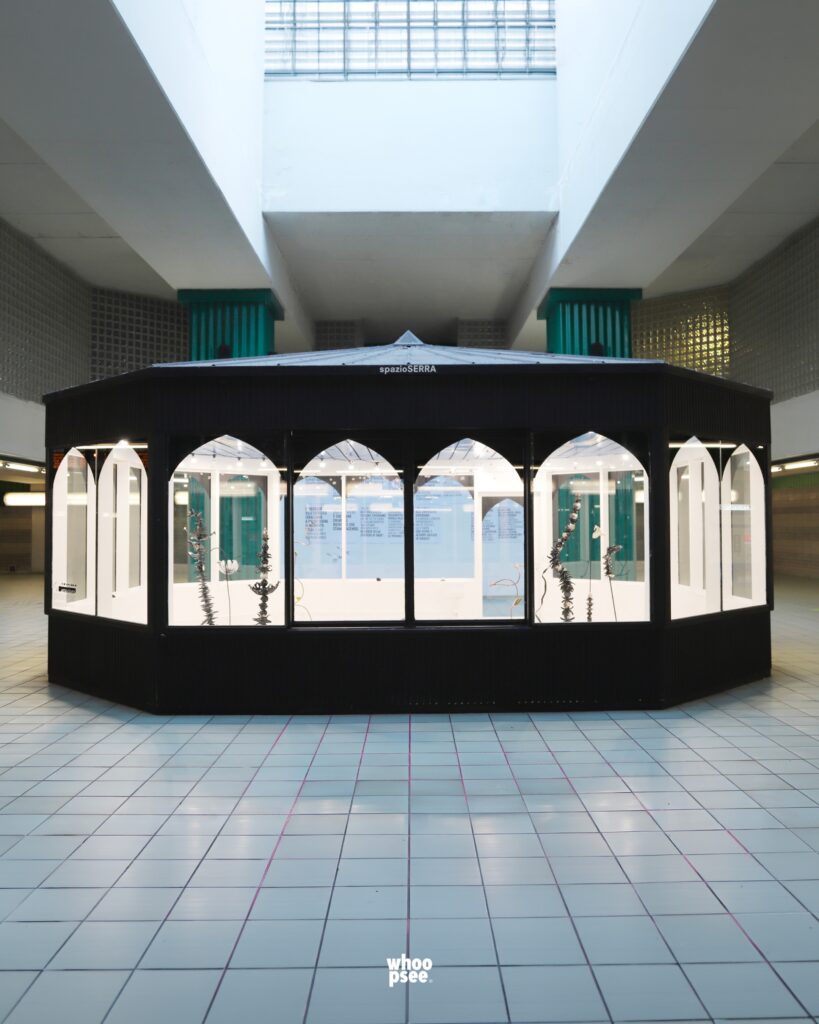
In 2017, an initial duo took over the space at the Lancetti train station and launched a process of collaboration that led to the current collective: eleven people with diverse backgrounds in art, anthropology, design, photography, and web development. This composition defines an approach to cultural work grounded in the plurality of knowledge and the fluidity of skills, where practices intersect and influence one another. SpazioSERRA functions as a liminal device for contemporary art: a membrane that regulates the continuity between interior and exterior. The transparency of the structure facilitates and organizes a simultaneous relationship between the exhibition space and the urban space, producing a shared field of visibility: the gaze circulates in both directions. Those passing through the station observe the space and become part of an exhibition dynamic that includes the passerby themselves, giving rise to a condition of asymmetrical co-presence in which the observer and the observed coexist within the same field of vision without settling into fixed roles.
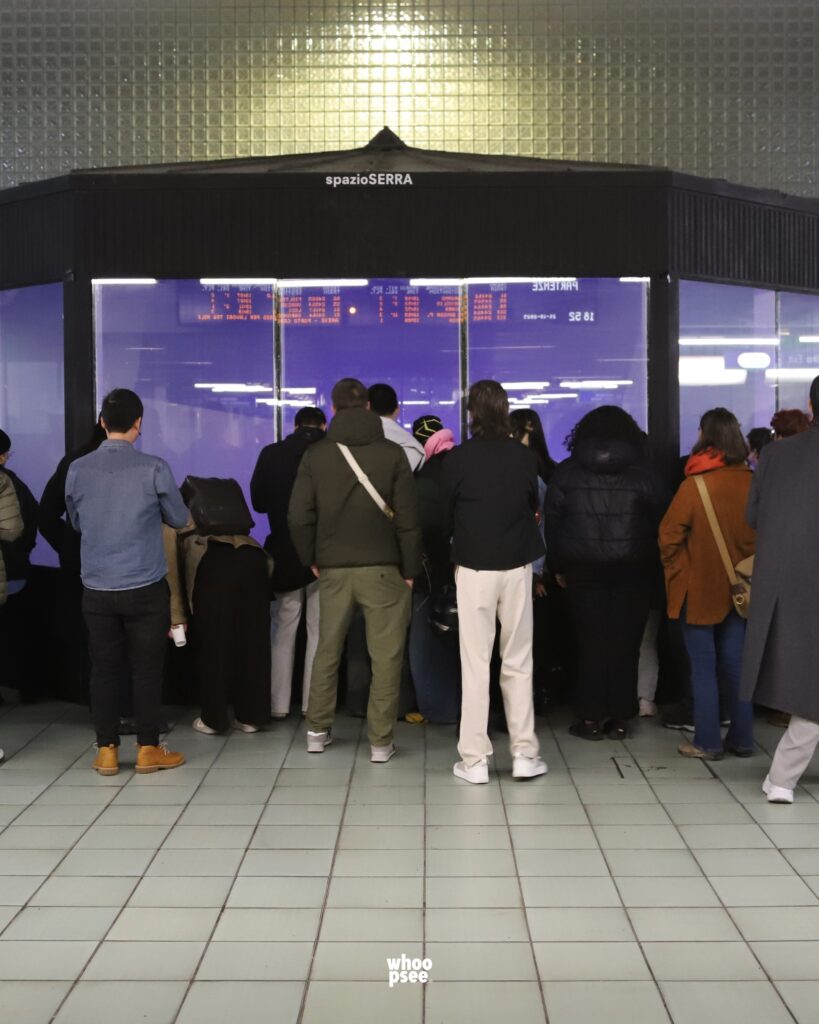
The temporality of passage, inherent to metropolitan infrastructure, shapes the grammar of space: everything exists in a state of continuous transit. Vision is constructed in fragments; permanence takes on provisional forms; the threshold becomes a constant condition. The exhibition becomes a practice of transit and the coexistence of gazes. “We’re inside a station, so everything is already in motion. People don’t necessarily come to see an exhibition—they just pass through it,” explains Massimiliano. The curatorial work is built precisely on this structural instability. The exhibitions arise from annual open calls, initially with specific themes, now more fluid. Over time, the programming has in fact shifted from a thematic structure to an open process, in which meaning emerges from the relationships between the selected projects. In recent cycles, a recurring theme has emerged: spectatorship. “We’re very interested in the relationship between the viewer and the viewed. In a space like this, every act of seeing is situated, traversed by shifting gazes.”
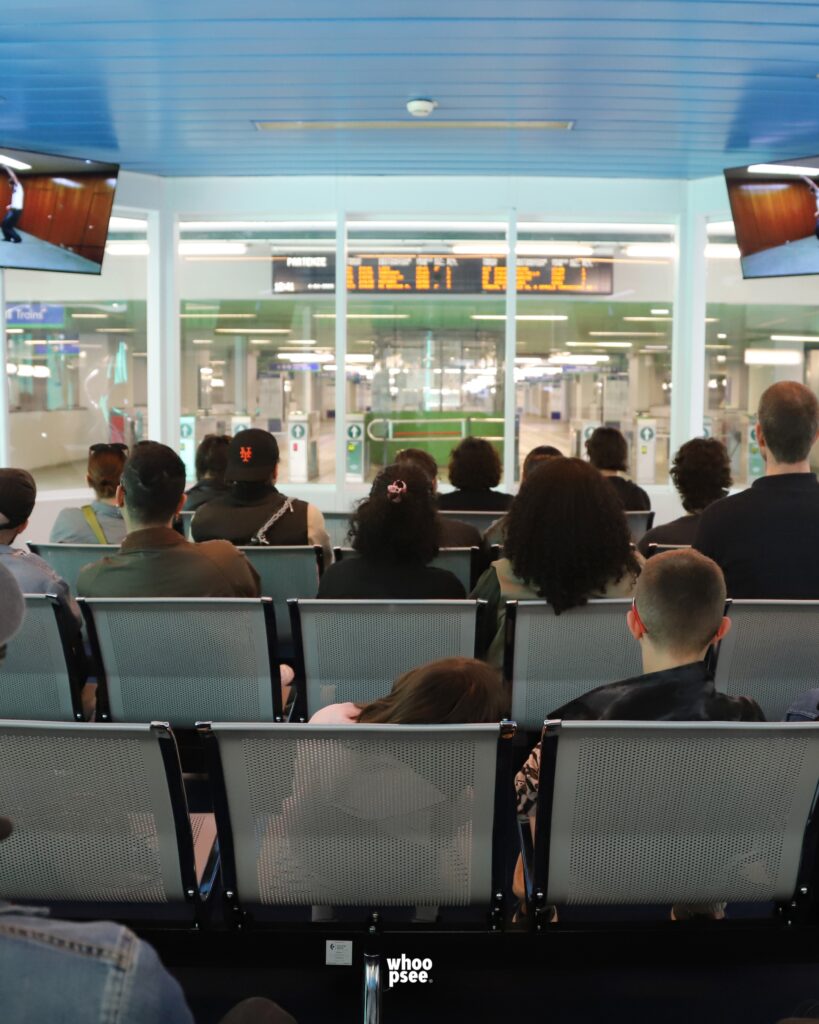
The reduction in the number of exhibition projects in recent years has led to greater sustainability in production, while the recent transformation into a social promotion association has opened up access to calls for proposals and funding, making it possible to compensate artists for their work. Alongside its exhibition programming, the collective develops institutional collaborations, curatorial practices, publishing projects, and interventions in external contexts as well. This expansion defines a practice that unfolds continuously between physical space and the urban landscape. The public dimension is central to the project’s identity: the space remains accessible every day, from 6 a.m. until midnight, following the subway’s schedule. “During the COVID-19 pandemic, the space remained continuously accessible. People passing through the station encountered the artworks as part of their daily commute, and we were perhaps the only cultural institution able to remain ‘open to visitors’ during that period.” Over time, the collective has incorporated independent film, publishing projects, performances, and—as mentioned—collaborations with external organizations, extending its reach beyond the physical space.
The programming follows a layered structure: each project builds upon the previous one and helps shape the next, creating a dynamic continuity among different practices. Current and upcoming exhibitions include a performance by Valerio Eliogabalo Torrisi, Sveva Crisafulli’s editorial and performative research on the relationship between the body, food, and sexuality, and projects by emerging collectives focused on environmental and installation-based practices. When asked about the type of audience that gravitates toward spazioSERRA, Massimiliano observes: “We’re not looking for a specific audience. People who are passing by, those who know the space, and those who stop by chance all come. This makes the work unstable and, at the same time, fertile.”
SpazioSERRA defines itself as an active threshold: a space where art takes shape through passage, the gaze, and the ongoing relationship between permanence and transit, within an urban context in constant transformation. Spaces like spazioSERRA introduce a particular form of presence into the urban cultural fabric, because their continuous accessibility does not simply mean that they are open to the public, but rather that they are constantly exposed to the gaze of the city. Being constantly visible also means inhabiting an unstable threshold, where art engages with the everyday reality of passage and its unpredictability. In this sense, the term “accessibility” moves beyond its most abstract and hollow formulation and translates into a concrete practice, made up of proximity, passage, and co-presence. In this sense, visibility is not limited to the exhibition space but becomes part of an urban ecosystem that includes those passing through, those observing distractedly, those returning, and those who discover the space by chance. Within this dynamic, spazioSERRA takes on a valuable role that is also rooted in the neighborhood: a cultural resource that helps build continuity between artistic practices and daily life, embracing possibility, experimentation, and otherness in all their facets.
[📷 Courtesy of spazioSERRA]