Legend has it that Parthenope, one of the Sirens who in the Odyssey attempted to bewitch Ulysses with their song, upon the hero’s refusal, able to resist thanks to the stratagem of the ship’s mast, allowed herself to die of grief. His body, abandoned to the currents, landed on the islet of Megaride. There, according to the myth, it dissolved, transforming into the city itself: the head lying on the hill of Capodimonte, the tail lying along Posillipo.

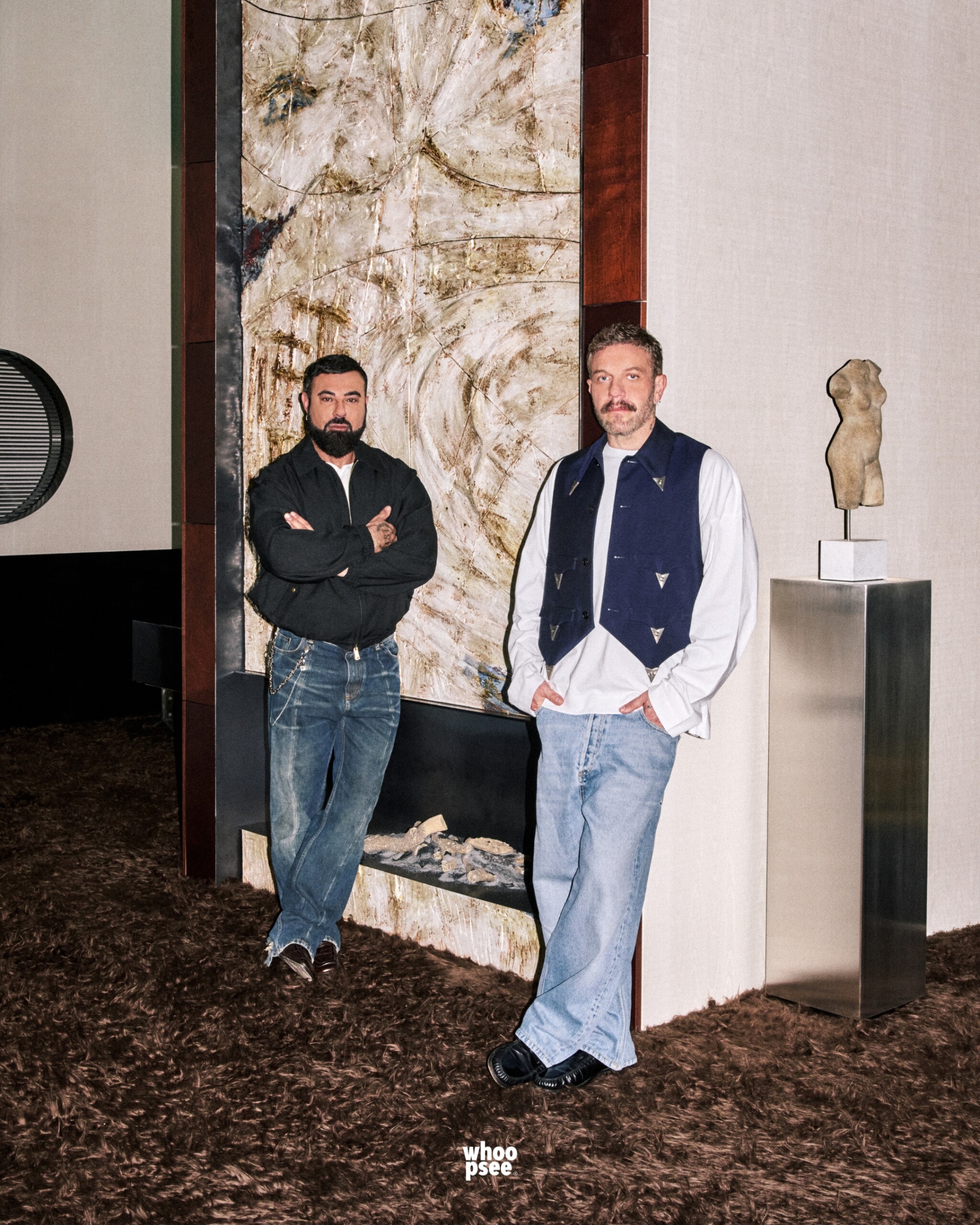
Parthenope thus becomes from woman to city, from body to geography, from voice to landscape. But if she lived today, what kind of woman would Partenope be? This is the question that runs through the installation created by DSIGNINCMILANO on the occasion of Milan Design week 2026, which can be visited at Galleria Cardi. The project develops inside a cube: archetypal, pure, absolute form, a space that immediately appears inhabited, lived, crossed by a strong vitality.
An unmade bed, cigarettes consumed in the ashtray on the nightstand, next to a forgotten necklace: traces of a night of light and laughter, long gone. The bathroom retains the trail of make-up removal, the relief of feet fatigued by heels worn long for the city. The living area holds echoes of conversations and secrets: the record player resting on a soft rug, almonds and glasses left on the glass coffee table beside the seat. The walls here are keepers, witnesses to unspoken words, silences, loves, confidences. And then stacked books, sketches that foreshadow constructions and insights, sculptures, elegant lamps, precious ceramic objects that punctuate the space and anchor it to an ancient, distant matter.
This is the home of Partenope today. A mermaid who has chosen the city, with her changing mood and energy. A woman who does not die of romance, but transforms it, strong, present, immersed in the everyday life she loves, and welcomes, making her home her port.
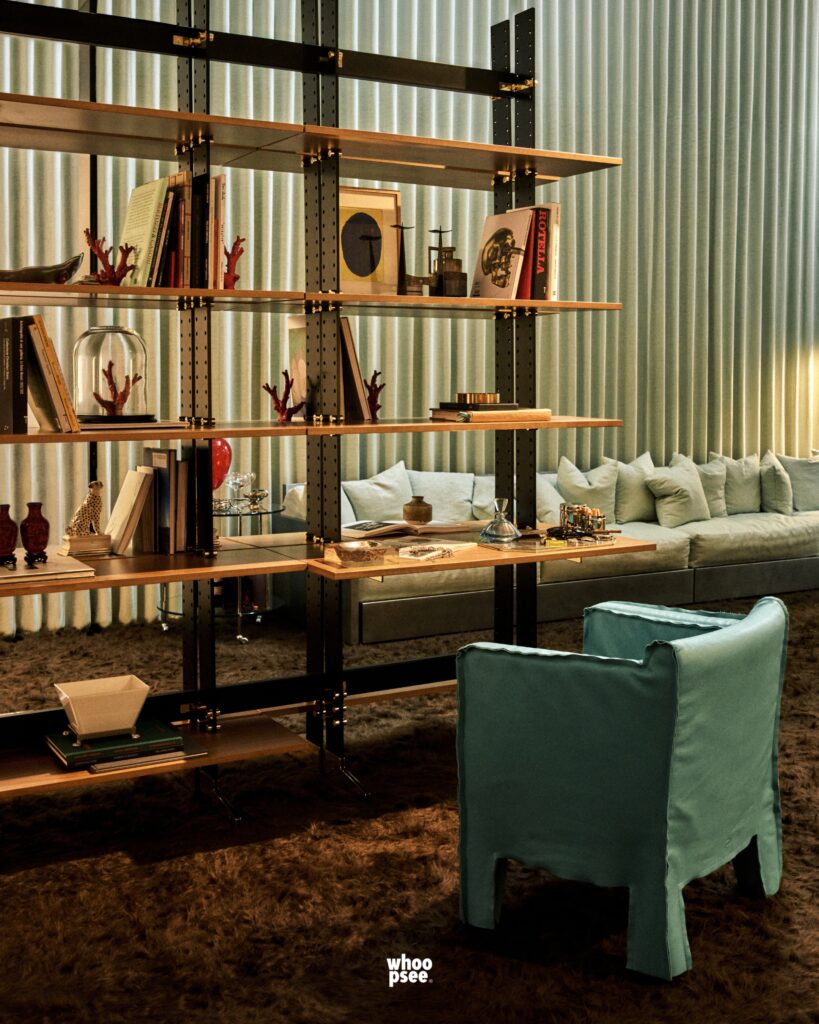
The path winds through an interior with a 1970s flavor, yet deeply contemporary. The entrance is marked by a bell, a domestic, familiar gesture on which a name appears: Partenope House. Here we are, then, in its city port. Crossing the threshold, we enter the densest and most layered space: entrance and studio coincide. A large desk dominates the room, accompanied by a leather and steel seat by Baxter. It is the centerpiece. A warm, female voice enters the space through a telephone call, welcoming the visitor and drawing him or her into a dimension with a private, intimate flavor. The surfaces tell a continuous dialogue between inside and outside, memory and present, just like the life of Partenope. White moiré wallpaper, crossed by a wavy pattern, alternates with glossy black lacquered paneling. A large mahogany wall introduces rigorous geometry, while the floor, in long-pile carpeting, restores warmth and intimacy.
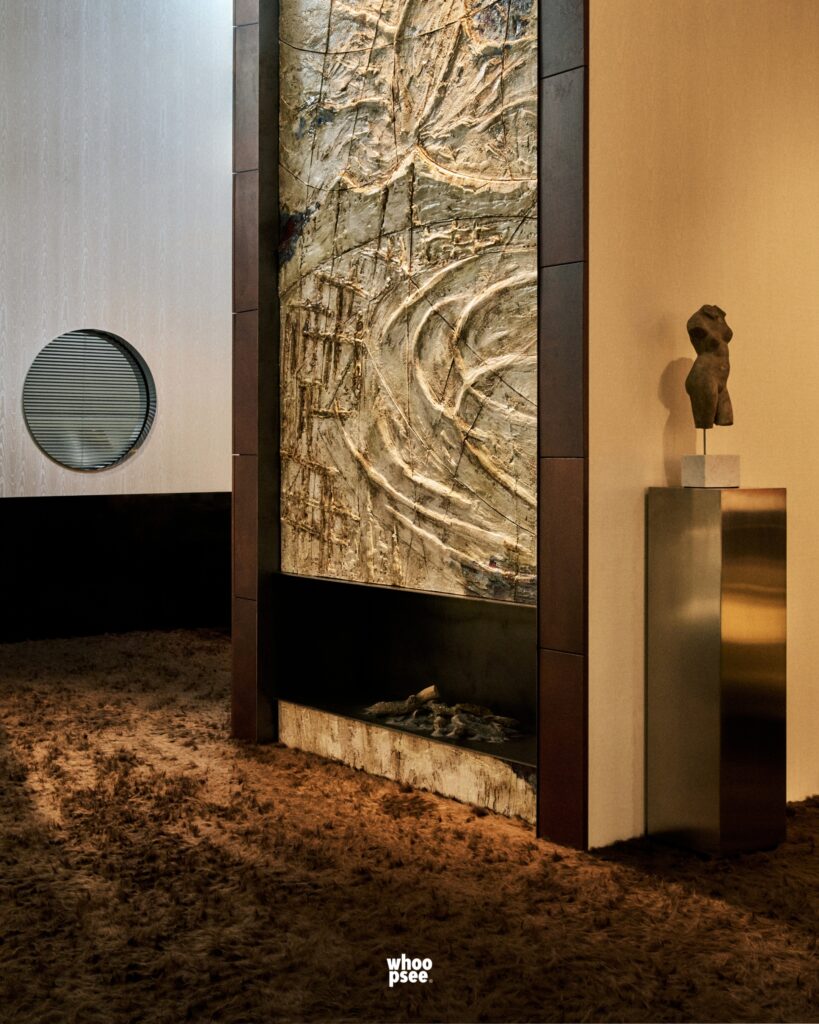
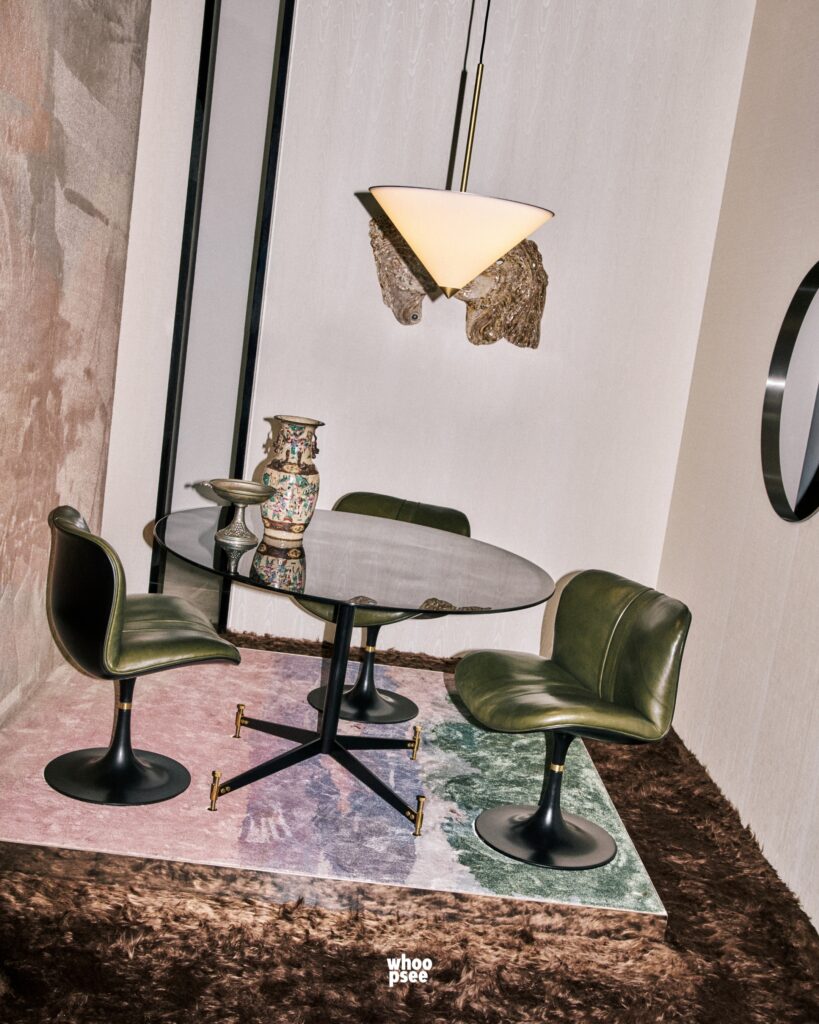
Then the walls dissolve into a system of wave curtains, made in the same aquatic, deep jacquard as the large sofa. The space opens onto a cosy living area, organized around a ceramic fireplace: the fulcrum of conviviality, a symbolic threshold between present and memory. An ideal window on a distant gulf. The black table, designed in 1951 by Ignazio Gardella, dialogues with metal and dark leather seats, maintaining a warm and enveloping palette, ready to welcome new encounters.
A printed carpeted wall unfolds as an immersive backdrop: a sunset in shades of pink, a sky observed from the Isola dei Galli – a place dear to this contemporary Partenope.
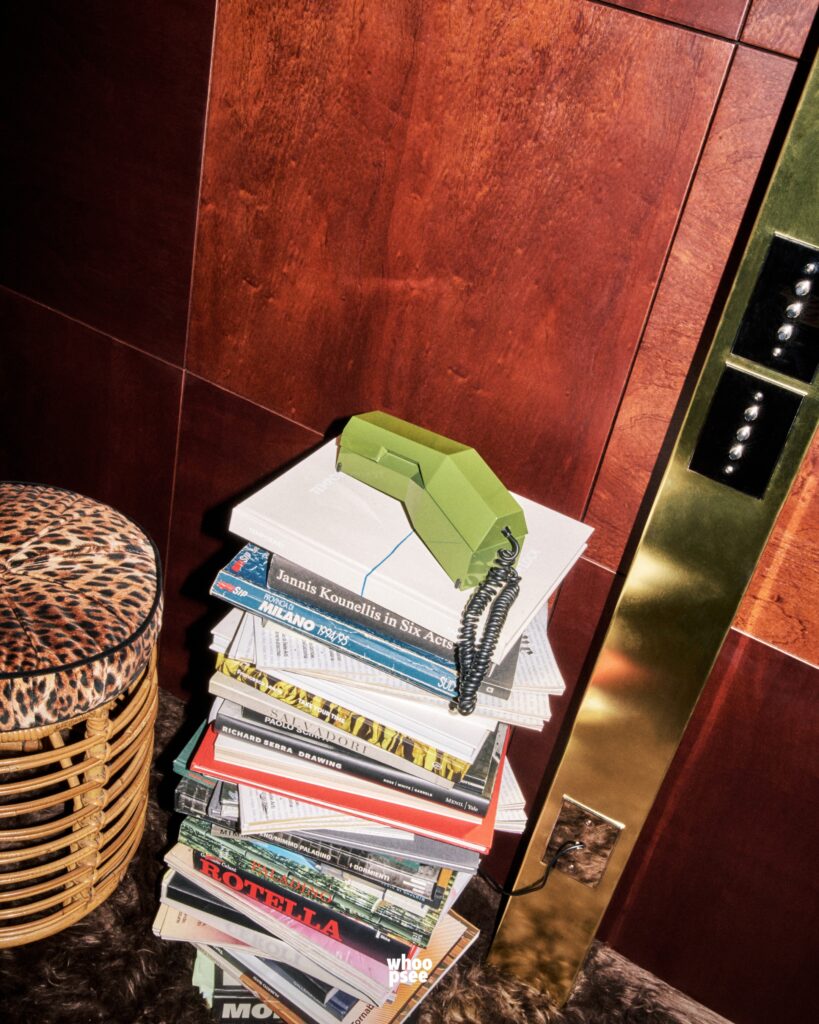
Beyond a large walnut bookcase, the space is transformed by entering the night dimension: the Partenope bed. The bed is integrated into a paneling of glossy black and brass panels that cover the entire wall. Technical elements, switches, chrome-plated steel lights, fit in with precision, like details already encountered along the way. Some panels open like caskets, revealing hidden spaces. The bed, deliberately undone, is covered in green silk, still retaining traces of a deep sleep. In continuity, the bathroom: black ceramic surfaces alternate with wallpaper that recalls a micro-mosaic in warm tones. A shell-shaped light and rattan furnishings discreetly evoke distant terraces, memories of a now transfigured coastal life.

The bed platform leads to the walk-in closet, the last room of the itinerary. An intimate space, a treasure chest of a femininity that knows no era, an intimate archive of shared objects and memories. Here the motif of the lily of the valley returns, but transformed: no longer faded, but imprinted on silk with golden reflections.
Like Partenope itself, which does not disappear, but mutates, renews itself, continues to live, this interior tells of a full life: layered with memory and memories, but animated by curiosity, fullness and a life force capable of crossing the present and transforming it. A Parthenope that today is not consumed in pain, but that, faced with the suffering of Ulysses, would choose to smile.
[📷 Courtesy of Dsigninc / © Matteo Verzini ]