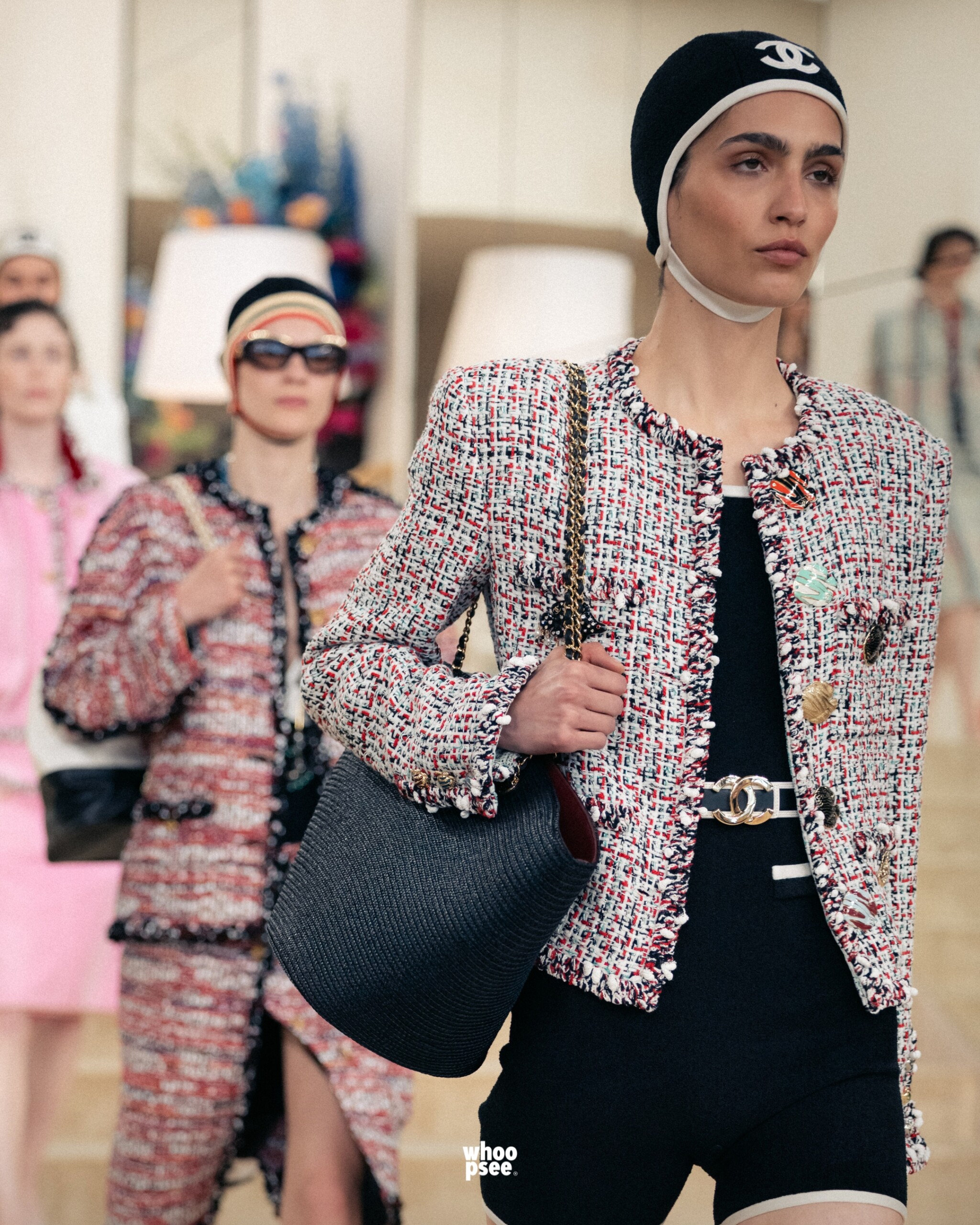
There was a time when the swim cap was not an accessory, but a manifesto. In the 1920s and 1930s, between bathing establishments and early beachwear icons, the swim cap was born: rubber, tight-fitting, necessary. It protected hair from salt water and chlorine, but above all it told a new way of experiencing the body, free and modern. It was functional, but already deeply aesthetic.
Then fashion, as always, observed and transformed. On contemporary catwalks, the cap has re-emerged with a different language: bolder, more self-conscious. Prada and Miu Miu brought it back into the spotlight, playing with unexpected volumes, textures and styling. No longer relegated to the pool, but worn as a distinctive sign, a gesture of rupture from the traditional idea of beauty.
And then there is Chanel, which in Biarritz-a symbolic place in its history-celebrated the original link between the maison and outdoor life in coastal resorts. Here the swim cap becomes memory and vision together: a bridge between Chanel’s seaside heritage and a contemporary aesthetic that is not afraid to reinterpret the ordinary. The swim cap does not ask for approval. It is a divisive, intriguing, challenging accessory. Minimal or statement, shiny or matte, it remains a loaded object: it speaks of sportswear, certainly, but also of identity and experimentation.
Perhaps it was never “beautiful” in the most conventional sense of the word. But that is precisely the point. Its strength lies in turning the useful into desirable, the everyday into the iconic. And reminding us that, in fashion, even the most unexpected detail can become a protagonist.
[📷 Getty Images; IPA; Instagram: isseymiyakeofficial; chanel.com; miumiu.com; prada.com; valentino.com]