Founded in Amsterdam in 2007 by Lonneke Gordijn and Ralph Nauta, Studio DRIFT develops research that interweaves art, technology and observation of natural systems. Their works, often kinetic installations and immersive environments, take shape through an ongoing dialogue between scientific research, engineering and visual sensibility, translating organic dynamics into technological languages. Over time, the studio’s work has helped redefine some now increasingly blurred dichotomies-natural and artificial, human and technological, organic and mechanical-avoiding as much the celebratory aesthetic of innovation as a nostalgic reading of nature. Rather, at the center of their practice is the idea of movement as a vital and perceptual principle: something that affects biological systems as much as artificial ones.
In this interview, we talked about the birth of the project and the meaning of the name DRIFT, the relationship between intuition and research, the role of the body in the experience of their works, and the future possibilities of the coexistence of nature and technology.
How did Studio DRIFT come about, and driven by what need?
We met while studying at Design Academy Eindhoven and were immediately attracted by our radically different interests. Ralph is a big fan of science fiction, while Lonneke is fascinated by nature and the world around us. Although these universes seem far apart, we found ourselves united by the same curiosity: continuing to wonder why things are the way they are and how they could be different. It is from this curiosity that it all began. In 2007 we founded DRIFT as a way to explore these questions together. Since then we have been making works that relate technology and nature.

Your works seem to translate natural phenomena into technological systems: is this more an act of imitation or interpretation? And how do you address this dichotomy, perhaps now outdated, between nature and technology, organic and inorganic?
In our work we use technology to reproduce what happens in nature: evolutionary mechanisms, patterns fundamental to survival. We want to capture the sensation generated by movement and put technology and nature in dialogue with each other.
Do you believe that your works can change the way we perceive artificial intelligence in everyday life?
Through our work we try to translate these systems and mechanisms into something more intuitive, something that can be perceived emotionally and physically. Using patterns and behaviors found in nature, we create experiences that the body understands instinctively, making something complex closer, more human and more accessible.
Regarding the creative process, how much of your work comes from intuition and how much from structured scientific research? Where do you look for inspiration? We find inspiration in nature and then observe these intuitions through structured scientific research to understand its mechanisms and deep logic.
How do you decide when a project is “finished,” considering that many natural systems are constantly evolving?
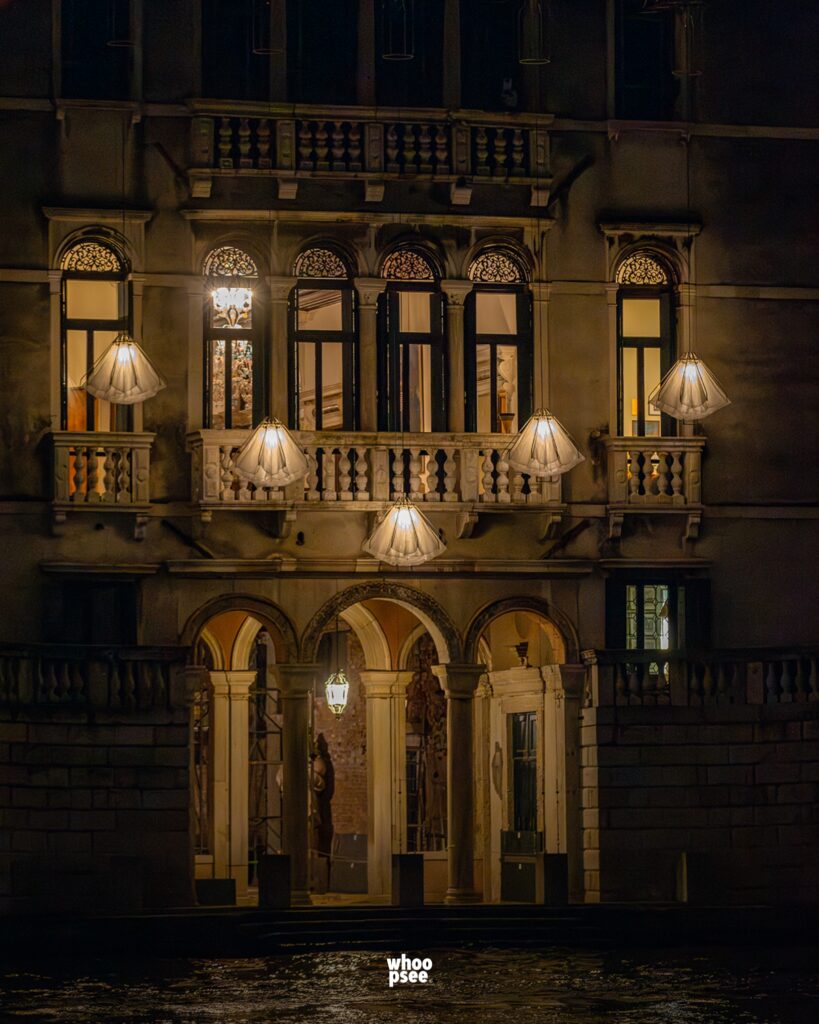
For us, a project is never really finished: it evolves along with the spaces it inhabits and continues to transform itself independently. Our works are site-specific. One example is Shylight, one of our most recognizable creations. The work has gone through multiple iterations: early versions were made from industrial vacuum cleaner components before evolving into the engineered mechanical objects they are today.

Do you consider yourselves more artists, designers or “mediators” between different disciplines?
We consider ourselves artists, not designers. We often collaborate with professionals from different fields-architects, interior designers, musicians, engineers-and it is this multidisciplinary approach that defines the core of our practice. Our work is driven by curiosity and exploration.
Your works often operate on an immersive scale: how much does the viewer’s “body” count against the mind, and thus the physical experience of the work?
Today the term “immersive” has become almost synonymous with spectacular images and deafening sounds. We do something different. Light and movement are our language – and it is a language that the body understands instinctively. They can transform a space, change its energy, make it breathe and resonate. We think the best way to experience our work is in person, physically, because only then can you really feel what we are trying to convey through our art: a sense of presence, calm and rebalancing.

Do you care about controlling the audience experience or do you deliberately design a margin of ambiguity?We believe in moments that can bring people together and really make them present with each other. That’s what we try to create through our work, so yes, we always think carefully about the audience experience. This year we are opening the DRIFT Museum in Amsterdam, bringing together all of our work in one space for the first time. It is a dream project we have been working toward for years.

[📷 Courtesy of Studio Drift/ © Wendelien Daan; Dario Lasagni; Arjen van Eijk Xinix Films; Ossip van Duivenbode; Marco Borggreve]