According to one of the most influential readings of twentieth-century thought, every cultural expression is traversed by an oscillatory motion. Contemporary fashion is no exception, moving between excess and subtraction. This movement between Apollonian and Dionysian, between rigor and momentum, seems to run through every form of cultural expression. Fashion, as an immediate and tangible aesthetic language, is perhaps one of its most obvious manifestations, inscribed as it is in the everydayness of living.
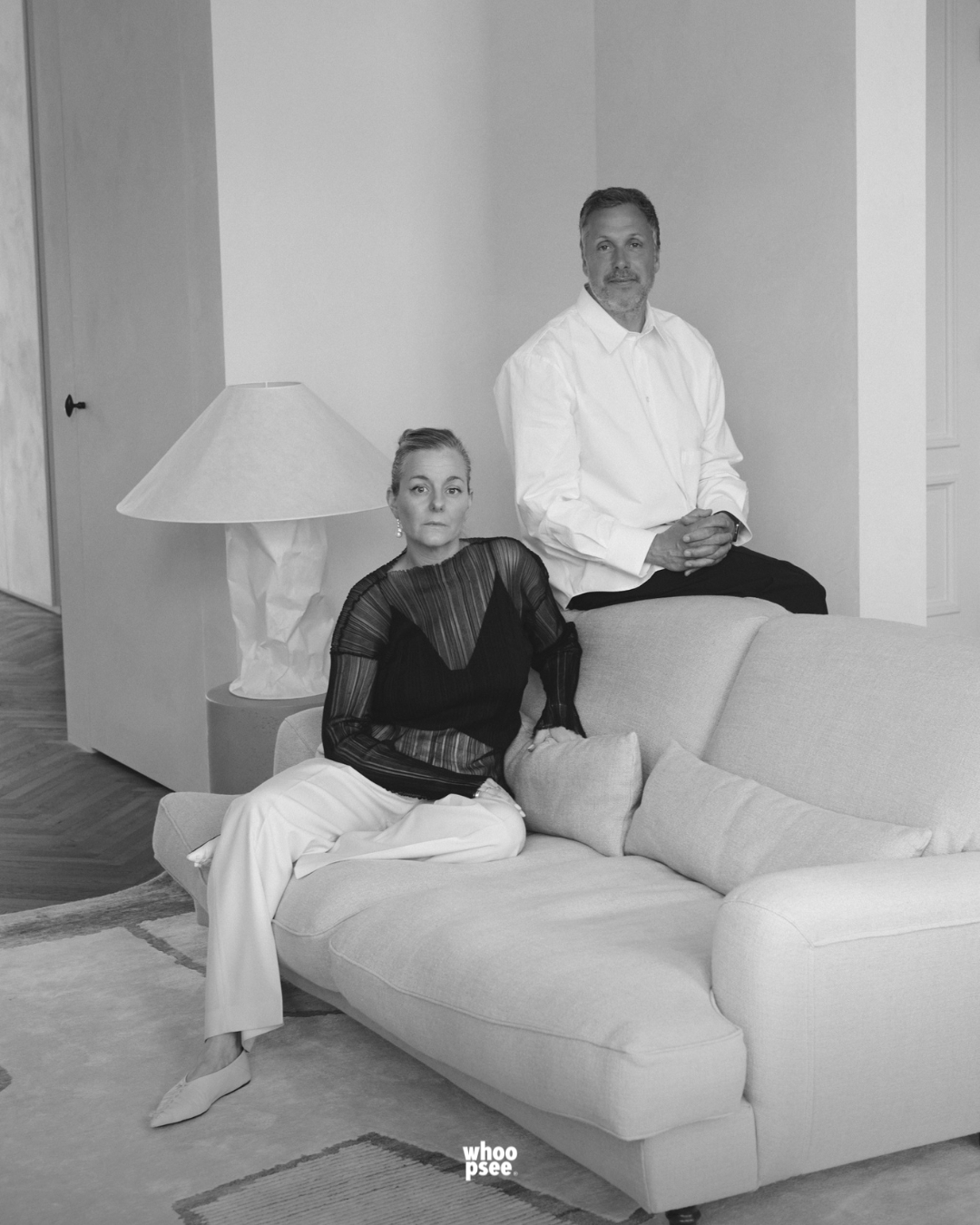
Northern Europe is traditionally associated with an idea of balance and measure: a modus vivendi reflected in an essential, precise aesthetic, often oriented toward a functional pragmatism. The result is a clean, well-constructed fashion, sometimes perceived as aseptic in the name of efficiency. Yet, Róhe Frames eschews this predictable reading. Born during the pandemic, the brand embodies a more intimate and warm, deeply personal impulse. This translates into the purity of the lines, the sensitivity of the visual campaigns, and a strong ethical framework that permeates every aspect of the design. While favoring elegant cuts and far from any baroque excess, Róhe Frames manages to place itself at a rare point of balance: that between minimalism and character. What emerges is a subtle and conscious stylistic figure, delicate but at the same time solid, capable of expressing a form of elegance quiet in its incisiveness. I had the pleasure of interviewing Marieke Meulendijks, founder of the brand, who told me about the genesis of the project, her relationship with fashion and the vision she envisions for Róhe in the coming years.

What made you move from appreciating fashion to actually building Róhe? And was fashion always present in your life, or did it emerge later as something more intentional?
Fashion has always been a part of my life. I studied fashion and textiles at the Fashion Academy in Amsterdam, and after graduating at the age of 21, I started working in the industry. I was fortunate to travel all over the world, learning the value of textile craftsmanship and building strong relationships that later supported the creation and evolution of Róhe. Róhe was born in a quiet moment. During the pandemic, everything stopped, creating space for reflection. For me it was the right time to follow my dream, and together with my husband Maickel, we decided to build something truly our own: something more personal, meaningful and lasting.
How has your relationship with fashion changed since you founded Róhe?
It has become much more personal. Fashion is no longer just something I do, it’s something I am. It is what I love most, what I do every day and what makes me happy. At the same time, my approach is more intentional. I focus on creating garments that last over time, beyond the seasons. With Róhe, the horizon has also expanded: it is no longer just about fashion, but about building something where everything is interconnected and what we create carries meaning.

Where do you draw inspiration for your designs and collections? Are there influences outside of fashion that constantly shape your work?
I find inspiration almost every day. Róhe was founded in Amsterdam, and the city remains a constant source of inspiration-from Dutch history to textiles to its deep-rooted culture of craftsmanship. Our studio and atelier are located in the Huis de Vicq, a 17th-century canal palace. The building’s imposing history, the large windows, the Dutch sky, the light, the garden, the canals, and the water-all these represent for me the essence of Róhe. Beyond that, inspiration comes from many disciplines: art, architecture, film, music, travel, and established and emerging artists. However, textiles are always my starting point: they are like ingredients that guide the creative process through tactility, texture and durability.
Your designs appear very basic but extremely intentional in cut, pattern, and fit. How do you know when a garment is “finished”?
When fabric, color, shape and fit come together in balance. When these elements align, the garment begins to tell the right story. That’s when you know it’s complete.

Do you create more out of intuition or structure? And thinking about the person you create for: do you imagine someone specific or is the wearer of Róhe more of an evolving idea?
Our creative process always starts with fabrics. We work with both existing materials and new developments, often taking up fabrics from previous collections to create continuity. Materials define not only the aesthetic, but also the longevity of each garment. We focus on building a continuous wardrobe, rather than seasonal statements. When something works, we refine it over time. We don’t create with a specific person in mind-it’s more of an evolving idea. We are constantly questioning what we do, but for us it is crucial that the clothes make the wearer feel comfortable and secure. Being a rather introverted person, I appreciate garments that offer quiet strength rather than striking statements. This feeling runs through all the collections. At the same time, Róhe is meant to be interpreted in different ways: quiet confidence has a different face for everyone.
What kind of life do you envision for your client and what do you think she values or appreciates besides clothing?
Anyone with a deep appreciation for art, architecture, literature, and interior design embodies an independent and intelligent spirit. Every garment in her wardrobe is carefully chosen to reflect an authentic purpose.

What part of the process do you find most difficult: the initial idea, development, or letting go of a leader?
For me, the hardest thing is to let go and start again. When you design a collection, you go into it completely, you dive deep into it; then, toward the end, you re-emerge and you have to let go, and then dive back into something new.
Is there a garment that perfectly represents Róhe today?
I would say all Pankou fastened garments: they represent the union of tradition and craftsmanship. During my travels in China, I was deeply impressed by the precision and simplicity of traditional tailoring. The refined detail of the Pankou closure reflects my love of understated sophistication.

How do you reconcile building a brand today with the climate crisis and the problem of overproduction in fashion? And considering the importance of materials for Róhe, how do you position yourself in this debate?
The first step in our process is fabric selection: we analyze existing or leftover materials and look for new durable qualities. Materials have a big impact on the environment and the durability of garments. Continuity is key: when we find a reliable material, we continue to use it.We work with a select network of suppliers, mainly in Europe, with a strong focus on Italy for fabrics and production. Building long-term relationships is essential: we travel often to maintain close relationships and develop work together. This ensures consistency in quality and a deeper understanding of processes. We produce consciously, in small quantities and with a high level of craftsmanship.
Did founding Róhe change your personal way of consuming or thinking about clothes?
Absolutely. It all has to be conscious, high-quality, not mass-produced, and, above all, made with love.
I noticed that on your site you value the work of artists and designers, creating a visual universe that extends beyond clothing. What makes you choose someone?
It’s often a matter of instinct. I am fascinated by the materiality and tactility of a work: how it feels, how it is made. It’s never about perfection, but about that small imperfection that makes it interesting. Then creativity, connection and energy come into play. We meet people along our projects and journeys, but often they also find us. When there is energy between people, creative magic arises spontaneously. It is always inspiring to see different creative worlds come together.
Do you see Róhe as part of a larger cultural conversation?
Yes. We believe that clothing is part of a larger whole. We try to inspire not only through garments, but also through objects and spaces, creating a real universe. There is no separation: each element contributes to a larger narrative in which fashion, design and lifestyle come together.

What would you like Róhe to represent in 10 years, besides aesthetics?
Róhe was born out of a need for stillness and a desire to return to the essence of fashion: form, matter and emotion. Today the ambition is to grow into a multidimensional world: not only collections, but also architecture, art, fragrance, spaces and physical retail, where the Róhe universe can be fully experienced.
Is growth something you actively or cautiously pursue?
I would say cautiously. We want to build something lasting: growing too fast would not allow it. We prefer steady, conscious growth, always maintaining the integrity of the brand.

Is there something about running a clothing brand, but not only that, that is little talked about?
Today it is increasingly complex. You have to constantly react to external factors: market, global events, production, prices. You need flexibility, adaptability and a solution-oriented mindset.
Last question: what have you changed your mind about since you started?
I learned to trust my instincts completely. Following heart and intuition has been my true salvation.
[📷 Courtesy of Róhe Frames]