On the eve of Pitti Uomo, Polimoda’s show, which took place last night at the school’s headquarters at the Manifattura Tabacchi in Florence, celebrated the culmination of the journey undertaken by the final-year Fashion Design students, whose diploma collections blend creativity, technique, and research, while also marking an important symbolic milestone: the 40th anniversary of the school’s founding. To mark this anniversary, the students were guided by creative directors Luke and Lucie Meier, former Polimoda students, alongside Massimiliano Giornetti, An Vandevorst, and the faculty. The collections reflect the sensibility of a generation that has grown up in a context of instability and global change: personal, conscious, and deeply human works that transform clothing into a medium for emotional and conceptual expression. The graduating class includes over 100 students from 34 countries; among their collections, the 19 best were selected to be featured in the 2026 Graduate Show. The mentorship provided by the Meiers, who returned to Polimoda 25 years after their own studies, represented an important transfer of knowledge across generations, promoting a vision of fashion based on excellence, sensitivity, design awareness, and a return to the essence of creativity.

The overall impression was one of a surprisingly serious approach to the work, but in just the right measure. Unlike most of the fashion graduate shows we’ve discussed, where students naturally give full rein to their creativity, pushing toward a freedom that transcends the concepts of functionality and wearability in favor of a more unrestrained artistic and conceptual expression, at Polimoda, expressive freedom appears calibrated toward a perspective that goes beyond the system itself, looking directly at the consumer-spectator.
This can be interpreted as a greater focus on the commercial aspect, but above all, I believe, as a necessary form of reasonableness, perfectly in line with the times. And so be it, one might say: looking at today’s world means being realistic and asking oneself who I am addressing, who I am speaking to, and whether there is room for what I have to say. Today’s young designers must grapple with a complex system, and the key—probably always, not just now—is finding the right balance between themselves and the world.
As is to be expected, the sources of inspiration were quite obvious: from smaller brands like Hodakova, August Barron, and Sandy Liang to giants like Prada, nothing comes from nothing: it goes without saying that visual culture is a constant process of reinvention, a whirlwind of cultural references reworked and reinterpreted, where the new emerges from repetition, from that fragment that is a remnant—“repetition and change.” A contemporary Atlas Mnemosyne that cannot ignore the giants we know. I found, however, no mere imitations, but rather a conscious homage, reworked with a personal touch. I observed this in several collections, and not at the expense, however, of lightness, sensuality, irony, or simple fun.
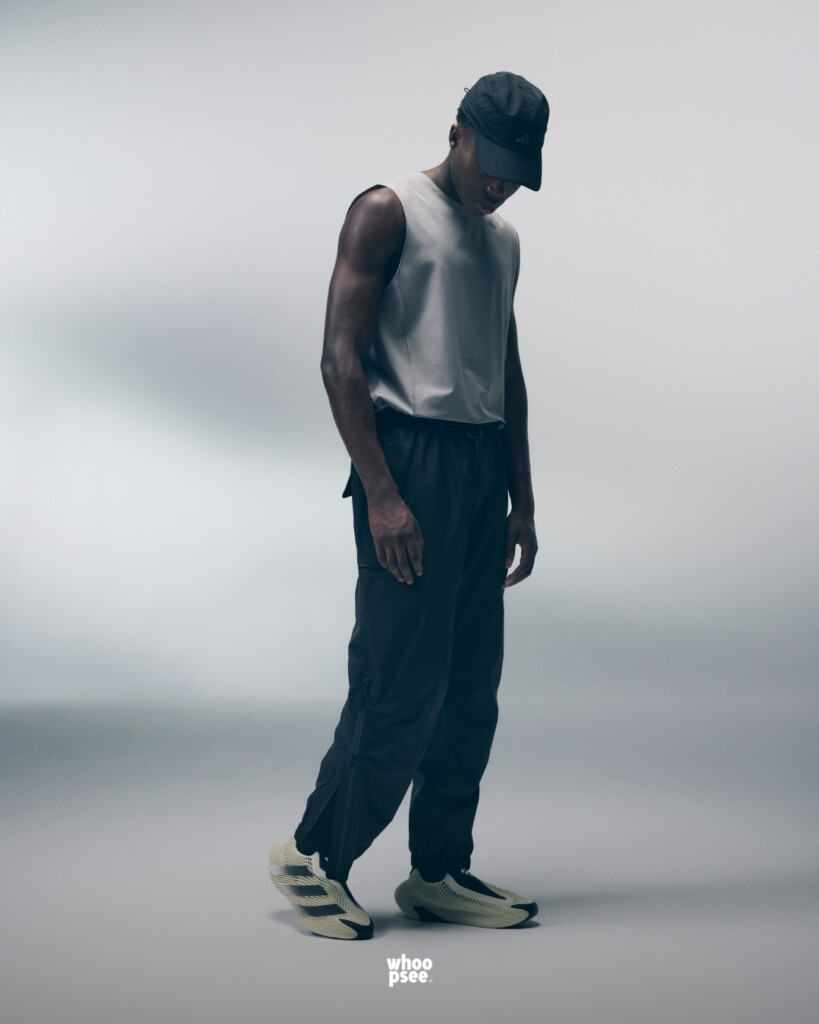
In my opinion, the men’s collections were particularly successful. Isabella “Zaz” Alvarino’s (USA) collection, Hot Nerds—dedicated to her late friend Jay—creates tailored silhouettes that balance masculine heritage with personal reinvention. She’s managed to capture all of this: Jay is everyone’s friend; he is my Max, my best friend who is afraid of nothing and everything at the same time, and embodies in his clothes all the love for the world he possesses, in bright colors and slightly retro shapes, which speak of a man who existed yesterday, exists today, and will exist tomorrow in the life of a new woman, bringing that lightness that reminded me a bit of Dries, in its astute balance, without becoming either comical or satirical. Jirat Jitdee’s (Thailand) imagery is also fresh; in Cool Back Home, he depicts the arrival in Bangkok of fiercely anachronistic provincial youths, reinterpreting menswear through altered proportions and pop references. Another interesting proposal comes from Jakob Nittmann, Unlearning Neutral (Austria), where colors shaped the silhouettes, enhancing them: an almost painterly chromatic work, in the style of Matisse or Gauguin. The knitwear by Lusine Mkrtchyan, The Parajanov Street (Armenia), was exquisite, featuring truly remarkable craftsmanship. The accessories were beautiful, especially the leather goods and bags: drawing on a clear Tuscan tradition, yet with a decidedly contemporary flair found throughout the collections presented.
Overall, it struck me as a strong showing: a generation of young designers who know how to have fun while striking a balance between desire and freedom. A prestigious jury, composed of some of the most renowned figures in culture and entertainment, has been tasked with selecting the “Best Collection 2026.” Evaluating the collections to award this year’s coveted title are Eva Cavalli, fashion designer and model; Tuomas A. Laitinen, Fashion Director of SSAW Magazine; Danae Mercer, journalist and body positivity content creator, Eugene Rabkin, founder and editor of StyleZeitgeist magazine, and actress Simona Tabasco. The winner will be announced on Polimoda’s official channels in the coming days.
[📷 Courtesy of Polimoda]