There is something extraordinarily contemporary about the fact that the most iconic material of Spring/Summer 2026 was invented nearly a century ago. In a season that seems to have definitively put the excesses and over-the-top elements of post-pandemic fashion behind us, nylon emerges as the quiet star of the international runways, appearing across diverse collections with surprising ease.
The history of nylon dates back to 1935, when American chemist Wallace Carothers developed the first entirely man-made synthetic fiber for DuPont. Originally conceived as an industrial innovation destined to revolutionize the textile market, the material quickly won over the public thanks to the famous women’s stockings that cemented its success in the late 1930s. During World War II, nylon was used to manufacture parachutes, ropes, and military equipment, revealing qualities that still define its appeal today: lightness, strength, and extraordinary versatility. In the postwar period, it gradually made its way into sports and technical apparel, but its true cultural breakthrough came in the 1990s, when Miuccia Prada recognized its aesthetic potential, transforming it from a utilitarian material into a symbol of contemporary sophistication. From that moment on, nylon ceased to be merely a synthetic fiber and became a language—an alternative way of understanding luxury.
More than thirty years after that insight, the Spring/Summer 2026 collection seems to carry on its legacy with renewed conviction. While “quiet luxury” had brought the nobility of natural fibers—from impalpable cashmere to the finest linens—back into the spotlight, today’s collections suggest a different hierarchy of desire. Prestige is no longer measured solely by the rarity of the raw material, but by the quality of the design, the fabric’s performance, and its ability to adapt to the demands of contemporary life. It marks the rise of what we might call “technical luxury”: a form of luxury less tied to ostentation and more closely aligned with the idea of advanced functionality.
No one interprets this transformation better than Prada. In the Spring/Summer 2026 Men’s Collection designed by Miuccia Prada and Raf Simons, the silhouettes become lighter, the volumes seem suspended, and technical fabrics replace any structural rigidity. Nylon does not appear as a sports-inspired element but as a tool for envisioning a new elegance—one that is freer, more spontaneous, and more in tune with reality.
But it is perhaps Saint Laurent that has offered one of the most surprising interpretations of the season. In the Spring/Summer 2026 collection, Anthony Vaccarello elevates nylon to a material of seduction, definitively distancing it from its purely technical image. Sheer trench coats, ethereal duster coats, and ultra-light outerwear float around the body with an unexpected sensuality, transforming a synthetic fiber into an almost ethereal material. Even the iconic windbreakers take on a new aesthetic dignity, suspended between sportswear and haute couture. Neutral tones coexist with more intense accents of red, orange, and petrol blue, confirming the versatility of a fabric that no longer needs to justify its presence in the luxury wardrobe. And then there are the maxi dresses with theatrical ruffles, which have already gone viral and become a symbol—one of the few, we might add—of last season’s trends.
At the same time, Japan continues to lead the way in cutting-edge materials research. Brands such as Aton, Auralee, Comoli, and Goldwin work with nylon with an almost artisanal sensibility, subjecting it to washes, dyes, and treatments that radically alter its appearance. In many cases, the result resembles natural fibers weathered by time—soft, matte surfaces that eliminate any association with the traditional synthetic world. This research does not aim to astonish but to perfect, elevating the fabric to an increasingly refined and sensory dimension.
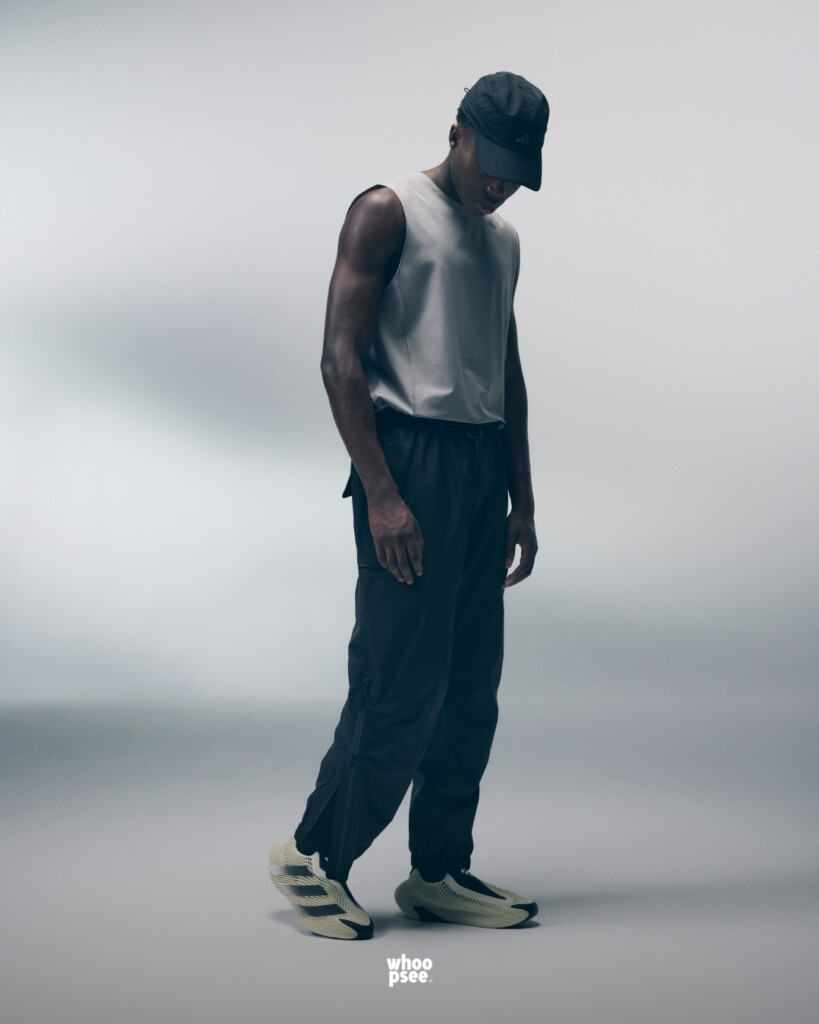
The outdoor world also continues to exert a strong influence on the language of contemporary fashion. In recent years, Stone Island, Moncler, and And Wander have helped shape a new aesthetic in which performance and desirability coexist without contradiction. In the Spring/Summer 2026 collections, this fusion now appears to be here to stay. Ultralight parkas, technical overshirts, windbreakers, and performance pants no longer belong to a specialized wardrobe but have become essential elements of everyday attire. The distinction between luxury, sportswear, and outdoor apparel is gradually dissolving, giving way to a new category that takes shape precisely through materials such as nylon.
Even designers and fashion houses traditionally distant from technical aesthetics seem to have picked up on this shift. From Louis Vuitton to Loewe, including OAMC, Craig Green, and the world of Issey Miyake, synthetic fabric is being used to create movement, lightness, and new proportions. It is no longer just a matter of functionality. It is a matter of language. Nylon allows designers to sculpt volume without weighing it down, to construct complex silhouettes while maintaining a sense of extreme lightness, and to envision an elegance capable of engaging with the present.
In an era when fashion increasingly reflects on the relationship between desire and utility, between beauty and function, nylon embodies a new form of luxury. A luxury that does not stem from nostalgia for the past but from the ability to respond to the contemporary world. For decades, synthetic fibers have sought to imitate natural ones. Today, they no longer need to. In Spring/Summer 2026, nylon finally asserts its own identity without compromise, becoming the material that best embodies a fashion where innovation, lightness, and research matter as much as—if not more than—the material itself.
[📷 ysl.com]