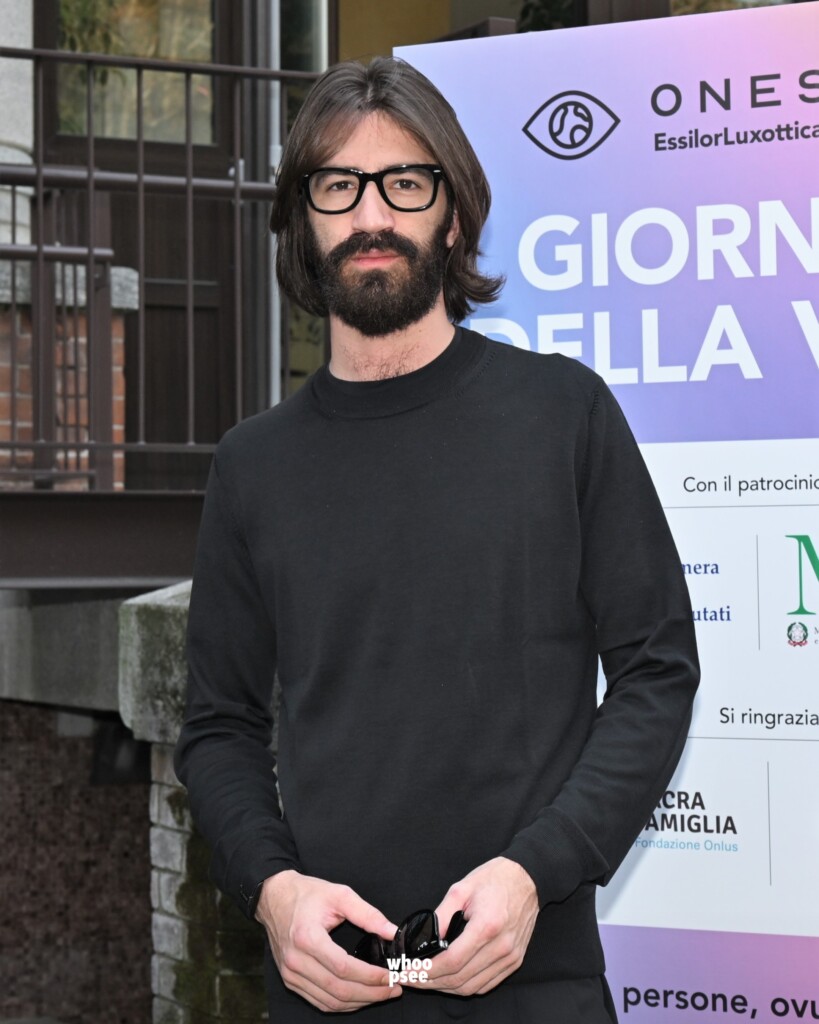
At just twenty-seven years old, he is already considered one of the most remarkable voices in contemporary European theater. Yet, when looking at Mario Banushi’s work, what strikes one is not so much the precocity of his success as the maturity of his vision. The Albanian director, who grew up in Greece and was awarded the Silver Lion at the Venice Theater Biennale, seems to possess a rare quality: that of transforming personal wounds into images capable of speaking to everyone.
Banushi belongs to that generation of artists who do not feel the need to explain everything through words. In her performances, the narrative unfolds through bodies, light, objects, and silences. Emotions are not explicitly stated: they emerge slowly, like memories resurfacing from the past. At the Venice Biennale, she presented “Romance Familiare” in its entirety for the first time—the trilogy that brought her to international attention. Three performances—Ragada, Goodbye Lindita, and Taverna Miresia—that are rooted in his personal history, in a childhood spent between Albania and Greece, and in his family’s stories. But to simply call it an autobiographical trilogy would be reductive.
What Banushi has created is a veritable landscape of memory, inhabited by figures who seem to emerge from a dream. Mothers, sisters, grandmothers—women who bear the weight of family history and become universal symbols of care, sacrifice, and resilience. At the heart of her work lies the family. Not the idealized family of perfect photographs, but the real, fragile one, marked by absences, separations, migrations, and bereavements. A family that continues to live on through the gestures, memories, and scars it leaves within those who remain.
It is no coincidence that the first chapter of the trilogy is titled *Ragada*, a Greek word meaning a stretch mark or a crack in the skin. An image that seems to encapsulate the author’s entire poetic universe: wounds may fade, but they never truly disappear. Born in Albania in 1998 and raised in Athens after his family moved there, Banushi has often spoken of how memory drives his artistic creation. The places of his childhood, the smells of home, family traditions, and the experience of emigration become theatrical material, yet never take on a documentary form. Everything is transformed into a vision.
And this is perhaps her most distinctive trait: the ability to make the deeply personal universal. In her performances, the home is a recurring motif. It is both a refuge and a prison, a place of birth and loss, a space where love and violence, protection and abandonment coexist. The rooms become territories of the soul, minimalist sets imbued with symbolic meaning. Even when a male figure appears, he seems to exist primarily through his absence. In the trilogy presented in Venice, the female universe dominates the scene: mothers, daughters, and sisters preserve the family memory, while the male presence manifests as emptiness, nostalgia, and absence. A choice that makes the narrative of mourning and distance even more powerful.
Banushi’s strength lies precisely here: in her ability to convey what often defies words. Her performances do not follow a linear narrative, but unfold through images, apparitions, and rituals. They seem like dreams materializing before the audience’s eyes, suspended between reality and imagination. This is why the Biennale’s recognition takes on special significance. It not only celebrates the talent of a young director but acknowledges an artistic vision that is already surprisingly fully formed. In a theatrical landscape often dominated by the need to explain and interpret everything, Mario Banushi instead chooses the more difficult path: evocation.
And perhaps this is precisely why his theater has such a profound impact. Because behind every image, every gesture, and every silence lies something that belongs to all of us: the need to remember where we come from, the people we have loved, and the absences that continue to shape our story.
[📷labiennale.org]