Maria Callas was not only the voice that revolutionized the world of opera, but also a figure capable of transforming every gesture, every appearance, and every aesthetic choice into an image destined to remain in the collective memory. An eternal muse of bel canto and, at the same time, a style icon ahead of her time, “La Divina” possessed that rare quality found in great personalities: the ability to express herself through a powerful, recognizable, almost theatrical visual language.
Her image did not stem from a simple passion for fashion, but from something deeper. Maria Callas was a woman of contrasts: fragile and monumental, disciplined and passionate, aristocratic and tormented. Her style reflected the complexity of her personality—a stage presence that carried over even offstage. Every dress, every piece of jewelry, every detail contributed to the creation of a character who was both real and mythological.
From Violetta Valéry in *La traviata* to Cio-Cio-San in *Madama Butterfly*, including *Norma*, *Tosca*, and the great tragic heroines of the operatic repertoire, every performance by Callas left an indelible mark. Her artistry was not merely vocal: it was physical, emotional, and visual. The audience did not simply listen to a singer; they witnessed the emergence of a figure capable of embodying pain, love, revenge, and passion with an almost supernatural intensity.
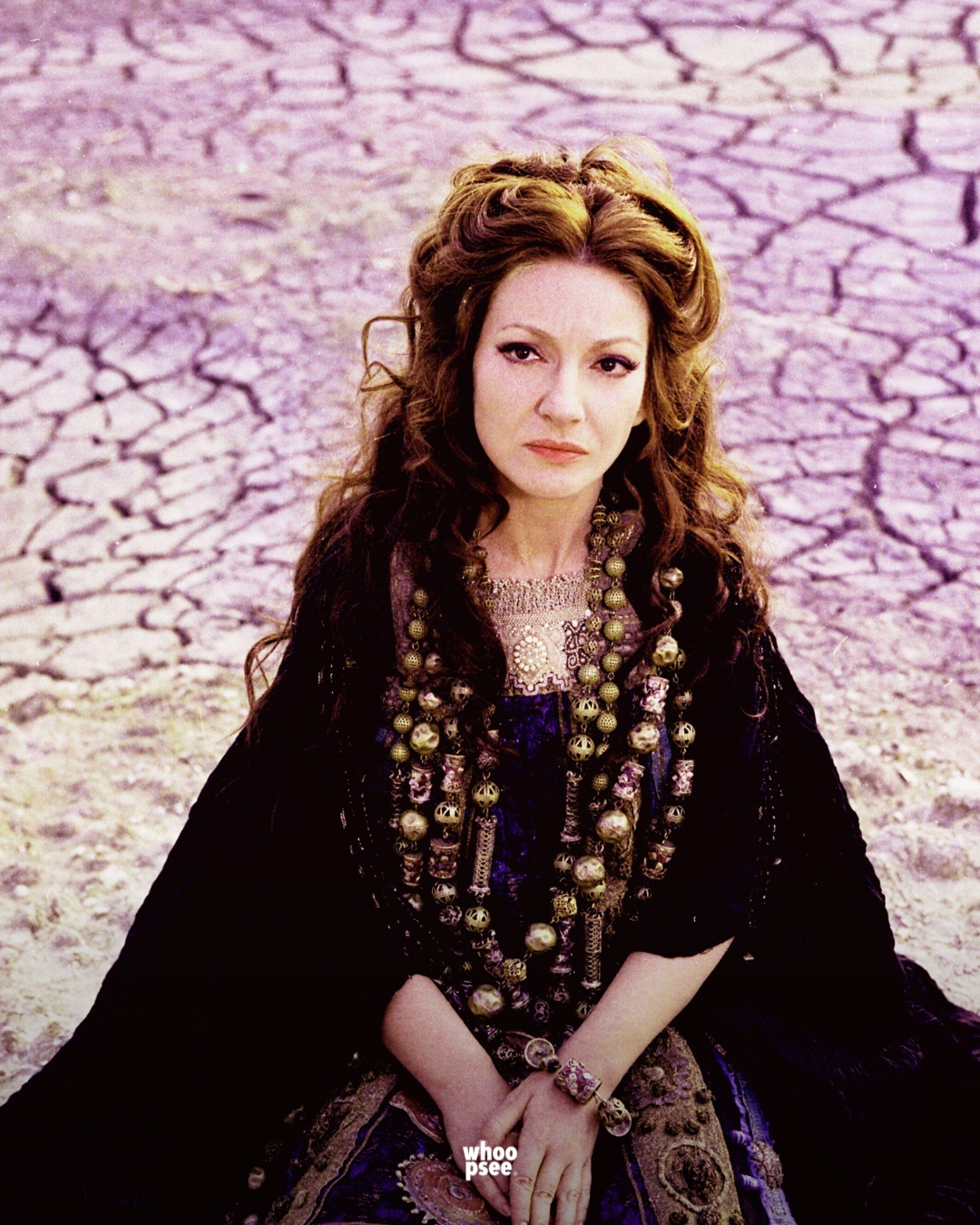
This same expressive power found another form in her encounter with cinema and with her friend Pier Paolo Pasolini. Her collaboration on *Medea* marked a unique moment in the singer’s career: stepping away from singing, Callas brought all her dramatic intensity to the screen, lending her face and her intensity to an extreme, rebellious, and tragic woman from the great Greek mythological tradition. Medea was a role that seemed tailor-made for her: a passionate, unconventional figure, suspended between ferocity and vulnerability, between humanity and fate.
The film’s costumes also helped create an extraordinary visual universe. Callas-Medea appears enveloped in an archaic and powerful aesthetic, where Hellenic tradition is reinterpreted through a language rich in symbolism: precious fabrics, ornaments inspired by antiquity, ritual-like jewelry, and forms that evoke a distant and mysterious past. These were not merely stage costumes, but true narrative tools capable of amplifying the character’s mythical dimension. La Divina seemed almost sculpted in light, an ancient queen brought back to the present.
But Maria Callas’s relationship with the world of textiles and fashion was not limited to major public appearances. In her private life, the singer had a particular fondness for the caftan, especially in its most opulent and evocative forms: Moroccan caftans, adorned with damask patterns, embellished with embroidery, intense colors, and luxurious color combinations.
The caftan seemed to perfectly embody her taste: a dramatic yet natural garment, capable of draping the body without constricting it, elegant without being ostentatious. In its loose fit and understated theatricality, there was something that truly evoked Callas: the ability to command a room with her mere presence.
The charm of the caftan, after all, lies precisely in its history and its ability to transcend cultures and generations. Originating as a traditional garment worn in various parts of the East and later becoming a symbol of international sophistication, it has always evoked a sense of travel, freedom, and exoticism. It is a garment that evokes faraway places, Mediterranean markets, sun-drenched atmospheres, seaside homes, and summer sunsets.
Even today, the caftan retains its evocative power. It is one of the few garments capable of serving as an entire wardrobe: light and sophisticated on the beach, it instantly becomes elegant for an evening dinner, especially when crafted from fine silks, featuring handcrafted embroidery, or adorned with jeweled embellishments. Its strength lies precisely in being a one-of-a-kind piece, a style statement that requires few other elements.
Its great success in Western fashion is linked above all to the 1960s and 1970s, when the fascination with the East, folklore, and travel reached its peak. It was a time when the international jet set was discovering new aesthetic worlds and transforming the exotic into a form of everyday elegance. Figures such as Marella Agnelli and Marta Marzotto masterfully interpreted this trend, becoming symbols of a stylish aristocracy capable of blending tradition, high society, and personal expression.
During those years, even great designers recognized the potential of the caftan and elevated it to a symbol of contemporary luxury. Yves Saint Laurent made it one of the most iconic pieces of his vision, which was inspired by the interplay of cultures, colors, and Moroccan influences. Emilio Pucci, too, with his unmistakable world of prints, movement, and vibrant colors, helped transform the caftan into an emblem of the elegant freedom of modern women.
It’s no surprise, then, that even today the caftan continues to hold a special place in the wardrobes of women who love timeless style. Whether it comes from the collections of major fashion houses or was purchased during a trip to a faraway place—perhaps from a local artisan—it always retains that unique ability to tell a story. Perhaps this is precisely why Maria Callas loved it: the caftan was not simply a garment, but a narrative. Like her voice, it had the power to evoke lost worlds, deep passions, and distant atmospheres. It was a bridge between everyday life and the theater, between the woman Maria and the myth of “La Divina.”
After all, Callas didn’t just wear fashion—she embodied it. And the caftan, with its understated opulence and timeless charm, was one of the most authentic ways Maria could express herself: a tragic queen, a traveler of the soul, a woman capable of transforming every detail of her life into an unforgettable scene.
[📷 IPA]