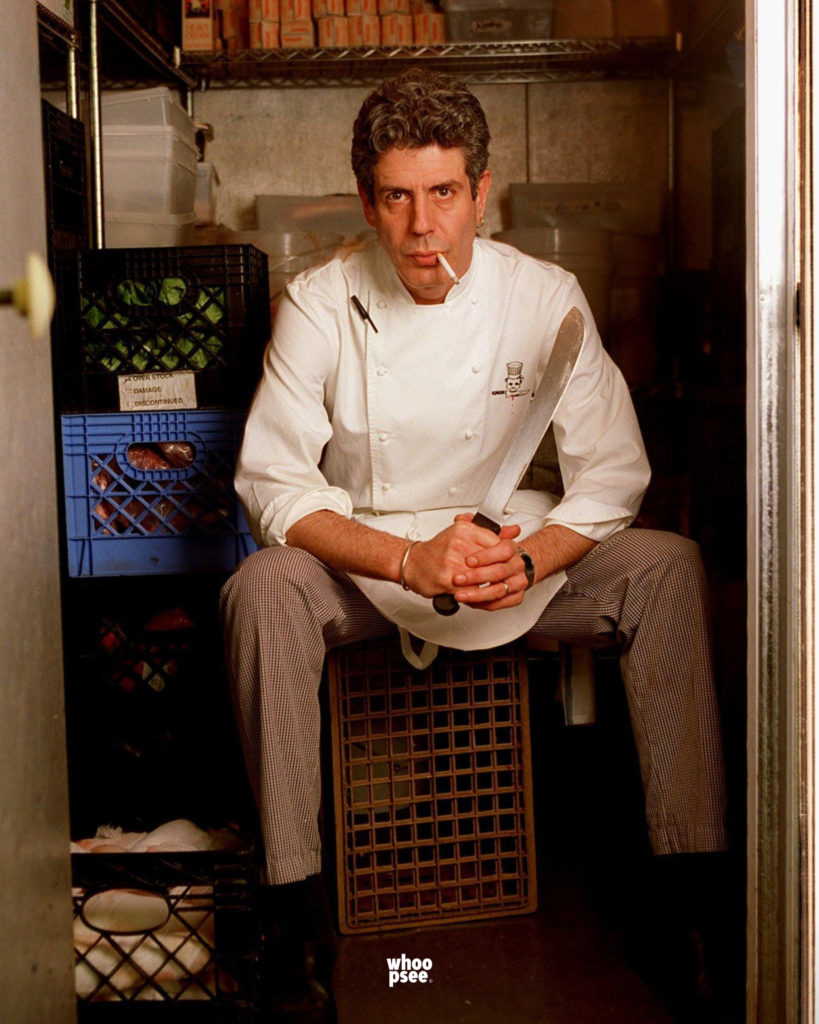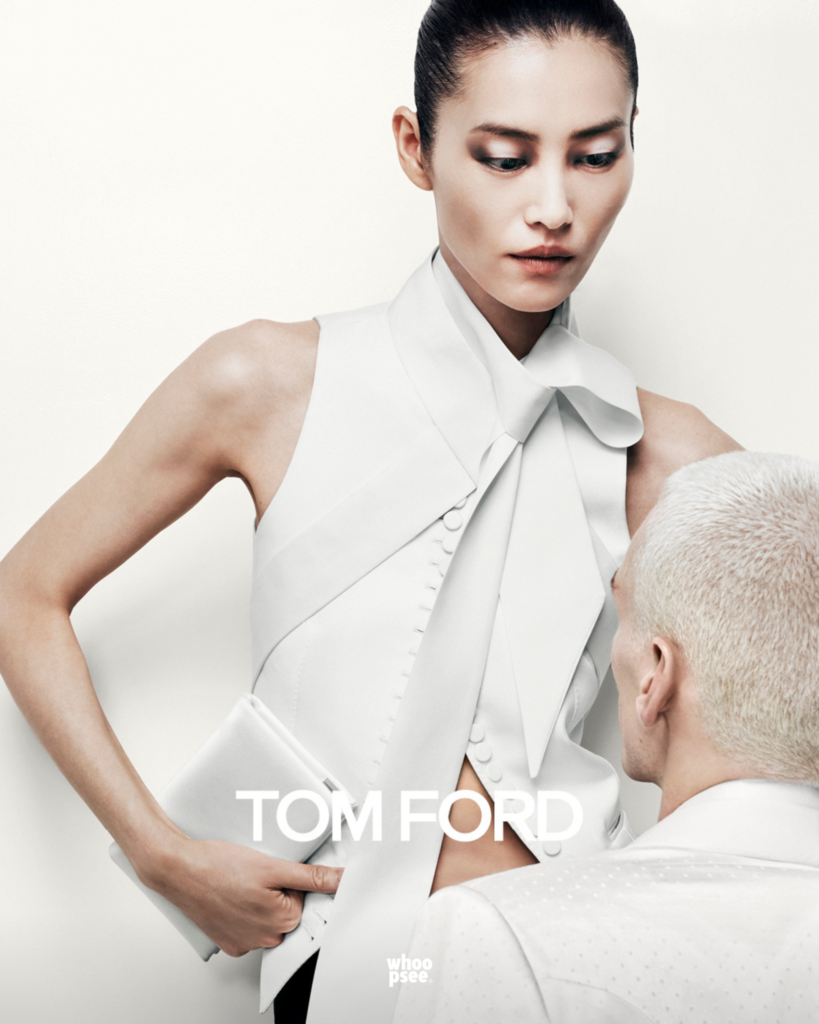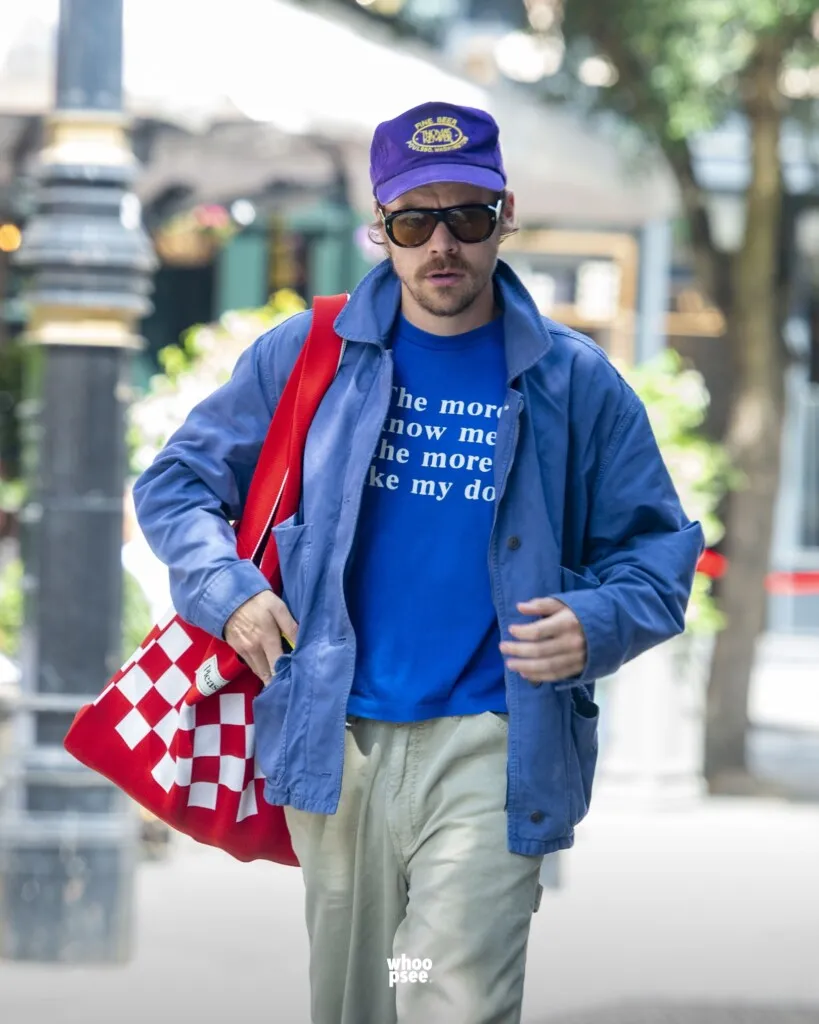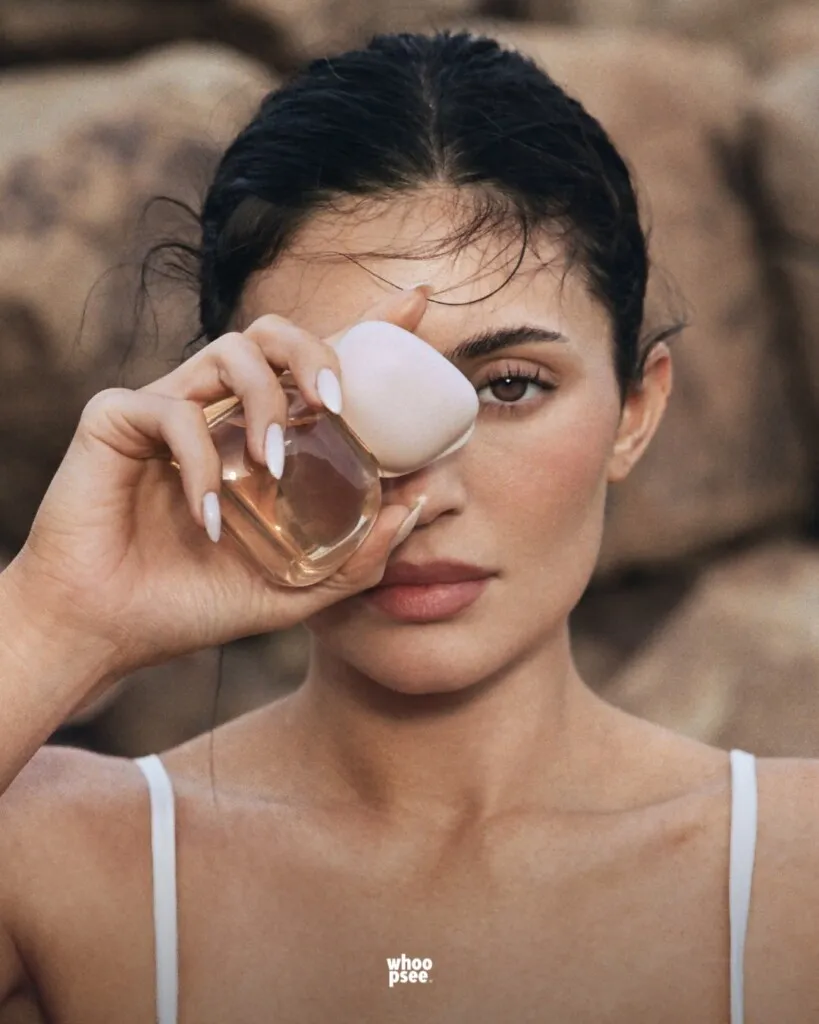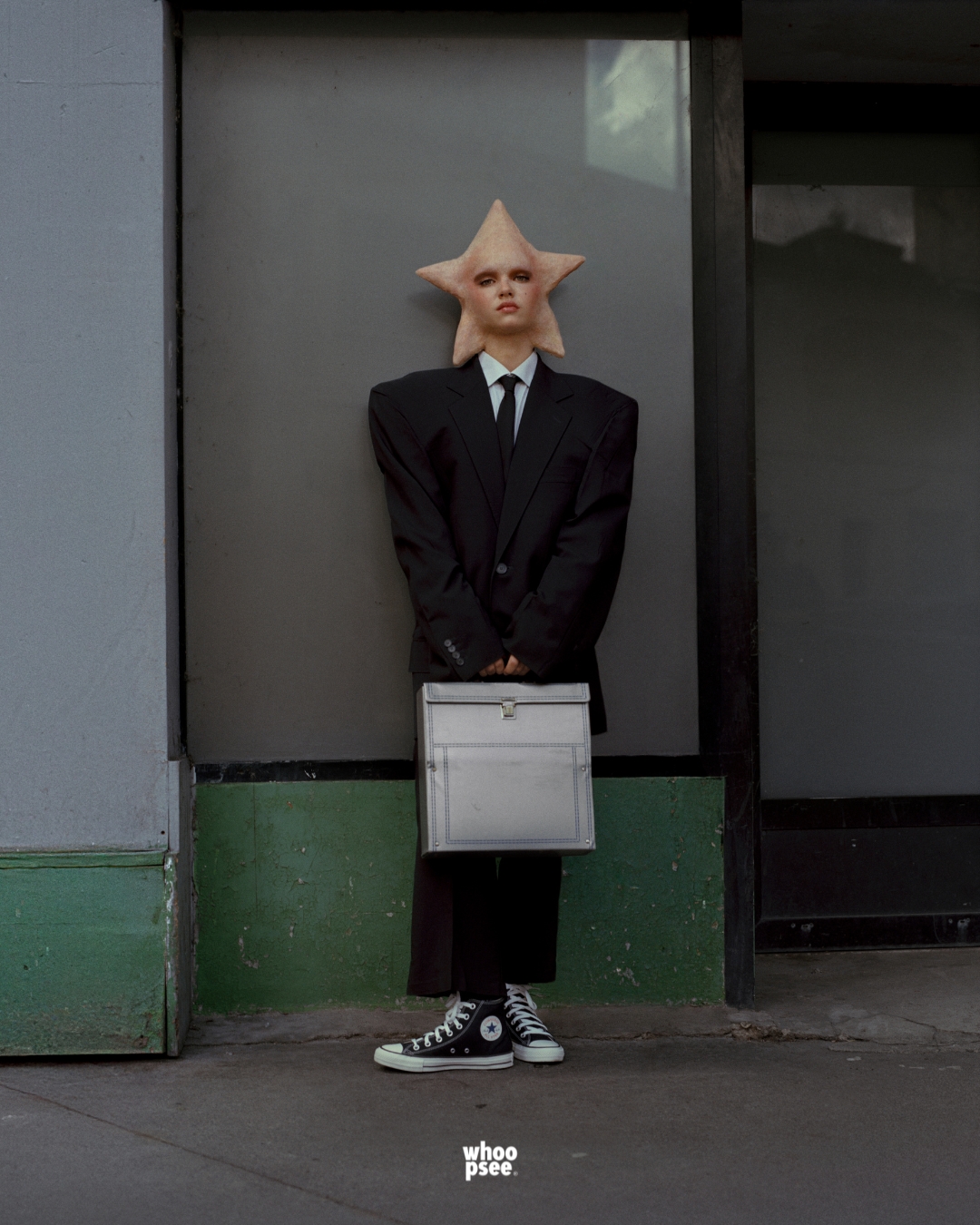
I’d like to start with you. Your taste, your world, where you personally draw inspiration from, because I think photography always tells us something about the subject but maybe even more about the person taking the image. What do you enjoy? What are your passions, images, aesthetics, a film or book that you always come back to?
I watch a lot of movies, reality TV and like to scroll through Internet Archive and obscure corners of YouTube. I always find myself going back to the films and videos of David Lynch, David Cronenberg, and Chris Cunningham. I have started collecting a lot of books, toys and puppets, and I feel there is so much to learn about people and conditioning through the history of objects. As for photographers, I often go back to the work of Diane Arbus, William Eggleston and Guy Bourdin. I am also very inspired by nightlife and everyday life, observing people in states of boredom or leisure. I am very interested in different forms of domestic life and family relationships. I like to peek into people’s homes and imagine their lives, for the same reason I love to scroll down to the very first posts on a stranger’s Instagram.I go to malls, markets and party stores for inspiration – places where I can see many different kinds of people and impressions all at once, while also looking for useless objects.
How much of what you capture is constructed and how much do you leave to chance?
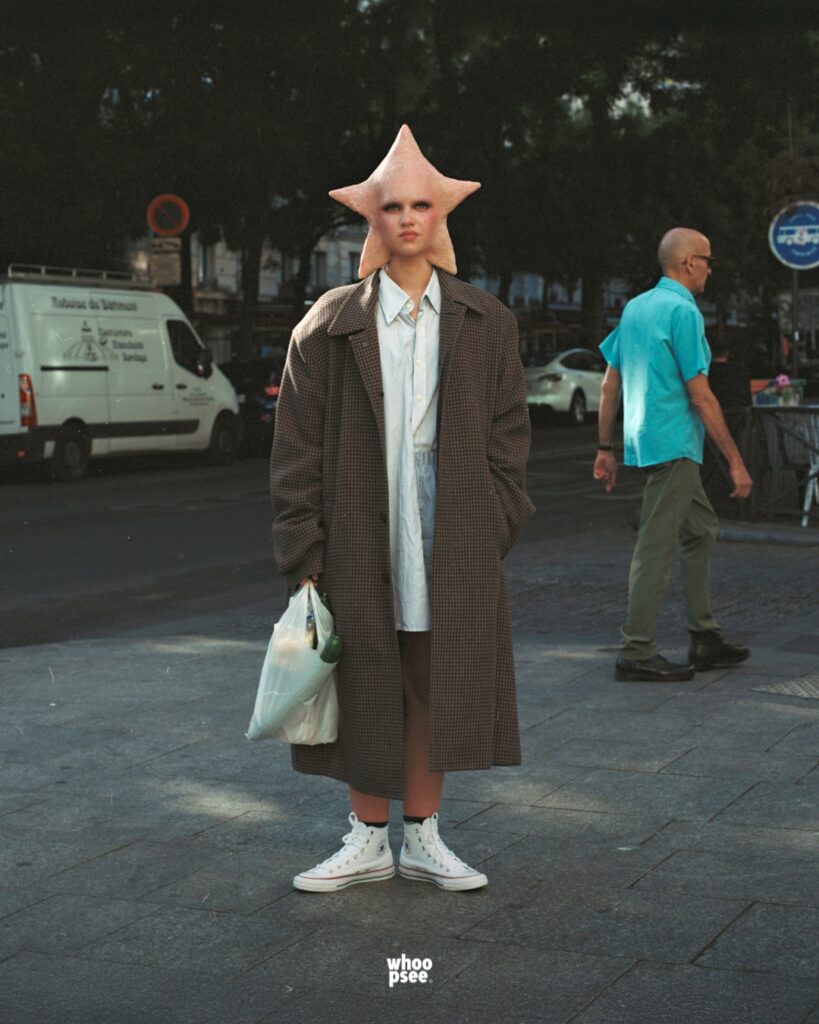
This varies from project to project. My work is generally quite staged and constructed. I collect a lot of photobooks, and many are by documentary photographers, but when it comes to my own work I definitely feel a stronger desire to transform the world around me rather than capture it “as is.”
I usually imagine images long before I take them. That’s why I prefer to photograph in real locations, especially lately in public spaces. I love those serendipitous moments that can happen. Sometimes that passerby in the background, with his morning attire, is the icing on the cake.
What do you do when reality resists the image you had in mind? Or when you never really have an idea before you shoot?
Being very demanding and meticulous can be a strength, but it can also become your Achilles heel.
In the end, things always turn out a little (or a lot) different than you had imagined, however, it is often a change for the better.Don’t stifle your ideas by trying to control everything too rigidly-that’s what makes them small. The magic will wear off. Just like in relationships. If I can’t find exactly that prop, is it really a problem? Actually it probably is (lol), but I’m trying to be less obsessive about it today, so that leaves me time to wash my hair and doomscrolling.
Whether it’s for a fashion brand, a magazine or a personal project, I always see underground influences in your work. Is this an important source for you?
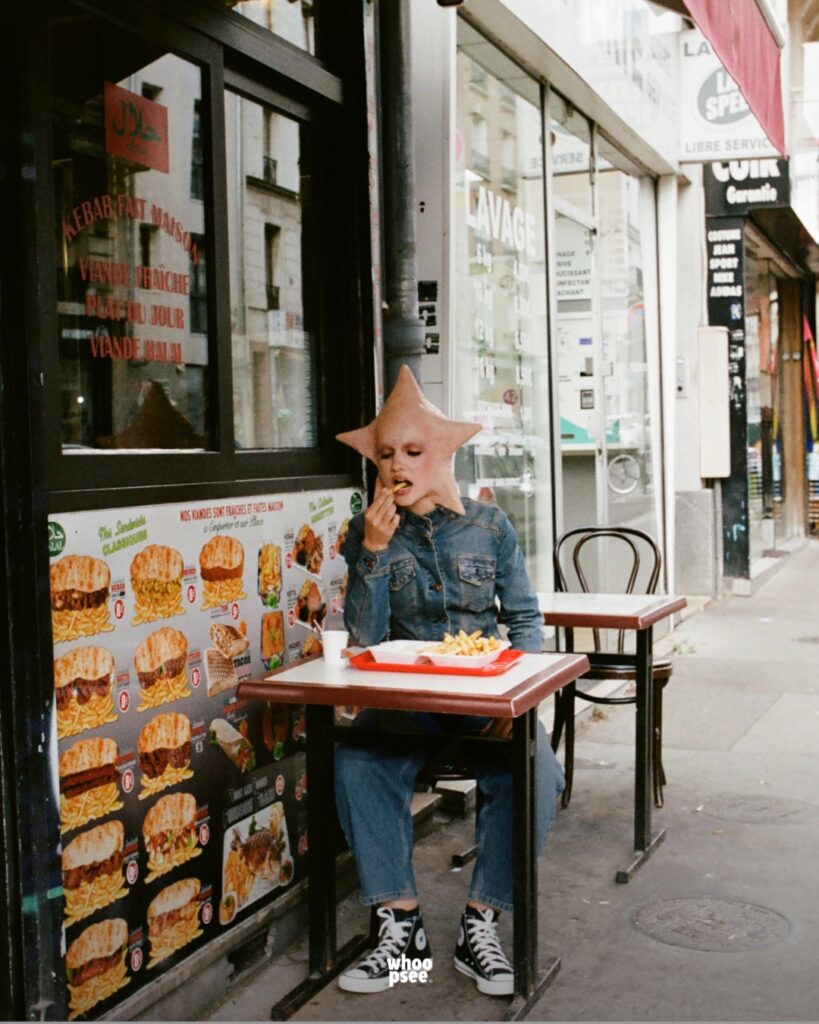
I am actually inspired by both countercultures and excessive normality.The extremes are actually much closer than you might think.

Working with fashion can be challenging but also difficult. How do you manage the creative dialogue between what the brand or magazine that hired you wants and your vision?
I generally have a fairly specific aesthetic, so I am usually approached with that in mind. However, sometimes brands become hesitant (or a bit paranoid) about more “pushed” visual ideas or translations. Although they want “me for me,” they end up wanting a more toned-down version. Sometimes the commercial nature of projects limits how much risk one can take. My work for Converse was, in this sense, a truly unusual project: a combination of total creative freedom (I conceived the campaign from start to finish). From a major brand this is a rarity. And interestingly, the campaign was a success both for the brand and for me. This shows what can happen when you allow more room for play and experimentation.
Do you think your images are tied to a specific moment or do you try to resist this specificity even in space-time?On a stylistic level I always feel that they come from a utopian place, impossible to grasp completely. What makes my work special, in my opinion, is the mix of vintage taste and futuristic gaze. The viewer cannot temporally place the images or understand where they come from.
Aesthetically, the 1960s through the 1990s or even the early 2000s are definitely a recurring element of my work. But I don’t want to remain tied to a specific era or seek an “authentic” representation of a certain time. The contemporary always returns in my work. I am very interested in current technological developments and how they relate to our humanity. However, despite this interest in modern technology, I often return to a more “analog” and traditional language. I am also very interested in how we navigate states of “hyperreality” in the age in which we live. This is intertwined with a love of fantasy, science fiction, mythology. The possibility of being “in” and “out” of reality at the same time. How (im)possibilities merge with real life and coexist in parallel. Perhaps this is what makes it difficult to place my work in a specific time.
Is there anything you have photographed that has changed in meaning over time? And in general, what is your relationship with your past work?
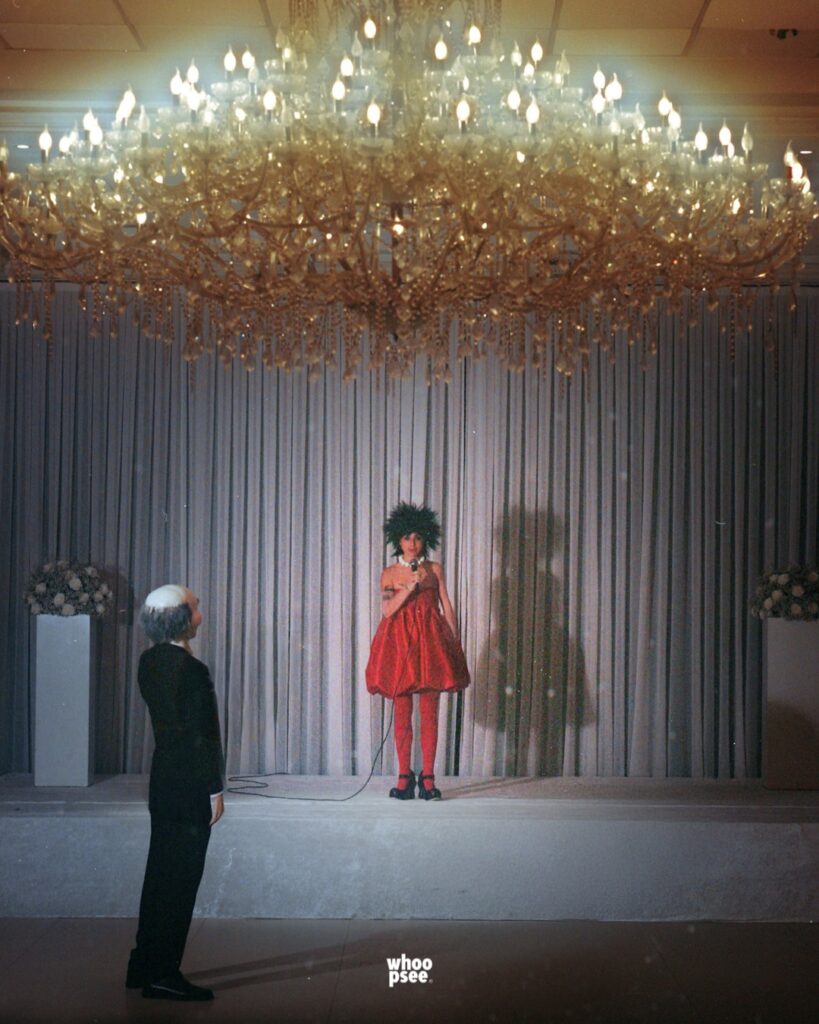
As with (probably) most creatives, the relationship with my previous work is up and down. It changes over time. Looking back, you are often faced with aesthetic choices that you would make differently today. I recently looked back at an old project, my most documentary. It was a very vulnerable series of portraits that I ultimately never published, although I am fond of it. Since then time has passed and time, inevitably, changes things. The person I photographed is no longer with us. This obviously changes the way I regard the images. The times almost seem to overlap. The process of “looking back” has raised many questions about agency, ownership, and the relationship between photographer and subject. How much do we owe to the person with respect to his or her commitment to the project and how much to his or her surviving family and friends? Questions that have yet to be answered.
How important is editing in defining the final image versus the shot of the moment?
Post-production can take as much time as pre-production, for me, because editing is a fundamental part of my work. While editing and editing images I can really accentuate my vision.
But editing always runs the risk of turning into an endless cycle of retouching, where a project is never really finished because there is always “something to fix.” Excessive perfectionism doesn’t always help the final image, so I try to keep it in check. I’m training myself to guide my editing process by asking myself questions like, “What feeling do I want this image to convey?” That way, for example, I find it easier to come up with a certain color tone.
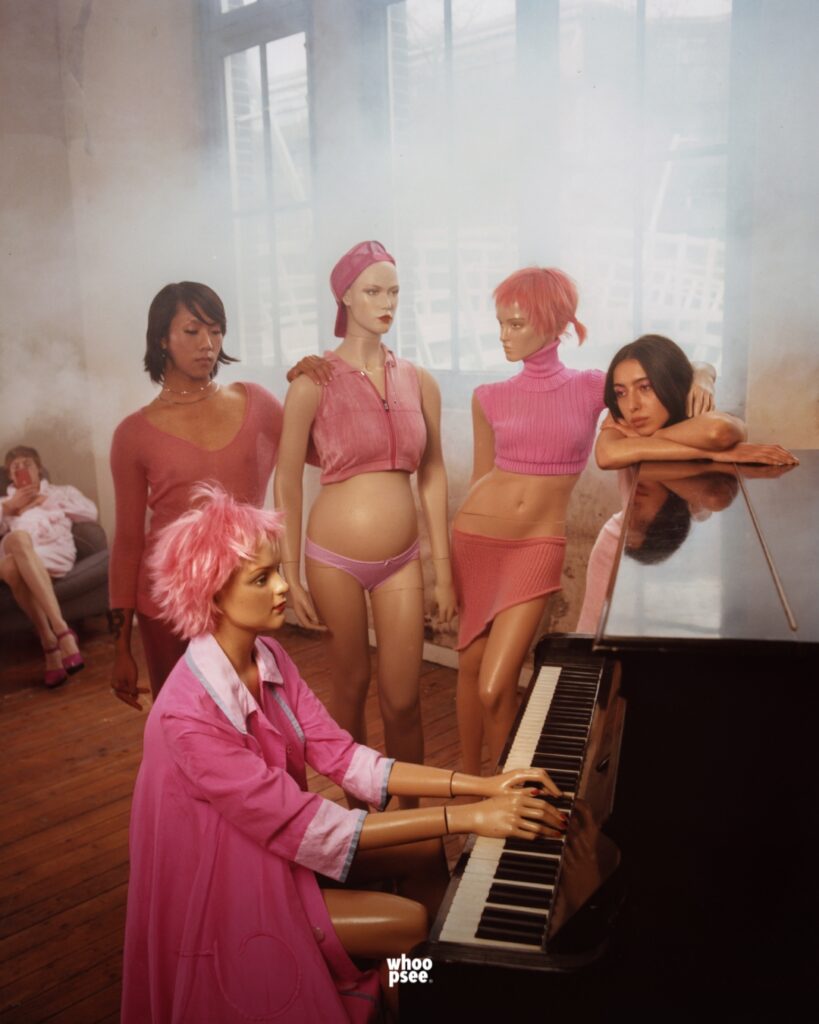
What kind of tension are you looking for in an image? Or do you rather look for a resolution within it?
I try to give the people I photograph some understanding of the scene they are in. But not too much: I like them to remain slightly in the unknown. The relatively absurd situations in which I place my characters greatly amplify this feeling of unease. I am interested in moments of dissociation and emotional numbness, often when people are overwhelmed but at the same time detached from the intensities of the world. I often place my models in states of “absence,” immersed in ordinary, everyday gestures or activities. Another tension present in my work is fragmentation. My images often evoke scenes from stories. In this way they deny the viewer true resolution, because “essential” parts such as the beginning and the end are absent or unknown.wings” such as the beginning and the end are absent or unknown.
[📷 Courtesy of Lois Cohen]
IG: loysicohen