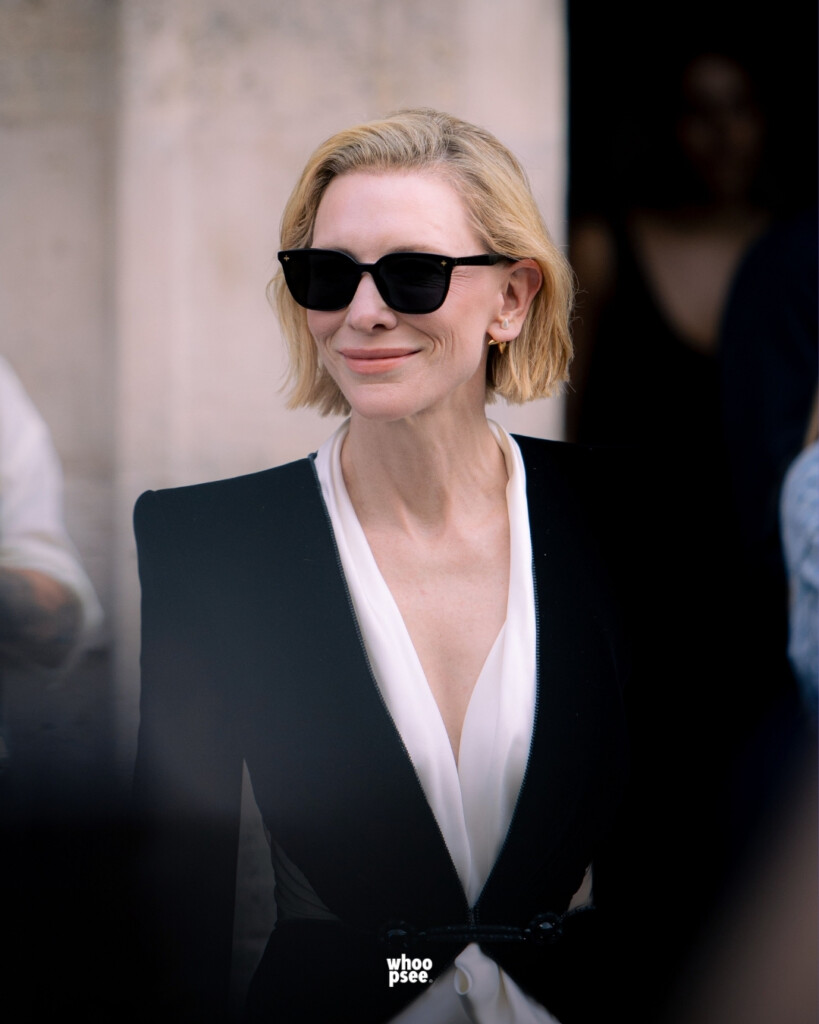
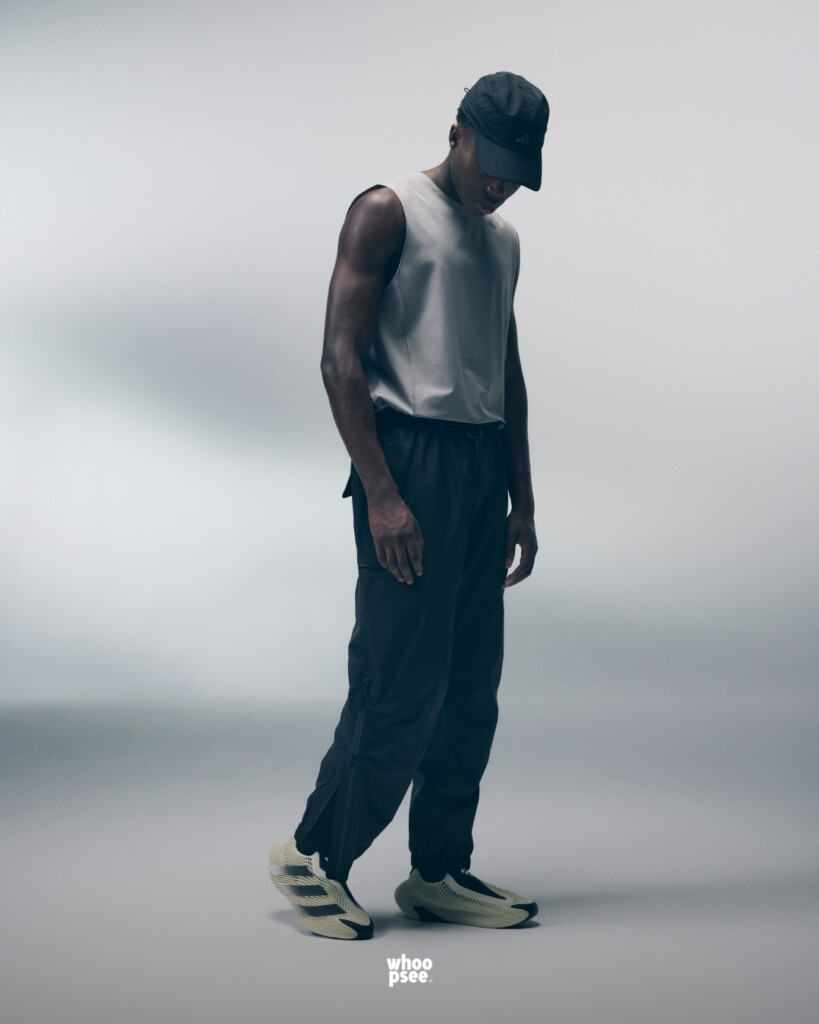
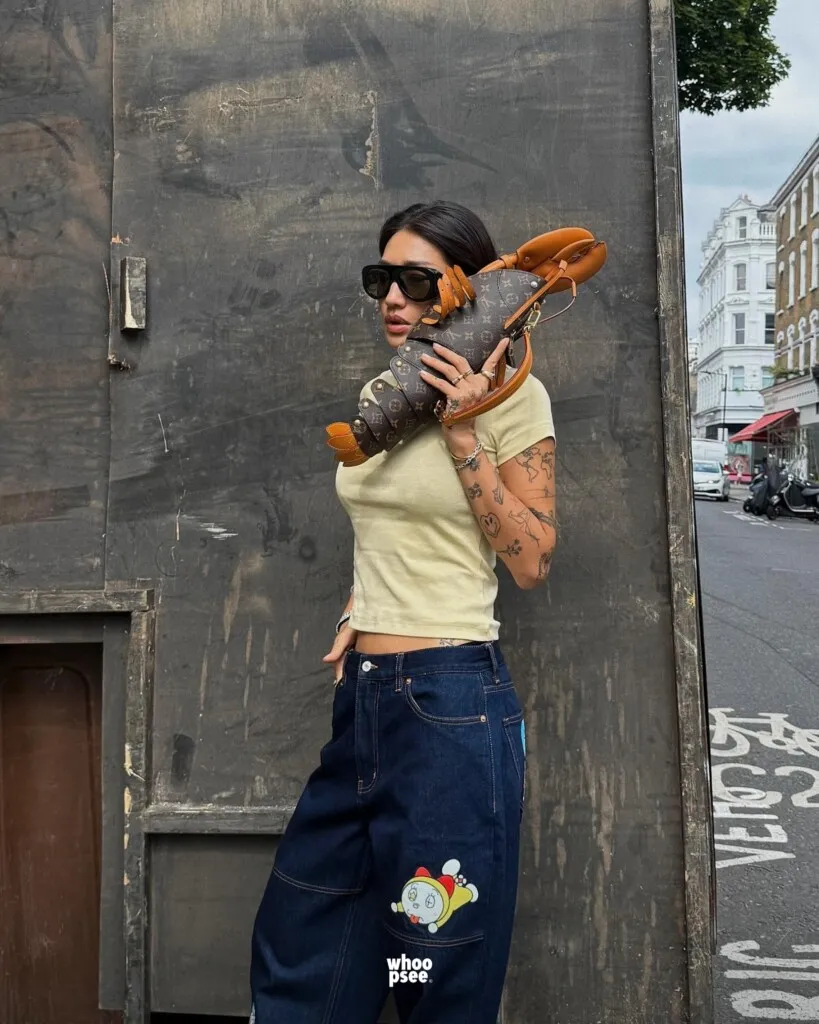
Fashion’s Enfant terrible, Jean Paul Gaultier’s baton passed last year to the very young Duran Lantink, a designer known for a strongly experimental, irreverent and provocative streak towards dress codes. The inspiration for this Fall-Winter 2026 collection, Lantink recounts in an interview, would start with Marlene Dietrich, a German actress and singer considered among the greatest icons of cinema in the first half of the 20th century. Even without knowing in advance, something of that imagery is clearly perceived: explicitly in a print reproducing Dietrich’s face on a dress worn by Alex Consani, but also in the opening and closing of the fashion show.
Here models draped in total black, with fiery red lipstick and gangster hats, seem to emerge from the fog like figures straight out of the Roaring Twenties, immersed in a nighttime atmosphere with a strong cinematic flavor. However, this powerful symbolic imagery, which could have been explored more consistently, dissipates in the main body of the collection. Indeed, jackets and blazers with plunging necklines or shirts that go so far as to turn into hoods alternate with looks that mix tailoring and sporty suggestions: K-way laces, nylon- or PVC-like materials, and functional details that interrupt the initial narrative.
Patchwork, Lantink’s true trademark, returns in mixing technical materials such as nylon with more structured suits, or in combining knitwear and overlapping fabrics. There is no lack of his usual provocative streak, here declined in the detail of the garter belt, applied over whole suits or pants as a deliberately exhibited element. An ironic and desecrating gesture that plays with erotic imagery, transforming a traditionally intimate accessory into a declared aesthetic sign.
The corset, Jean Paul Gaultier’s iconic code, returns in some looks, as do the prints. If last year they caused a stir with their explicit depictions of genitalia, here they are reinterpreted in an almost robotic key, drawing bodies that resemble rubber dolls. Toward the end, figures re-emerge completely shrouded in black, cloaked from head to toe, to a final look that almost goes so far as to deny the very form of the body, transforming it into a dark, undefined presence, like a shadow from another time.
In my opinion, it is these initial and final total blacks, evoking the aesthetics of the 1920s and 1930s, that are the most successful moments of the collection. The rest, on the other hand, appears as experimentation still in the process of being defined: sporty suggestions mingling with knitwear, velvet suits alternating with tailored suits, in a quest that seems more like an open process than a fully completed vision.
The difference from the previous collection lies here, however. If the past one was mainly a provocative and linguistic exercise, almost entirely built on the shock effect, this one seems to move toward more material and formal experimentation. Many looks are indeed more wearable and less dependent on the provocative gesture, although, we can say, definitely not for everyone.
[📷 Instagram: jeanpaulgaultier]