For years, a dried sunflower hung upside down in the rooms where I lived. It had followed me all the way to Amsterdam, through moves, homes, and seasons. It had been my eighteenth birthday gift: my friends knew how much I loved sunflowers and had given me a huge bouquet. From that bouquet, I’d chosen just one, let it dry, and amid boxes and cartons, it had come with me to another country. Over time, it had stopped reminding me only of that day; it had become a tangible fragment of a part of my story.
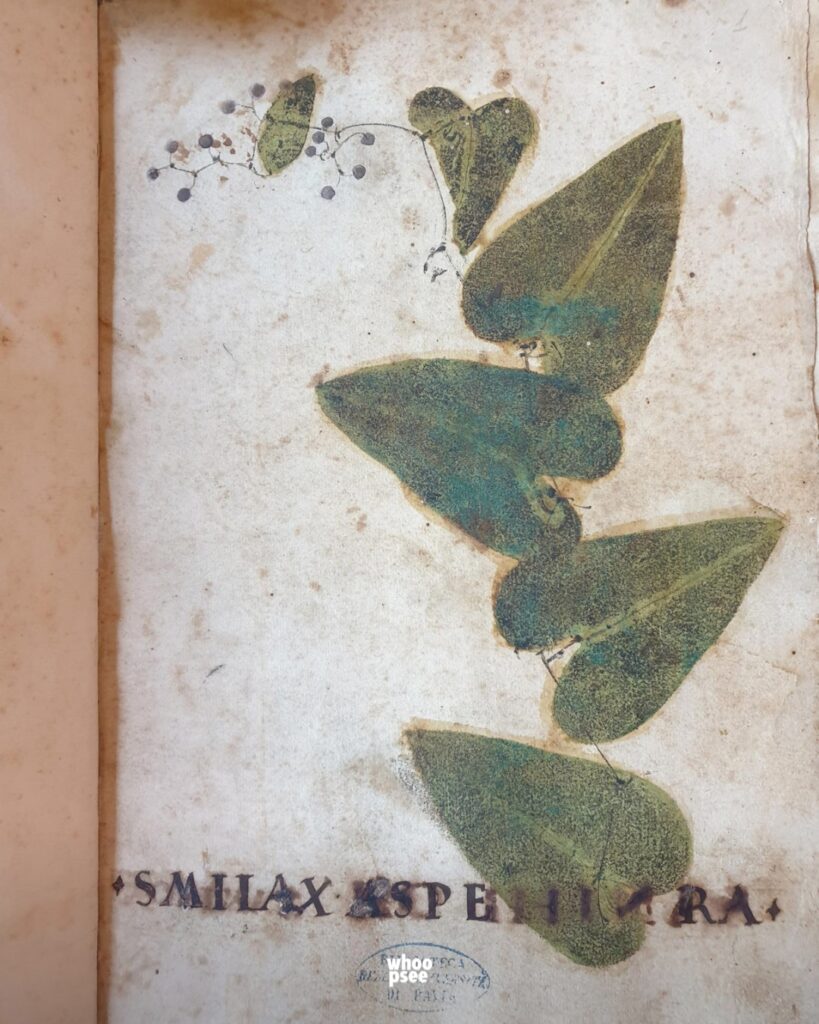
There is something deeply human about the desire to preserve a flower. We pick it while it’s still alive, let it dry, press it between the pages of a book, or hang it upside down, as if that gesture could freeze time. It is, in fact, an attempt to hold onto a place, a person, or a season of one’s life, giving memories a more tangible quality. What we now consider a gesture of affection is part of a much longer history. Herbariums originated, first and foremost, as scientific cataloging tools: a way to classify plants, understand their origin, behavior, and characteristics, and through them gain a deeper understanding of a region, its climate, and its ecosystems. In the early Middle Ages, herbariums were primarily illustrated books—manuscripts that collected images of plants accompanied by descriptions of their medicinal properties. The aim was not so much to faithfully document a species as to make it recognizable and to pass on the knowledge associated with its uses. For this reason, the images were often stylized and were copied from one manuscript to another. The turning point came during the Renaissance, in the 16th century, when botanists began to take an interest in plants not only as therapeutic remedies but as objects of study. It was in this context that the idea arose to preserve the plant itself by drying it and mounting it on a sheet of paper.

Credit is generally given to the Italian botanist Luca Ghini (1490–1556), who taught first in Bologna and then in Pisa. Ghini perfected the method of pressing and drying, creating permanent collections of actual specimens. These collections were called hortus siccus (“dry garden”), because they constituted a sort of portable garden intended for study. From that point on, the term “herbarium” began to refer not only to the illustrated book but also to the physical collection of dried plants. For a time, the two traditions coexisted. On the one hand, illustrated herbariums continued to be produced, becoming increasingly accurate thanks to the work of naturalist artists; on the other hand, dried herbariums became the preferred tool of botany, as they allowed for direct observation of plant morphology, comparison of specimens, and, later, the classification of species. This transition reflects a broader shift in the history of science: from the representation of nature to the preservation of nature as material evidence. Drawing remains a tool for knowledge, but it is no longer sufficient; the plant itself becomes the document. This is the idea that still drives modern herbaria today, which preserve millions of specimens collected even centuries ago.

Yet some medieval herbariums retain a special charm, precisely because they bear witness to a time when science and imagination were still deeply intertwined. Their illustrations alternate between realistic depictions and fantastical figures: among the plants appear hands, faces, hybrid creatures, and imaginary animals, such as dragons or monsters, evoking a world in which botanical knowledge coexisted with magic and symbolism. One example is the Aldini Herbarium 211, housed in Pavia, where the mandrake is depicted as a human body with tufts of red berries sprouting from its head: a being suspended between plant, human, and mythological creature.
Over time, the herbarium has also become a means of exploring this very relationship—this interplay between disciplines: science and art, memory and history, time and matter. It is therefore not surprising that it has become a recurring tool in the work of many contemporary artists. The herbarium, in fact, allows us to reflect on the human need to classify and measure the world—not only to understand it, but also to unravel its mysteries or exorcise the incomprehensible. It speaks to the patience of repeated gestures that, precisely in their apparent seriality, reveal themselves to be different each time, and to the fragility of a material that, in its ephemeral nature, seems to defy time. From Giuseppe Penone, who explores the profound relationship between humans and nature through trees, leaves, and plant imprints, to Chiara Camoni, who incorporates botanical elements and natural fragments into her ceramic sculptures and installations, to Zhang Dali, who uses cyanotype to imprint wild herbs and branches, creating photographic herbariums in Prussian blue that reflect on the loss of ecological memory and urbanization.

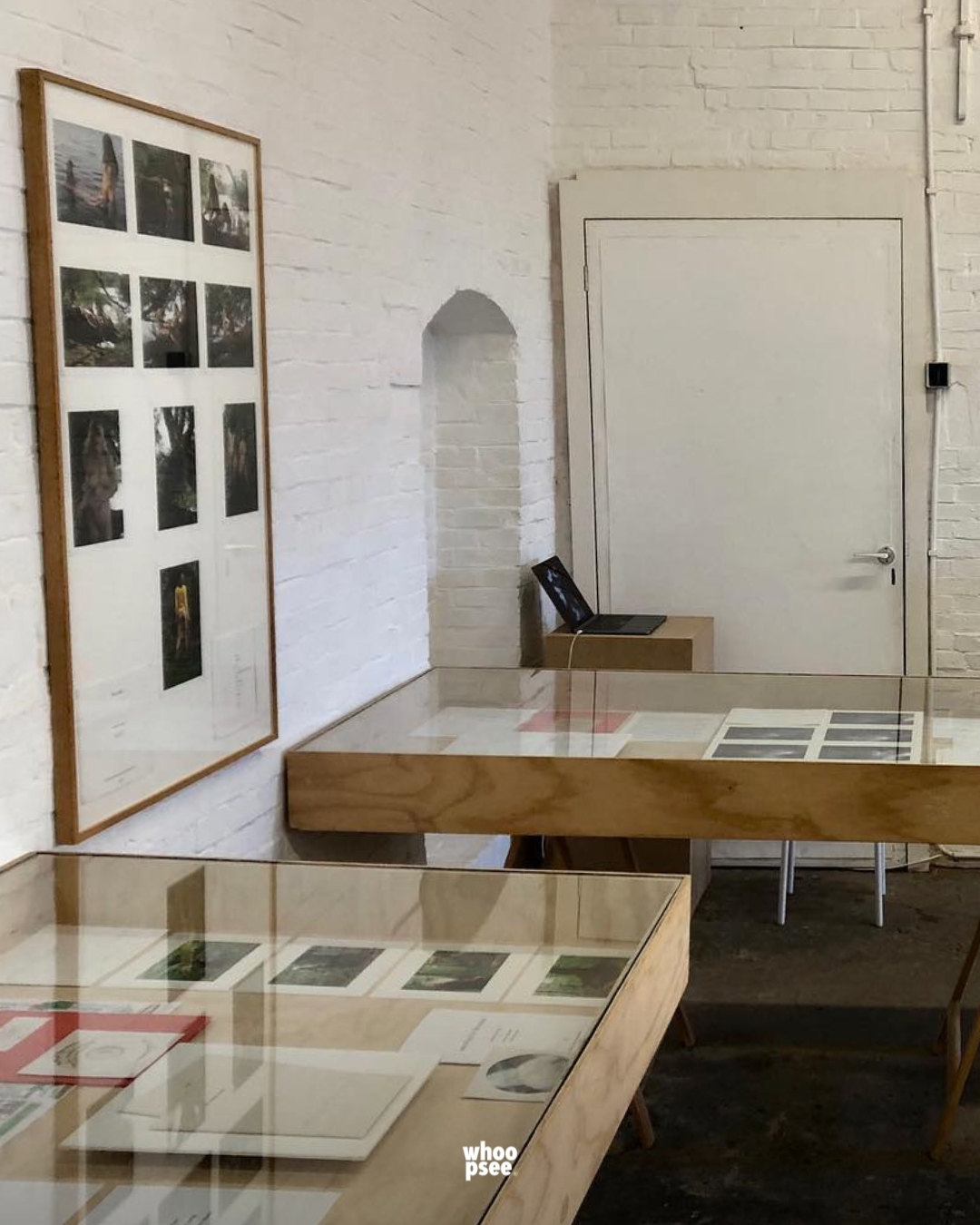
But the herbarium permeates much of contemporary art even in less explicit forms. The Dutch artist Herman de Vries, for example, who trained as a biologist, has been collecting leaves, seeds, soil, and wild herbs for decades, presenting them according to essential classification systems that create a dialogue between scientific method and the poetic contemplation of nature. Mark Dion, on the other hand, draws on the language of natural history museums and botanical archives to create installations that critically question our need to order and classify the world. His collections of plant specimens and found objects mimic the tools of science, yet also reveal their cultural and subjective nature. Finally, Lois Weinberger has dedicated much of her research to wild herbs and species considered marginal, transforming “useless” vegetation into a living archive capable of narrating landscape transformations, biodiversity, and the relationship between nature and society.
The herbarium, therefore, extends far beyond the pages of a book or a personal journal. It is both a physical object and an action—a practice of observing the world, a material geography made up of plant fragments that preserve time. It is a fragile archive, yet one capable of telling us something about ourselves, about the way we inhabit the earth, and about the constant change that shapes every landscape. Every herbarium is both a collection of plants and a collection of perspectives: it preserves what grows, but above all, the way we have chosen to look at it, remember it, and pass it down.
[📷 Instagram: hermandevries; bibliotecauniversitariapavia.it]