There was a time when luxury looked at sports from afar. The maisons observed its aesthetics, borrowed a few details from it, but maintained an almost hierarchical distance from a universe perceived as functional, technical, distant from fashion codes. Today that scenario seems to belong to another era. Sport is no longer just a source of inspiration: it has become one of the most strategic, desirable and culturally relevant territories for the entire fashion system.
The phenomenon was certainly not born today. Collaborations such as those between Adidas and Yohji Yamamoto with Y-3, or between Nike and some of the most influential contemporary designers, paved the way many years ago. But what has been happening in the last two or three years represents something different. It is no longer about individual capsule collections designed to generate hype, but rather a structural convergence between two industries that have realized they are speaking to the same consumer.
At a time when a Garmin can generate more interest than a luxury watch and when running a half-marathon has become as much an element of identity as owning an iconic bag, the symbolic value of performance has taken on unprecedented weight. The quest for wellness, the focus on health, the desire to belong to sports communities, and the spread of an active lifestyle have transformed technical clothing into a new cultural language.
It is in this context that increasingly frequent and sophisticated collaborations are taking place. The latest is the one between Marine Serre and Under Armour, which transferred the distinctive imagery of the French designer’s famous crescent moons inside a high-performance wardrobe. Similarly, Diadora has shown how a historic sportswear brand can dialogue with two seemingly opposite universes: on the one hand, JW Anderson, who reinterpreted the historic Equipe Trainer from 1975 through a contemporary lens; on the other hand, Dolce&Gabbana, who transformed the Brasil, a football icon of the 1980s, into an object suspended between sports nostalgia and luxury language.
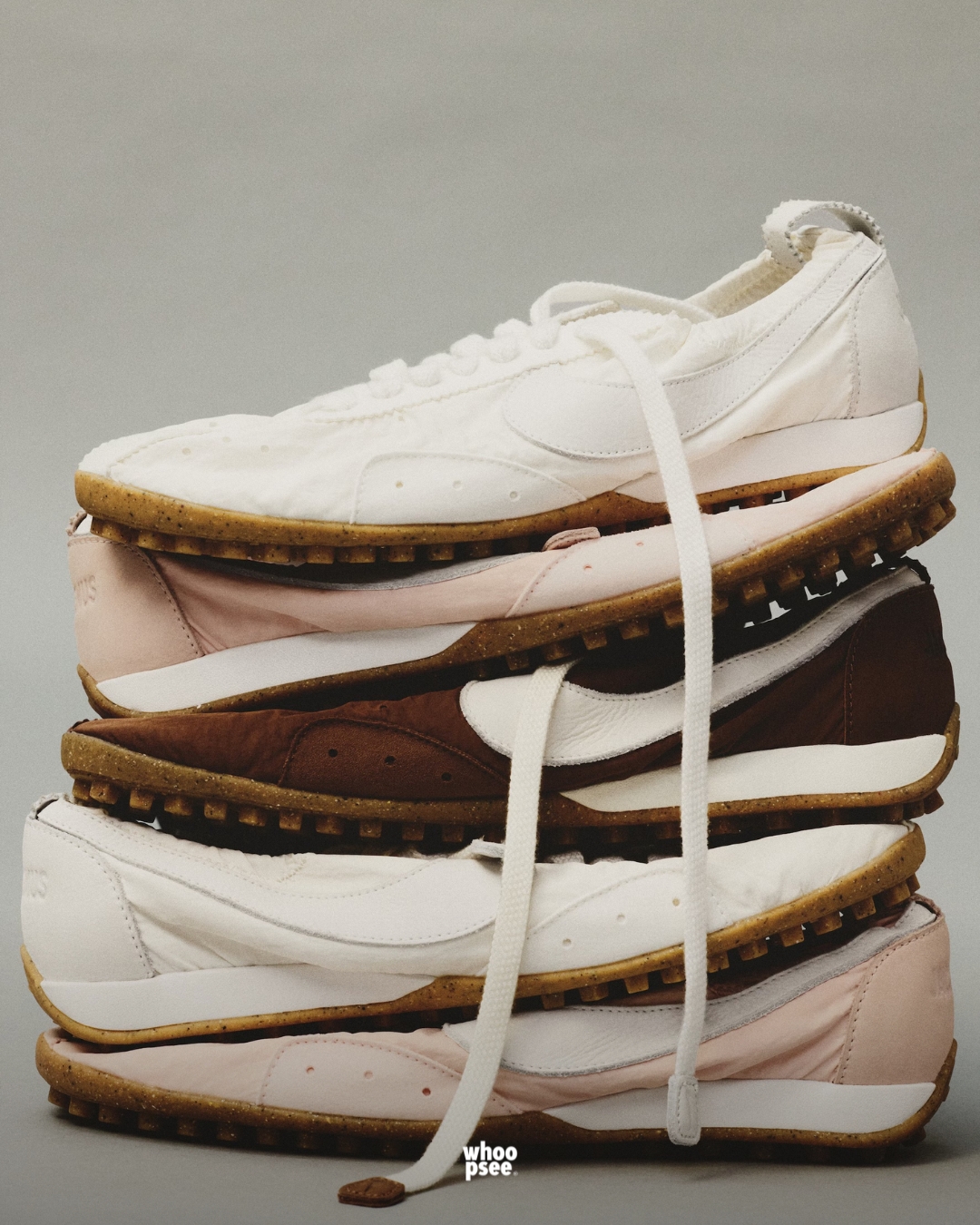
Lululemon, one of the brands that has benefited most from the global athleisure explosion, also continues to invest in creative contamination through its collaboration with Saul Nash, a London-based designer who has built his identity precisely on the fusion of movement, dance, sport, and fashion. His aesthetic perfectly narrates a generation that no longer distinguishes between performance wear and everyday wardrobe. If until a few years ago tennis represented the main meeting ground between elegance and sport, today the phenomenon involves practically every discipline. The catwalks have welcomed partnerships such as those between Onitsuka Tiger and Versace, Nike and Jacquemus, and Asics and Thom Browne, showing how the sneaker has become the ideal meeting point between stylistic research and technological innovation. But the real news is that the most interesting frontier is no longer running or fitness: it is soccer.
For decades, football has maintained a complex relationship with fashion. Despite being the most popular sport on the planet, it has long been perceived as distant from the universe of luxury, at least compared to disciplines considered more akin to the aesthetic codes of the high-end. Today the situation has radically changed. Footballers have become protagonists of fashion weeks, ambassadors of major fashion houses and, above all, interpreters of a new visual culture that develops as much on social networks as in the locker room. The entry of fashion into soccer is visible everywhere. From looks designed for stadium arrivals to collaborations between clubs and luxury brands, to special uniforms that increasingly take on the value of true collector’s items. Paris Saint-Germain has led the way with Jordan Brand, turning a partnership initially considered experimental into a global business model. Meanwhile, clubs such as Milan, Juventus, Arsenal and Real Madrid have intensified their relationships with fashion and lifestyle brands, understanding that contemporary merchandising is no longer just about fans but also about consumers interested in culture, design and fashion.
Major soccer events are also becoming creative platforms. Pre-match uniforms, capsule collections and special projects developed around national teams or international tournaments show how soccer is now one of the main storytelling tools for brands. It is no longer just about visibility: it is a way to connect with global and transversal communities. Behind this acceleration lies a deeper transformation of the luxury market. The contemporary consumer appears less interested in traditional ostentation and more attracted to products that tell of experiences, passions, and belonging. The technical sneaker, the running jacket or the limited-edition soccer jersey manage to satisfy this need better than many classic symbols of status. Not surprisingly, the very concept of luxury is shifting from rarity to authenticity, from formality to functionality.
Fashion looks to sports because in sports today it finds what luxury desperately seeks: community, cultural credibility and the ability to generate real engagement. Sports, for its part, finds in fashion new tools to expand its imagery and reach different audiences. It is a relationship that produces value for both parties and seems destined to intensify further. After all, the growing overlap between catwalks, stadiums, marathons and tennis courts tells of something broader than just a commercial trend; it tells of the way contemporary aspirations have changed. Today, desire no longer passes only through what we own, but also through what we do, how we live our leisure time, and how we narrate our lifestyle. And it is in this space, somewhere between performance and identity, that fashion and sports have found their most fertile common ground.
[📷 jacquemus.com]