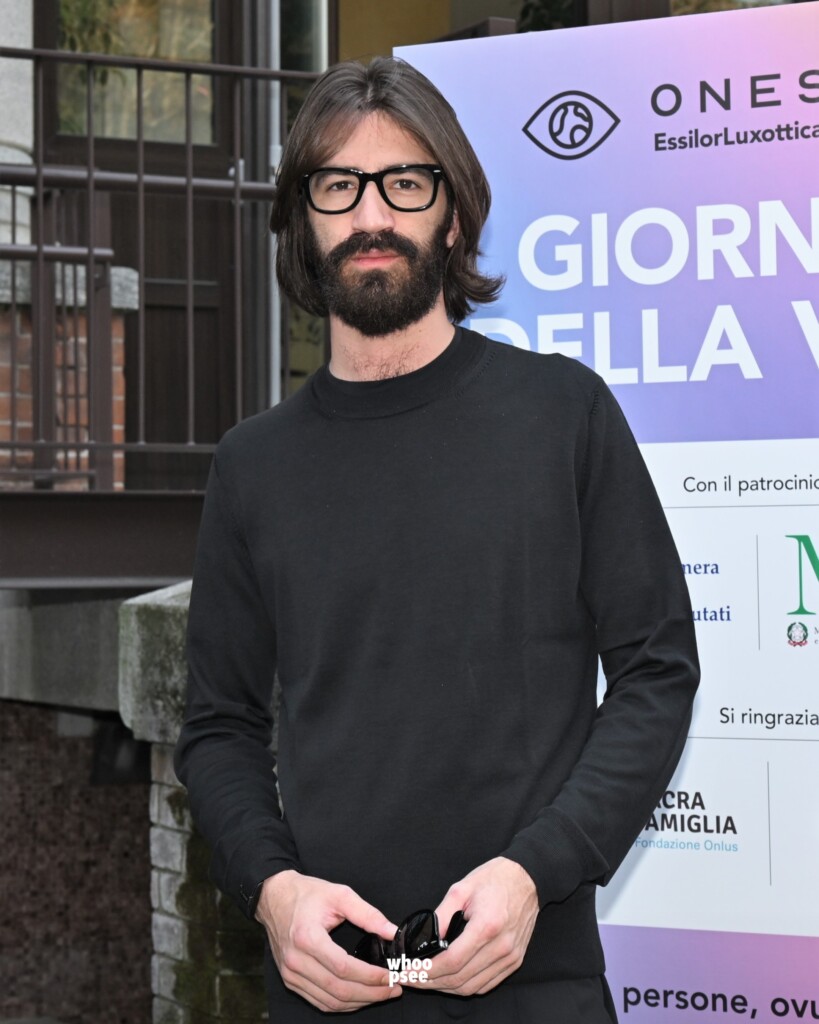
It’s often easy to say that clothes are more than just pieces of fabric, but telling a story that transcends the boundaries of the material isn’t nearly as simple. Especially when we consider today’s world, where theatricality and spectacle are increasingly sought after, stripping things down to the essentials while still managing to amaze is certainly not the easiest path—but perhaps it is the most authentic one. And Federico Cina knows this well. The designer has become one of the leading lights among Milan’s independent fashion designers, and season after season, through his collections, he has been able to tell a story: his own.
Combining precision tailoring with a soft, fluid style, Federico Cina has successfully translated his personal story into a visual narrative that speaks of emotions and strong ties to his native region, Emilia-Romagna, and his vision is never shouted but whispered, because when there is true savoir-faire, there’s no need to shout to get noticed. For him, communicating with the public and telling his story is not a monologue, but an ongoing dialogue that allows him to weave together ideas that may seem far removed from our reality but are inevitably connected. As he himself told us, at the end of the day, feeling is much more satisfying than appearing.
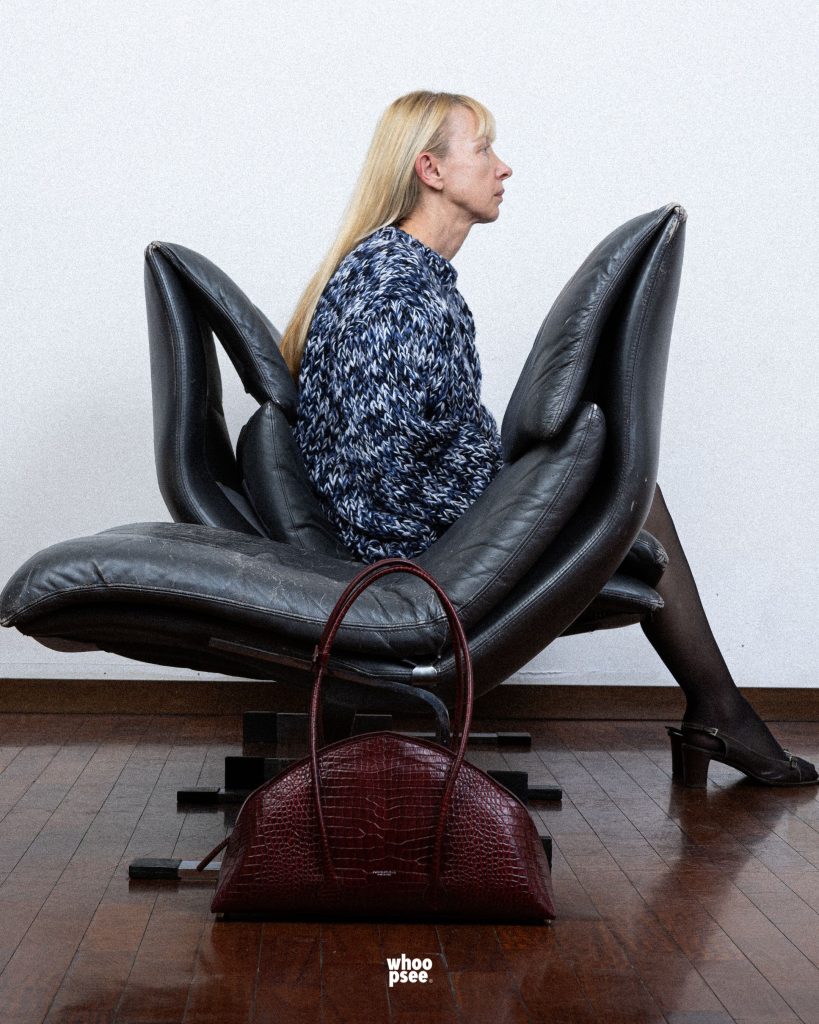

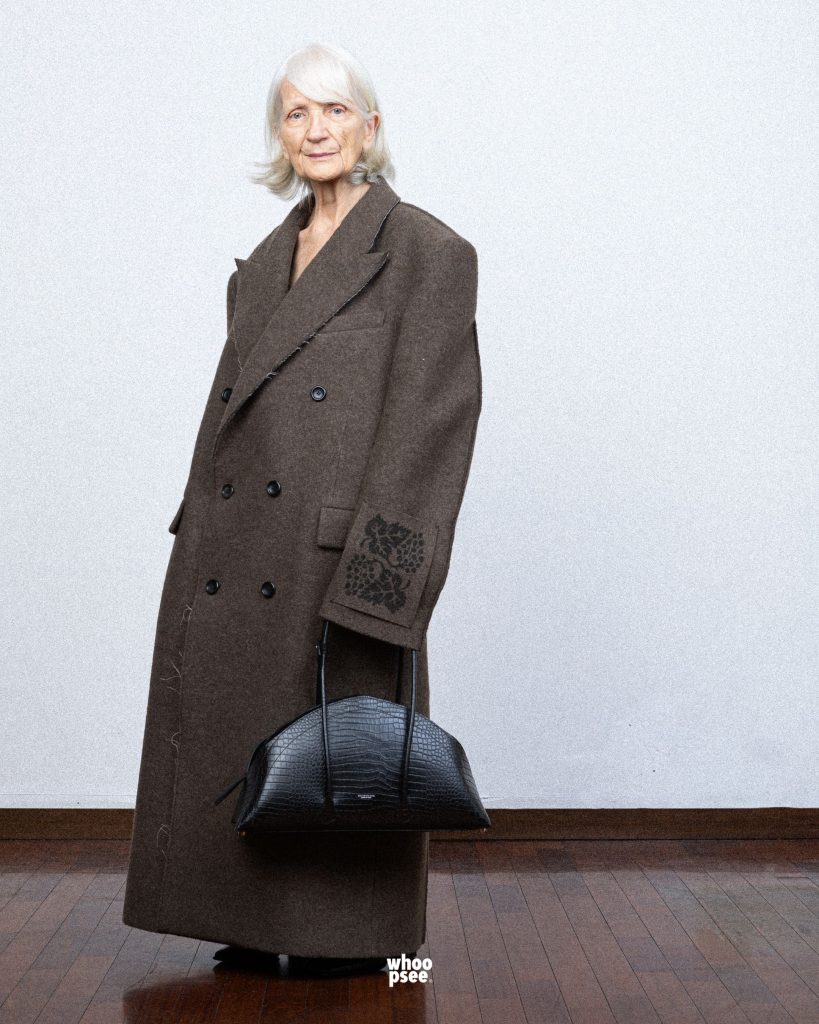
A no-frills sincerity that sparks inspiration, but also a sense of gratitude for all the influences that enable him to create. And it is from these roots that iconic pieces have emerged. From the “grape” logo, which speaks to his connection with viticulture and wine production in his hometown of Sarsina, in Emilia-Romagna, and which has helped shape experiences and craft a solid, coherent narrative. But also the viral Tortellino Bag—whose appearance is evident from its name—which immediately became a delightful “fashion sensation,” thanks to that blend of regional identity—all-Italian—and unmistakable design.
His latest Fall/Winter 2025 collection, titled “Assunta and Giacomo” and presented last January 2025 during Milan Fashion Week, was undoubtedly shaped by the power of a story and a sentiment that is so personal yet so universal: nostalgia. The collection is an emotional journey that winds its way through memories of two people very dear to Federico—his grandparents—and for this very reason, it draws inspiration from the everyday garments worn by Assunta and Giacomo: loungewear and underwear, work clothes, and outfits for special occasions. The narrative took shape in a performance, hosted by the Sozzani Foundation, which translated memory into movement, making tangible the mark his grandparents left through a series of “scenes” in which male and female models interpret movement routines inspired by the most indelible memories. Each movement echoes the moments shared together—the daily habits that shaped their childhood and continue to influence their present. Every gesture, however simple, becomes an act charged with emotion, a representation of what the designer carries with her, day after day. The performance thus became an expression of a bond that never breaks, of a sense of continuity, and of affection that defies distance and time. An aesthetic act and a celebration of memory.
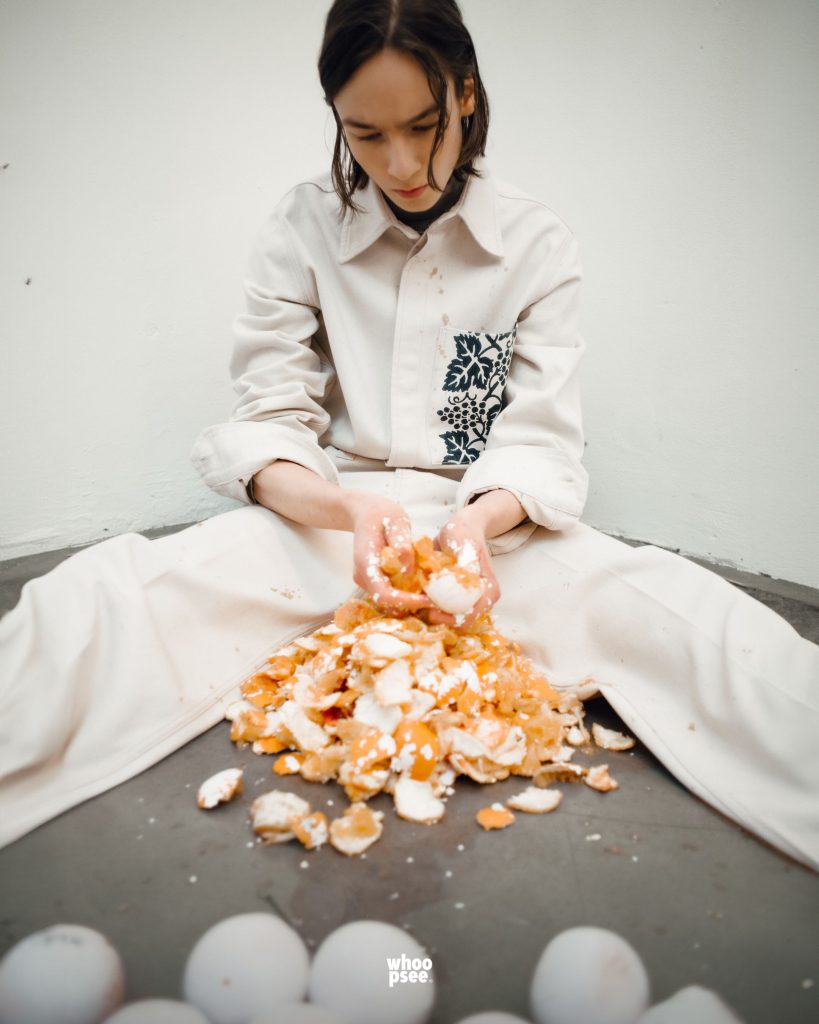
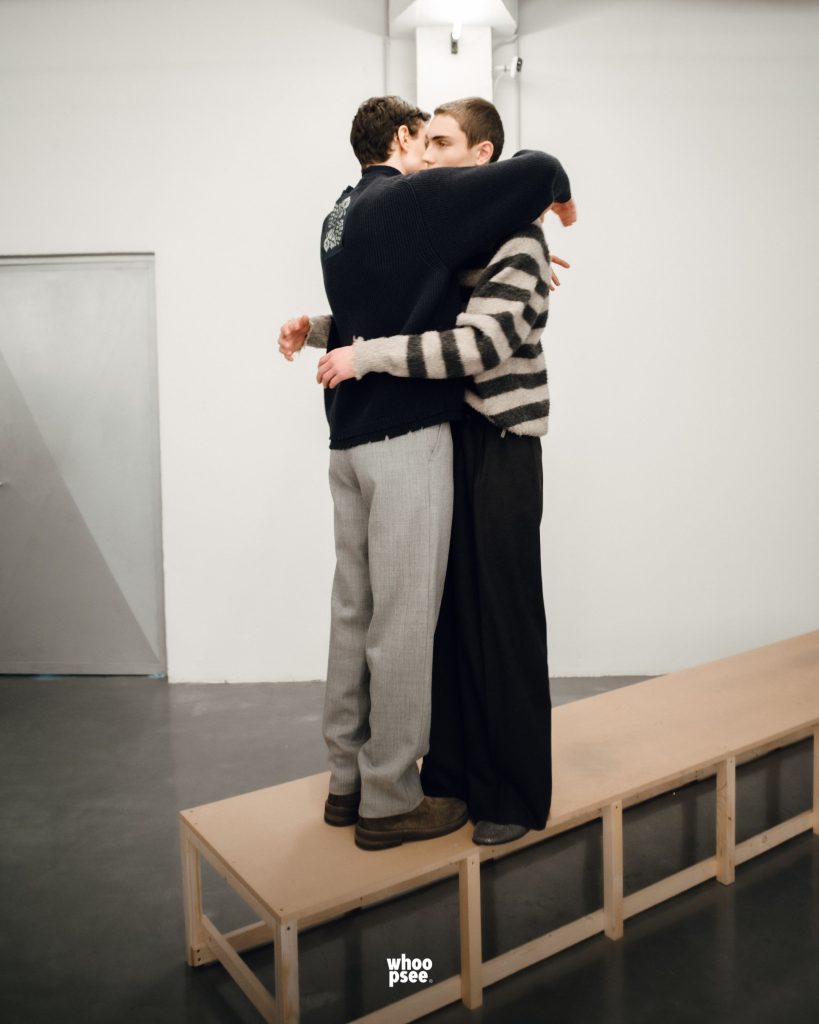
We interviewed Federico Cina, who spoke to us about his inspirations—which are deeply rooted in his memories and his heritage—and how they have evolved—and continue to evolve—through increasingly significant challenges and achievements.
Your collections seem to be a profound reflection of your life, drawing inspiration from your family and your homeland. How do you manage to strike a balance between your personal life and the creative process, creating something that is both deeply personal and responsive to market demands?
All of my collections are a blend of experiences, emotions, and feelings that I have truly felt. They are stories I have lived through firsthand, which I convey through my clothing. This is how I blend my private life with the creative process, sharing something that is part of me—something I’ve seen, felt, and sensed at a specific moment—and expressing it through clothing: these very elements of meaning allow me to maintain that fine line that defines the process of sharing between myself and the public. What I want to convey is communicated sincerely and transparently, without compromise or pretense; I believe this is the answer to the market’s needs: to be relatable by representing something that has existed, that is real, and that—to be recognized—requires a certain authenticity that is neither taken for granted nor out of step with the times.
My family is essential; they support and stand by me in every decision I make, are always there for me, and help me see my projects through to completion. I look to them as an example when it comes to commitment, determination, and sacrifice; they’re the ones who passed down the traditions to me—the ones I’m particularly attached to and in which I strongly believe when it comes to blending them with modernity. My strong connection to my homeland, Emilia-Romagna, shapes my collections; it influences my creations and makes them unique. It’s the place so dear to me that I once fled for a time—a place where I felt suffocated, imprisoned. Yet it is the very place that eventually welcomed me back and drew me back to it—the place that has always been home and from which, deep down, I was never truly able to escape.
Your latest Fall/Winter 2025 collection is a tribute to your grandparents and the importance of family in your heritage. How did you manage to translate this personal connection into a design that speaks to both tradition and modernity, while keeping your family’s legacy alive in contemporary fashion?
My latest collection pays tribute to two people who were very important to me—my two grandparents, who passed away last year. I wanted to bring them with me to Milan—they were two farmers who had never traveled—and to introduce them to those who never had the chance to meet them. It was a great source of satisfaction, despite the moments of melancholy and nostalgia I experienced while planning the presentation with my team. I wanted to recreate the house and the rooms where I used to spend entire days—those afternoons that will remain etched in my memory forever and that I had the honor of sharing with them. The entire collection draws inspiration from the clothes they wore to work—simple garments that I’ve reimagined with a more modern twist, suitable for everyday wear as well as special occasions. The idea was to recreate a space that would clearly and directly convey who Assunta and Giacomo were—a constant presence that, to ensure it remains so, I felt it was important to share and tell their story.
The Tortellino Bag was an instant hit, becoming a true symbol of your brand. How has this iconic accessory influenced the evolution of your brand and its popularity?
The Tortellino Bag was a clear expression of my connection to Emilia Romagna. The success we achieved was certainly a major milestone. I believe the bag’s iconic status stems from the fact that no one had ever conceived of anything like it—a traditional Emilian dish transformed into a bag through production processes similar to those used in making pasta; it starts with a sheet of leather (like pasta dough), to which the filling (the filling). Seeing it worn by people who, from the very beginning, appreciated and supported the hard work was a huge help in propelling the brand toward new horizons. The runway appearance significantly increased the bag’s visibility, thanks in part to collaborations and various social media sponsorships that helped spread the word, especially among young people.
From Emilia-Romagna to Milan. What were the most significant milestones on your journey—both literal and figurative—that helped you grow?
Leaving a very small town like my hometown, Sarsina, and moving to a huge city like Milan has contributed significantly to my personal growth—but above all, to the growth of my brand. Milan Fashion Week was exciting; it gave people who didn’t know me yet the chance to explore my world. It’s a city that offers opportunities that, unfortunately, are hard to come by where I’m from; it opens up new avenues, brings you up to speed with the times in a very fast, immediate, and dynamic way. It was meaningful to be able to showcase my work, which was nothing more than an opportunity to improve and mature.


You always incorporate a lot of performance elements into your presentations. What motivates you to take this approach? Do you think performance could represent a new direction for the future of fashion, and how do you think it might evolve?
I believe that through performance, there is an opportunity to convey and communicate a concept in a more direct and clear way. From my perspective, it’s an innovative and useful approach in the fashion world because it creates a shared space where we all experience the same moment—yet through different eyes and life experiences—which somehow brings together even those who don’t share the same background. All too often, we focus on appearances—on what is physically beautiful—while setting aside the emotions and impressions that are conveyed to us. It is precisely these that allow us to envision a future that is less rigid and more naturally formed.
You’re often described as an up-and-coming designer, but with the evolution of your brand and your growing recognition, do you think you’ve moved past that phase? How difficult is it for a designer to shake off the “up-and-coming” label and feel truly established in the fashion world?
Being placed in the “category” of emerging designers, on the one hand, makes me grateful for all the care and attention I put into my creations; it pushes me to go even further in revolutionizing my concept of fashion: a medium through which to tell stories and express oneself. On the other hand, it makes me aware that learning never stops; every milestone I’ve reached has been an arrival, but above all, a starting point for what’s next. All my victories were once defeats, and they’re never enough to meet the goals I set for myself. It’s a continuous journey through landscapes that never cease to enrich me and allow me to aim ever higher, striving to reach the same level as those who laid the foundations of fashion and earned the world’s admiration for the masterpieces they created. Raising the standard of my brand and joining the ranks of those who have been true masters is a task to which I dedicate my time and energy every day.
What or who made you realize at a young age that fashion would be your calling? Was there a moment, a person, or a designer that marked the beginning of this creative journey for you?
I started drawing clothes when I was a child; it was something I came to appreciate again after my teenage years, since at first I didn’t really see it as my thing, so I didn’t give it much thought. I have this memory of my first encounter with fashion when my aunt would take me to the boutiques in my town; she’d take me to buy fashion magazines on Tuesday mornings, which was market day in Sarsina. That was my first exposure to it; she dragged me along and encouraged me to explore what it had to offer—it captivated me, and I’ve never looked back.


One of your brand’s key strengths is undoubtedly its aesthetic, which makes it instantly recognizable and allows people to discover a story behind each garment. What drives you to tell this visually rich story, and where do you draw your inspiration from?
The inspiration I draw upon comes from the conclusions I’ve drawn from my own life—a series of events, places, and people that have caught my attention and captured my gaze. I connect them, weaving them together based on my instinct, and carry them with me throughout the entire creative process. I draw inspiration, add other fragments of real-life stories, and the moment I have direct contact with all the elements I’ve considered, I translate them into garments. When one of my creations is worn, I want it to be seen not merely as a piece of fabric, but as a symbol—a mirror in which one can reflect and rediscover oneself. A minimalist aesthetic, suitable for everyone, free from all conventions, and capable of conveying those hidden qualities of a precious connection between the body and the garment. There isn’t a single detail I focus on in particular; they are all necessary to build the foundation of my collections.
Do you think the fashion industry is currently a welcoming place for young people who want to make a name for themselves with their own brand?
Those who have the courage, strength, and determination to achieve their goals will certainly find the fashion industry to be the perfect field to pursue. It’s a world that can crush you—it almost seems to swallow you up and knock your aspirations down when you realize that all the effort you’ve put in isn’t always appreciated or recognized for what it is. Projecting confidence—almost invincibility—in the face of adversity is a fundamental requirement, especially given the competition and the multitude of talented individuals in the field. Never giving up, always choosing your own path—while also exploring shortcuts—is a good starting point for learning to appreciate influences and ideas that are foreign to us. It can be scary, but it makes us better people, and with time and the right amount of patience, it will yield great results.
Sustainability has become a central issue in the fashion world. How important is it to you to incorporate sustainable practices into your creative and production processes, and how do you approach this challenge?
We strive as much as possible to minimize our environmental impact by choosing small artisan workshops that pay close attention to every single detail and are able to authentically meet all of our requests. Production takes place within 100 km at facilities that use high-quality recycled materials, such as the fabrics produced by Manteco; a textile company we rely on, specializing in the production of high-quality recycled wool, which allows us to offer garments that are built to last and have a low environmental impact. The same applies to the vineyard’s logo, handcrafted by Stamperia Marchi, which is also located not far from our office. We are also committed to reusing previously used fabrics and yarns, and we build on that foundation to launch new clothing items.
To what extent do you feel you are part of a new generation of designers who want to redefine fashion? In your opinion, what are the trends and innovations that are changing the industry right now?
I believe that fashion is constantly evolving and changing. Standing out among so many others who, like me, are enterprising and need new inspiration every day is a constant struggle, but everyone, in their own way, manages to establish themselves as unique. Redefining fashion means starting from a reality where you never stop; it’s a continuous succession of successes but also defeats—and it’s those defeats that I use as a springboard to achieve even better results. I believe that’s exactly where the difference lies: recognizing myself among those who ultimately made it and who, without ever giving up, paved the way for a new fashion. Addressing personal themes and telling a true story is a winning strategy when it comes to speaking to an audience so heavily influenced by different fields and trends. The moment people feel represented, they connect in some way to your world; they want to be part of it, and lately I’ve noticed a strong desire to explore everything that goes beyond the runway. With the January event, I sensed this almost urgent need for engagement—to explore a reality and understand its meaning, even if it doesn’t even remotely resemble one’s own. The more a theme or choice engages the audience and the observer, the more it can be defined as innovation. It’s something new because it belongs to you; that moment was experienced by you, if you were the true protagonist.
Where do you see yourself in the future?
In the future, I see my brand as a place where I’ll never stop improving and where I’ll continue to grow. I’ll strive to make it more solid and well-known internationally, even though my intention is to avoid losing touch with my native Romagna and to continue preserving its unique character. I wouldn’t rule out the possibility of collaborating with other brands—not just in fashion but also in design; it’s an aspect of aesthetics that has always appealed to me, and for now, I’m keeping it on my list of things I’d like to explore further.
[📸 Courtesy of Federico Cina]