If I had been asked as a child what my dream job would be, I would not have blinked an eye in stating one answer: collecting clothes. Lo and behold, for many, that dream has not only become a reality, but a real job with all the trappings. A visceral passion, a taste that is developed by doing research, an incredible flair for spotting bargains and not only in terms of economics, but also the rarity of an item. Those who collect clothes and accessories, especially from iconic collections of the past, are a kind of Indiana Jones of fashion, an adventurer who can skillfully navigate the world of creativity, an eye that is attentive but above all equipped with culture, knowledge, an eye that can perfectly recognize the value of a garment. And so, from what might seem only a personal passion, unexpected professional opportunities often come to life, because never before have fashion archives become one of the few lifelines in a world dictated by standardization. Celebrities have long been teaching us this: on the red carpet or on important occasions, the archive is what makes the difference.
And if a 1995 John Galliano total look also worn by Kim Kardashian reached $80 million valuation at auction, or a Prada coat that belonged to Carolyn Bessette sold for $192,000, we should ask ourselves questions. Sure, the big brands continue to produce several collections a year, yet the fascination around them often wears off within a short time; time to digest the post-show hype. It seems that now the only recipients of the collections on the runway are the mega-rich with large budgets, minus the connoisseurs. And this is where the archives come in: those who know fashion, those who want a garment more for its stylistic value than purely economic, prefer to wear something that has a history, something that is iconic but above all not the same as that worn by a hundred other people. The archives, which increasingly come out of private closets and turn into real pop-up stores by appointment, are consulted by designers and students, by enthusiasts, by stylists and creatives looking for inspiration, and also by buyers who prefer uniqueness to luxury for its own sake. Not only sales and rentals then, but also study and research. I personally chatted with some of the founders of some of the most interesting fashion archives of the moment; we talked about the origins of their work, how they do research and what garments they dream of having in their archives one day. Some are promoters of real institutions established over time, such as Mazzini or the Enrico Quinto and Paolo Tinarelli archives; others, although more recent, already boast respectable collections, with truly unique pieces. Some have chosen to make this passion a job, others still remain tied to a private dimension, although they accept to lend their garments for editorial shoots. Some, choose to earmark their garments for sale, others only for rental or study by creatives. Each of them has a different story, each a specific taste that also spills over into the selection of garments offered; all are united by a passion that goes far beyond mere collecting or need to own.
MAZZINI ARCHIVES by Attilio Mazzini
A true institution, Archivio Mazzini, founded by the brilliant and visionary mind of Attilio Mazzini, is much more than a collection: it is a true “fashion library,” a living space where past and present dialogue, designed to inspire designers, students and creatives. “There is no absolute memory, only one way of telling and interpreting history but various perspectives where we are the narrators. The archive is not simply a display of history but a place in constant motion where objects take on new lives through the ability of the observer/reader to grasp interpretations. Over time we have become a place for schools and universities to visit and it is to them that we gladly turn, completely free of charge, to convey the importance of research as an inspirational starting point as well as a heritage of memory.”
“The sheer volume of items to date approaching or perhaps exceeding 400,000 has always been a limitation in undertaking the digital process, but for the generational future it becomes more and more essential every day and we are becoming aware of it, so hopefully it will become part of future projects.” The archive is closed to the public, and for this reason we reserve one or two events a year for open days. On Nov. 22, 2025, our first book “THE CODES OF FASHION” was presented, which explains in a technical way what research in the Mazzini Archives represents.
ENRICO QUINTO AND PAOLO TINARELLI
Enrico Quinto and Paolo Tinarelli turn the worldly energy of the 1980s into an entrepreneurial vision: from PR and events in iconic Roman clubs to the Italian launch of Jurassic Park, to the intuition that will change everything. In 1994, they gave birth to Borghetto Flaminio, the first American-style “garage sale” market in Italy, paving the way for the cult of vintage and widespread collecting.
At the same time, they built one of the most important fashion archives in Italy: more than 8,000 pieces that tell the story of the 20th century and beyond, including clothes, magazines and rare materials.
“Paul and I started collecting clothes in 1995. We have always been fascinated by design and the decorative arts, especially Murano glass and ceramics, and at some point we also began to look at dresses as collectibles. From then on we got more and more into the detail and history of costume. At first we were seduced by the more extreme designs of the 1960s, dresses made of paper plastic or metal, but soon we extended our interest to the last two centuries, spanning the major Western countries. We also had the good fortune to meet many clients of famous tailors of the past and to have met various creators and journalists who taught us so much. Collecting means unceasing study and deepening.”
With two published books to its credit, “A Century of Fashion” by Federico Motta (publisher) and “Italian Glamour” by Skira, to date the archive of Enrico Quinto and Paolo Tinarelli collaborates with leading international institutions and museums, such as the Metropolitan Museum of Art in New York, the Victoria and Albert Museum in London, the Palais Galliera in Paris; in Italy, with Fondazione Ratti, Il Museo Ferragamo, MAXXI in Rome, following enlightened curators such as Maria Luisa Frisa of Iuav in Venice, contributing to the legitimization of fashion as a cultural discipline. And as they continue their research, one dream remains: to find a 1965 Mondrian original by Yves Saint Laurent.
“I work on an archive built with a very personal selection. I’m not interested in accumulating, but in finding pieces that still make sense today. I research, buy and sell, and I also do styling with the garments I collect. I like to wear them-I believe that a garment is only really understood when it comes to life. It all started because in the new I was struggling to find something that really represented me. So I started looking for it elsewhere. Over time I realized that having an eye helps a lot. Sometimes it also leads you to find unexpected things: once I found a Dolce & Gabbana dress under the house, without a label, for €50, and only later did I realize how much it could really be worth.”
“Among the iconic pieces that I would like to own someday, lately I often go to a Jean Paul Gaultier couture early 2000s dress, a Dior by Yves Saint Laurent late 1950s, a Givenchy by McQueen from the early 2000s, the Hermès FW 2004 corset by Gaultier, and the Dior by Galliano Haute Couture FW 1997 tiger fur jacket. These are all garments that, in different ways, strike me with their identity.”
SIDE BY SIDE by Christina & Lydia
“Side by Side is an archive dedicated to rare and collectible vintage clothing, with a special focus on runway pieces from what we consider to be one of the most interesting periods in fashion – roughly from the mid-1990s to the late 2000s. What we love about that era is the way ideas had room to really develop. You can feel it in the garments: they have more depth, more variation, and a much more defined personality. With the ateliers still closely tied to the maisons, the end result retains something direct and alive. We are really fascinated by this breadth of expression.”
“For both of us, it started very organically. The more we explored fashion, the more we realized how deeply it resonated with us. When we moved there to study, we naturally started approaching garments from a pre-globalization past. At first it was the perfect antidote to fast fashion, but it soon became something much more conscious and almost compulsive. We felt the need to go deeper, looking for truly developed designs – pieces thought out, constructed with intention, and materials made with care. The opening of our first store in Berlin sharpened this instinct even more. In the six years we’ve been running it, we’ve developed an eye for the rarest and most sought-after runway pieces, and that’s how the collection has really grown. Our showroom is the result of this process: it holds the archive built up over those six years and, for the first time, is now visible by appointment in Berlin Mitte.”
“What are our fashion obsessions? Well, among the Prada pieces we continue to chase are those from FW 2002-particularly the black pleated dresses and skirts with thin leather bands on the body, the open garments decorated with metallic beads, and the leather jackets with the double closure. This detail allows the jacket to position itself in a slightly deconstructed but still extremely elegant way. We also often think of the more fragmented black looks from Alexander McQueen’s F/W 2002 runway: there are pieces with a very strong emotional charge. At the beginning of our project we sold some black leather corsets from Vivienne Westwood’s F/W 1997: we still bitterly regret it today and would love to find one of those pieces from that collection again.”
HER AGE by Alba Figueras De La Parte and Alessandro Berna
“Her-Age is a Milan-based platform and private space dedicated to vintage collectibles and high-quality pieces. It stems from Alessandro’s mother’s private collection – built over decades and rooted in a very strong cultural vision of fashion. Together, my partner and I built Her-Age as a place where pieces are not simply selected, but truly understood, read as memory, identity, and value over time, rather than just as a trend. Growing up, I was very close to someone with a natural sense of taste, my cousin. There was something effortless about the way she chose things, something I didn’t fully understand at the time but recognized instinctively. When she no longer needed certain pieces, they would come to me. And without even realizing it, I began to develop a relationship with objects that had already lived, pieces that already carried meaning. Entering that world meant learning a different way of looking: slower, more careful, more emotional. Each piece held a story, but also a sense of permanence that goes beyond time.”
“Over time, this also defined the way we built Her-Age-not around accumulation, but around meaning. For us, collecting is not about having more, but understanding more. I don’t think about a specific piece so much as the story it carries. I’m always attracted to pieces that arise in moments of transition-when something is transforming but not yet fully defined. There is a tension in that transition that makes them incredibly powerful. I’m constantly researching and building my archive, and right now I’m particularly focused on belts from Gianfranco Ferré’s Spring/Summer 1987 ready-to-wear collection. I have always been attracted to accessories, and these have an almost sculptural quality. They are not mere additions: they define the entire silhouette. This is what I find most interesting: pieces that carry with them a sense of time, identity and transformation. Not just beautiful objects, but something that continues to speak even years later.”
“Skof.Archive was born in Milan two years ago, at the moment it is digital only with already two purchasing platforms under its belt, 1stDibs and our e-commerce. Skof has at its core a selection that mostly looks at the 90s-2000s but we are constantly open to doing targeted research for our clients. I work mainly on clothes, trying to meet my own research needs but mostly those of our customers who I can now say I know pretty well. It’s a really fun world as well as super rewarding because it allows you to often interface with realities or people who really want that item as an object to be relived, treasured and worn, giving it value and it’s rare today to be able to give value to an item given the speed of everything around us. We have about 500 items that come in, go out, change and that we often don’t even photograph because we already know who we would like to allocate them to.”
“My passion stemmed mainly from my first job as a stylist; I always tended to seek out garments that I could keep and use on various sets. I also had the opportunity to work as a consultant in an archive that allowed me to touch some really unobtainable garments with a history and manufacture that was mind-boggling. So, thanks also to the good fortune of having found myself in the hands of some truly museum-like Gianni Versace Couture garments, I decided to implement my selection, starting to do more and more extensive and in-depth research. From there, doors and connections with different suppliers opened, allowing us to grow and get to know this world more and more closely.”
“I have a real obsession with Alexander McQueen’s SS2003 and SS2004 seasons, but also Tom Ford’s YSL, FW2002 season, and anything produced by John Galliano for Dior. Anything made by these three designers really is the focus of my research, however much more and more complex they are to find and with really big figures. But if I really had to tell you one of the dresses I would love to have in the archives right now might be the John Galliano dress worn by Kate Moss in Fall 1995, the Dolores Collection.”
ESCO PARIS/ NUMBER 13 by Estelle Couriol
“I launched ESCO three years ago with a website. Soon after, I started organizing pop-up stores lasting a few days for about two years until I opened my permanent store in the Marais in May 2025. I have always loved and worn vintage clothes since I was very young. Right after I finished my fashion studies, I worked as a stylist on photo shoots for magazines, as well as on music and personal projects.”
“In these jobs, I’ve always used mainly vintage pieces; that’s what I’ve always loved most about my work – finding that one-of-a-kind, unrepeatable piece. A few years later, I realized how much I really loved researching vintage garments, and that’s how, little by little, I began to devote myself completely to my vintage brand. Today I am deeply grateful and happy to be able to devote 100% of my time to this project that I am so passionate about! I sincerely love every single piece in my archive, and if I had to necessarily choose one, I would now say the Jean Claude Jitrois leather and fur suit from Fall 1985, which is simply amazing. When it was sold, I felt a small sense of melancholy, because I know I will probably never find another one like it, but that’s part of the game. Letting go of a piece to find an even more extraordinary one.”
“I became interested in fashion as a child. I remember one Christmas I had asked for a tablet to draw clothes from ready-made models (fortunately, because I actually never had much talent in drawing). I would also tear out a few pages from the photo shoots of the fashion magazines my mother bought every now and then, to keep them in a binder and look at them again, without a clear idea. I was probably already fascinated by the image and style of a silhouette. I arrived in Paris in 2021 to attend an MBA at a fashion school, but I didn’t feel I was in the right place. I wasn’t interested in marketing or communication, and I didn’t want to be a designer. I had good ideas, an ever-moving eye – constantly looking at people’s looks – and I was also quite intellectual, but I didn’t really know how to channel all that. I tried writing, but it didn’t satisfy me enough. Soon after – I don’t even know exactly how – I got the idea of selling and collecting clothes. I probably realized that it was the meeting point between a more intellectual dimension (the research, the history of fashion) and a more creative one (constantly training the eye to find the right piece to sell, to keep or to rent), with also a lot of freedom. And I enjoyed it. The project started to take concrete shape in late 2023, but it was in the summer of 2025 that I really launched Regard Archive.”
“I don’t have a specific or favorite piece in mind to look for. For now, I follow my instincts a lot: I select mainly garments for sale, so I try to choose what I think fashion-loving people would want to wear in 2026, whether in everyday wear or for an evening or an important event.”
RANDOM STYLING by Giulia Meterangelis
“I was born in Rome and have lived in Milan for almost 20 years. I am a fashion stylist and lecturer. Random Styling started as a personal project right after Covid and then evolved into a physical space and archive a couple of years ago because of my need to display and catalog everything I had to understand how big my collection of clothes and accessories was. And it was pretty big! So I decided to make this small heritage available to stylists and creatives, enriching it more and more with special goodies that would satisfy all needs. My goal is not to have the archival collector’s item that everyone can have but rather to find a unique piece, perhaps unbranded or with a strange name, that has a fascinating story.”
“The real passion started as a teenager when I was about 17 years old when I started going to vintage markets coming back at ‘dawn “from the disco.” Basically I was looking for quirky things to go dancing and differentiate myself from the rest of the people. I have a shoe fetish and would love to own Marc Jacobs’ Kiki boots. I already own several iconic shoes like some Prada FW2012 shoes that I am very proud of-especially for the price I found them at-or some Dior by John Galliano FW2004 creepers.”
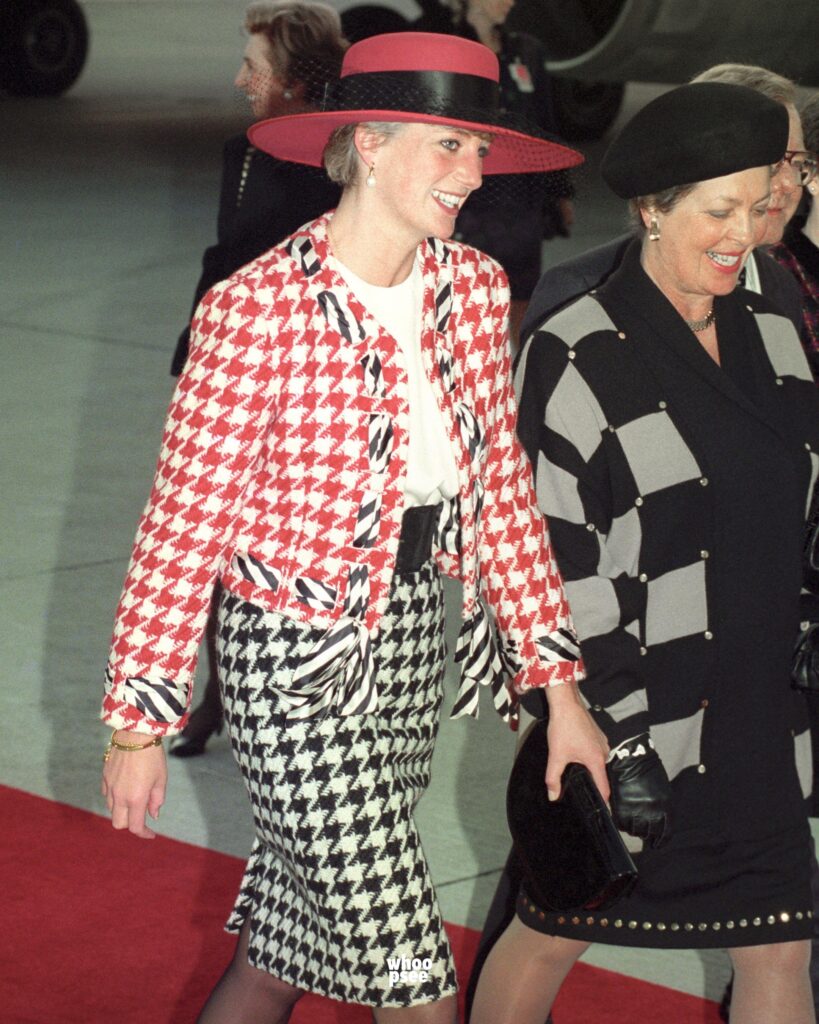
“It all started about fifteen years ago, when I moved to Milan to attend a master’s program at Istituto Marangoni. Back then, in addition to the splendors of the quadrilateral, I slowly began to interface with a reality that I currently consider fundamental to my creative process, that of the second hand. Mind you, not vintage, but second hand, where in my opinion one always uncovers very interesting goodies. I did not want to conform, and among the shelves of these stores I had the opportunity to experiment and develop a personal taste that was not at all influenced by mass trends. Currently, without presumption, I think I boast one of the most varied personal archives ever: about 200 only among long dresses, 180 among shoes and boots, 500 among shirts and overcoats. It is truly immense and although I don’t consider it my job at the moment and I definitely don’t want it to become my job, in the future I might think of organizing an auction done right. By my own choice I don’t sell to individuals but rent only for shoots and editorials.”
“My search happens everywhere, certainly online has also played its part in the last decade. I have to say that in my life I’ve been really lucky to find immensely valuable clothes for really ridiculous amounts of money for their importance. Among the items in my collection that I am most proud of is a Moschino Cheap & Chic jacket that was also worn by Lady Diana. In fact, actually, the possibility that it actually belonged to Lady D is not ruled out: back in the day she used to give a lot of dresses to Palace attendants, dresses that then made immense rounds, person to person. When I bought this jacket from a dealer in Birmingham, he did not rule out that possibility. And I like to think so. I’m also particularly proud of my Gianni Versace collection: the Medusa from the 1990s literally bewitched me, I think Gianni’s genius and what he gave women in terms of sensuality is beyond question. I also own as many as six garments from the “Carrà Collection,” meaning they belonged to the unforgettable Raffaella. I bought them personally from the curators who still manage her archive of stage dresses, those made by legendary Rai costume designers such as Luca Sabatelli, just to name one. I do not wear them, because for me they are like real relics. Instead, among my rarest accessories we find Tom Ford’s Anaconda boots: to call them incredible is putting it mildly.”
CLARISSA VICTORIA COLOMBO
“My passion was born when I was very young. My mother has always been a very particular figure: a reserved person with a strong, almost dark, out-of-the-box aesthetic. A real ‘designer bitch.’ It was she, in part, who passed on this view of fashion to me, although I think the real obsession came to me very naturally. From the very beginning I focused on Chanel, particularly the archive between the 1990s and 2004, a period that I still consider authentic, not yet completely contaminated by the current system. Today I own about 35 Chanel pieces, including 15 to 20 handbags, iconic models such as the Chanel Heart, the Beauty Case with jewel details, or rarer versions in materials such as faux fur, as well as accessories and garments, many of them worn on the runway, especially in the 1994 collection with Claudia Schiffer. These are extremely exclusive objects, difficult to find, and precisely for this reason fundamental to my research.”
“If I had to choose one piece that I dream of having in my collection, it would be the Vivienne Westwood dress made for Dita Von Teese and worn at her wedding in 2005. It is a piece that is practically impossible to get, and that is the point: I am only interested in items that cannot be easily had. Exclusivity, for me, IS EVERYTHING.”
[📷Instagram: number13paris/esco.paris; IPA]