There is something deeply paradoxical about the fact that flowers, the quintessential symbol of transience, have become one of the most powerful aesthetic languages of the present. Yet that is exactly what is happening. In a historical moment dominated by speed, visual overexposure and artificial intelligence, floral design is experiencing a new golden age not as mere decoration, but as an emotional experience, an artistic gesture, a cultural statement.
Outsides, especially this period, are more alive than ever: not in the sense that they are not wilting but in the sense that they seem to be one of the most representative languages of the moment. They are alive in fashion shows, on sets, in beauty campaigns, in the scenic tables that invade Instagram and Pinterest, in hotels, in restaurants, in contemporary homes where the centerpiece once again plays a central and ritual role. We no longer speak only of floral arrangements but of installations, organic sculptures, atmospheres built through petals, branches, moss, plant textures and colors.
Just think of the way the flower has again become central to the visual narratives of fashion houses. Jonathan Anderson’s recent SS26 collection for Dior, for example, transformed the runway space into something suspended, where art, memory, and nature coexisted in an extremely delicate balance. And this is not an isolated case. In recent years, floral design has become an integral part of luxury imagery-from Gucci Beauty to Loewe, via beauty campaigns built around giant flowers, decadent tables, and imaginary gardens.
Cinema also seems to have rediscovered the narrative power of flowers. Not only as a scenic element but as an emotional device. The set tables, banquets, receptions and houses narrated on screen are increasingly constructed through floral arrangements capable of defining a character or atmosphere far more than any dialogue. Think of the opulent aesthetics of Marie Antoinette, where flowers become almost an emotional extension of the character, or the perfectly imperfect tablescapes in contemporary cinema that look like something out of interior design editorials. In an age when we photograph everything we eat, the table has turned into a narrative set, and floral design is central to that. Not surprisingly, the return of “tablescapes,” or tables constructed as visual landscapes, has taken fashion, hospitality and contemporary design by storm. Loose candles, fruit, handcrafted ceramics, deconstructed flowers, seasonal elements-all contribute to a feeling rather than an image.
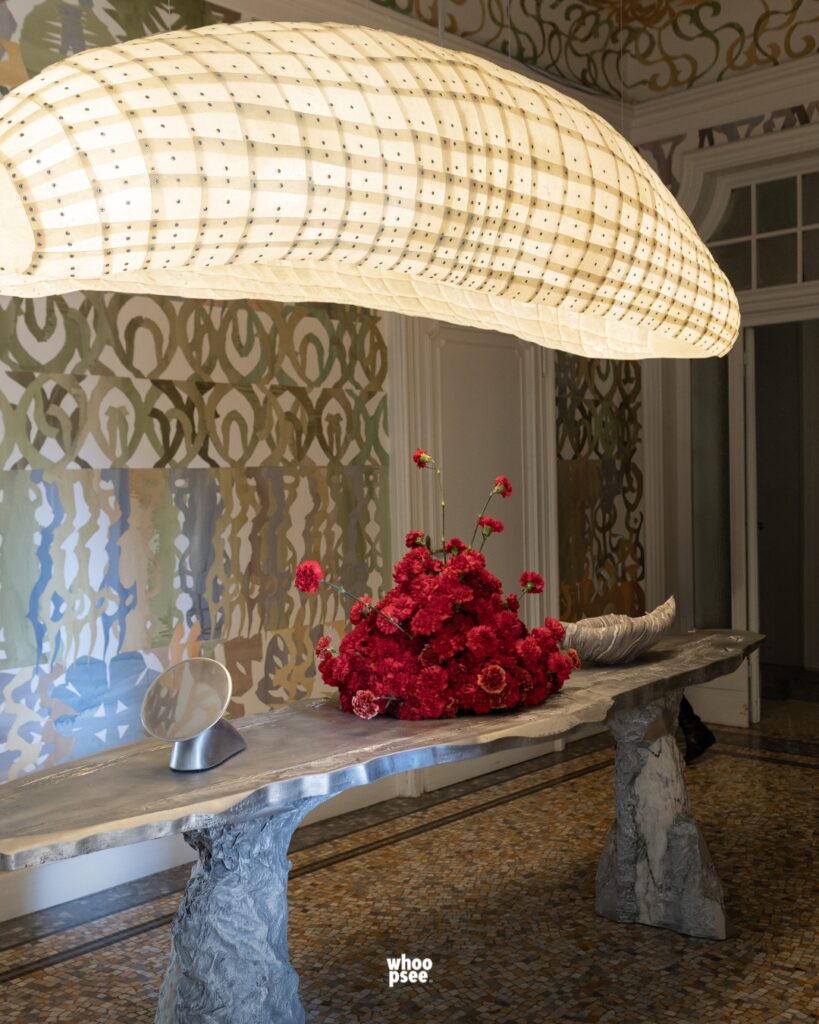
This is where the work of independent entities such as Hedoniya Floristry takes on special significance. Founded in Milan by Anastasiya Goncharova-Cosio together with her partner Danilo Cosio, the studio engages in foam-free floral design, that is, without the use of the classic synthetic floral sponge, with a more sustainable, artistic approach that is deeply connected to natural materials. More than creating compositions, Hedoniya builds experiences. “I am deeply fascinated by nature,” says Anastasiya. “I have been exploring it through photography for many years. I am driven by curiosity, and floral design gives me the opportunity not only to observe natural elements, but also to shape materials, discover new combinations. I want to translate my sensitivity for nature through my work. I sincerely hope that my work can encourage other people to be more open to the beauty of nature and notice its miracles and wonders, starting from the smallest details.”
And it is interesting how, in talking with her, a specific concept emerges immediately: flowers are not simply to make a space beautiful. They serve to make it feel. “Every plant has its own energy and every color transmits energy,” she explains, “Our brain responds to this energy much faster than we consciously realize. Flowers can completely transform the emotional atmosphere of a space. They can make people feel calm, happy, inspired or even deeply moved without them really understanding why. Could we survive without aesthetic elements? Yes, absolutely. Would our souls experience the same joy without them? I highly doubt it.”


Perhaps this is precisely the reason for their cultural renaissance. The more digital the world becomes, the more the desire for something living, tactile, imperfect grows. Anastasiya makes this clear: “I think the more technology advances, the more we feel the need for rootedness and connection with nature … not everyone, of course, but many people do. The real abundance of inspiration is found in the natural world, and I think it is very instinctive to look for harmony and beauty in it.”
It is a reflection that perfectly explains why luxury brands today are so attracted to floral design: flowers evoke something ancestral and manage to create memory. Also because behind those seemingly spontaneous compositions there is extremely technical and physical work. Flowers are living, delicate, unstable materials. “They may arrive a day or two before the event and then we have to process them: remove the packaging and clean the stems. You need a cool, moist environment,” Anastasiya says. And every detail is planned with precision, especially in fashion and luxury events where time is minimal and pressure extremely high.

Hedoniya’s projects, for example, include a collaboration with Gucci Beauty for Flora. “We developed the floral concept together with the We Are Lovers event production team. For this event, we were asked to incorporate all the colors of the Gucci Flora Fragrance collection, so the first area reflected the entire color palette of the collection,” she explains. “In the fragrance display area, we created floral sculptures representing the ingredients of the fragrances. For the dinner table, we designed a long, continuous centerpiece using moss and seasonal flowers from a local organic farm. I’m very proud to say that, because working with local and seasonal materials means a lot to me-it’s my way of respecting natural cycles and supporting the local community.”


A detail that tells a lot about the contemporary approach to floral design: less artifice, more seasonality, more real material. He also explained to us how the organization changes between commercial and personal projects: “For commercial orders, everything is mostly planned: we deliver projects developed down to the smallest detail. For events, having a clear plan is crucial because the time pressure is high and all materials and stage elements have to be carefully planned and organized. For my personal creative projects, on the other hand, I work much more instinctively. It is the way I calm my mind and really enjoy the process. We always start by preparing the vases and structures, as we work exclusively without a floral sponge. We reuse all our containers and wire mesh (chicken wire), so they require constant maintenance and care.”
Today luxury no longer necessarily coincides with the perfect, immobile excess of years past, but seems to be something more organic, alive, even fragile. And if you want to know how to make fresh flowers last longer, yes, he answered that, too: “Very simple: clean the vase thoroughly, add a drop of bleach to kill bacteria and, if you have it, some powdered flower nourishment. Trim the stems every couple of days and change the water regularly to keep them fresh. It is also important to avoid exposing them to direct sunlight, near radiators or fruit, as they may wilt faster.”


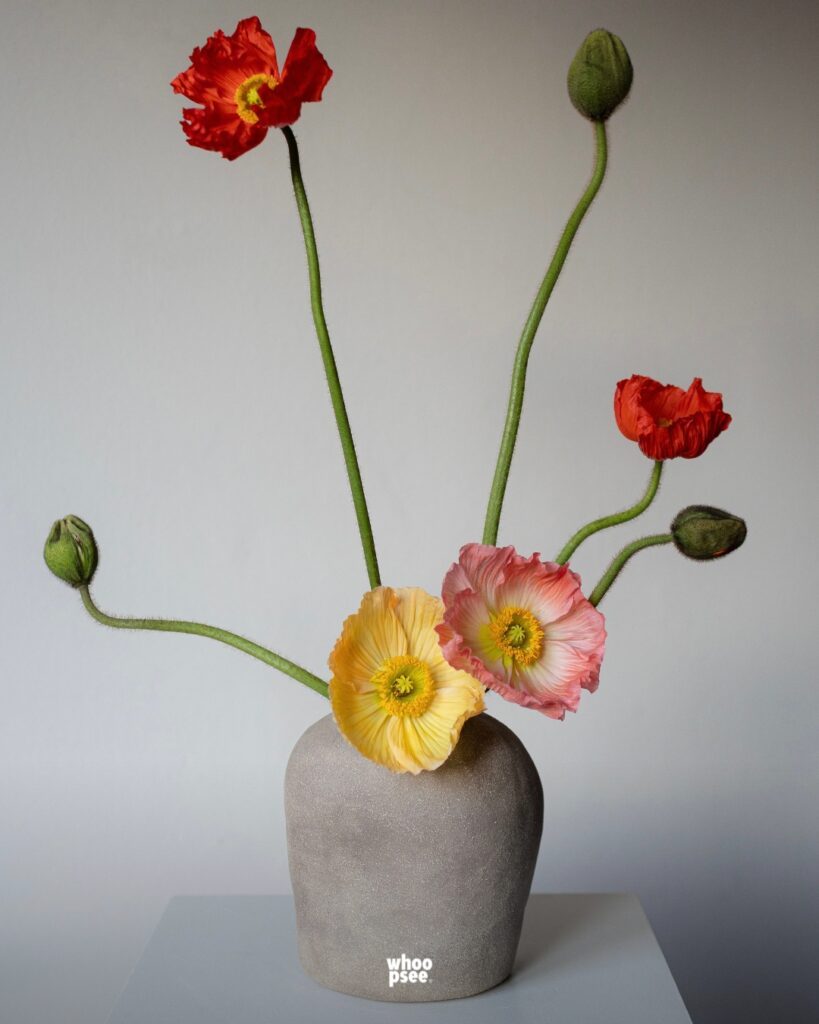
[📸 Courtesy of s2bpress]