Cinema, like art history, develops through artistic currents or strands: groups of authors who share a similar aesthetic language, a set of recognizable formal codes that make it easier to classify and read cultural phenomena. Although this tendency to grouping sometimes risks flattening the nuances and specificities of individual artists, currents are of great value especially from a historical and critical point of view. Indeed, they make it possible to give visibility to contexts and realities that would otherwise remain marginal or difficult to identify in a discourse dominated by the most influential cultural centers. In Western epistemological debates and cultural paradigms, often centered on major capitals and recognized avant-gardes, peripheral realities struggle to emerge when considered in isolation. Instead, embedded in a movement or “current,” they gain collective strength, visibility and recognition, being able to bring out their poetics more effectively. In cinema, this has happened time and again: just think of Italian Neorealism or the French Nouvelle Vague, labels created to describe groups of directors who were different but shared a common sensibility, and today have become fundamental reference points in the history of cinema.
A more recent case is that of the Romanian New Wave, a cinematic current that emerged in Romania in the mid-2000s. The Romanian New Wave (Noul val românesc) is a set of realistic and often minimalist films that emerged from two award-winning short films: Cristi Puiu’s Cigarettes and Coffee, which won the Golden Bear for Best Short Film at the Berlin Film Festival in 2004, and Cătălin Mitulescu’s Trafic, which won the Palme d’Or for Best Short Film at Cannes the same year. Aesthetically, the Romanian New Wave films share an austere, realistic, and minimalist approach, often enriched by subtle and edgy black humor. Some are set in the late 1980s, in the final years of Nicolae Ceaușescu’s regime, and deal with themes of freedom, resistance, and everyday survival (4 Months, 3 Weeks, and 2 Days, The Paper Will Be Blue, The Way I Spent the End of the World, Tales from the Golden Age). Others, however, such as The Death of Mr. Lăzărescu, California Dreamin’ and Tuesday, After Christmas, are set in contemporary Romania and reflect on the consequences of the post-communist transition, highlighting the contradictions of the new democratic society and market capitalism.
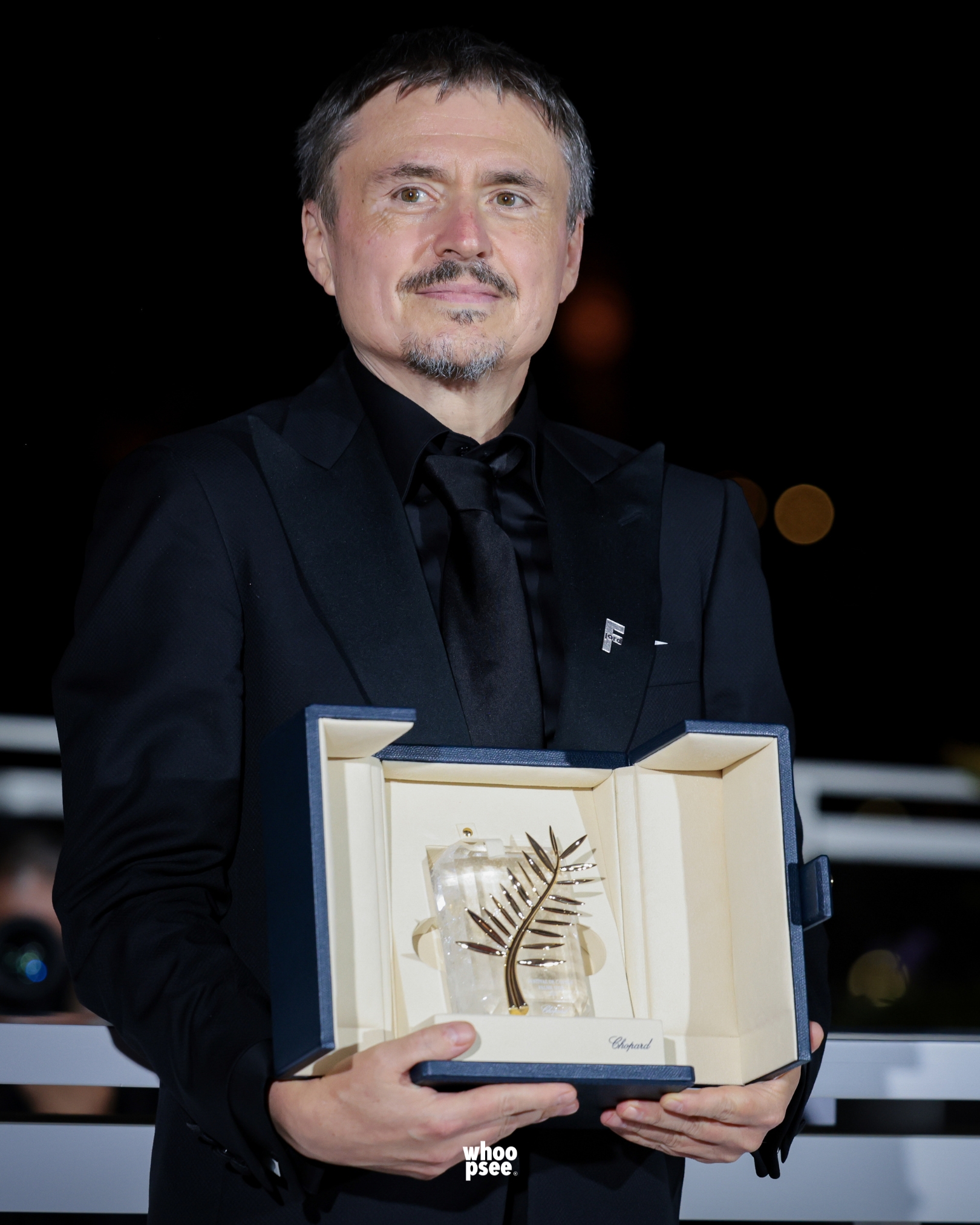
Through a mix of dry realism and black humor, these films transform everyday dilemmas into true moral dramas. The personal and the political are constantly intertwined in the works of directors such as Cristi Puiu, Corneliu Porumboiu, and Cristian Mungiu, who recount the legacy of communism and the difficulties of the post-1989 transition, revealing a world still marked by bureaucratic absurdities and subtle but persistent institutional violence. Despite the diversity of individual authorial poetics, the Romanian New Wave has contributed to the coherence and recognizability of contemporary Romanian cinema, bringing it to the attention of international critics and audiences, while also facilitating a space for reflection on political, social and cultural issues related to post-communist Romania. In this sense, Cristian Mungiu’s recent international acclaim confirms the solidity and continuity of this cinematic outlook. An auteur already awarded the Palme d’Or for 4 Months, 3 Weeks and 2 Days, Mungiu has continued to develop a rigorous, essential and deeply moral cinema capable of investigating the ethical and social tensions of contemporary Europe. His most recent film awarded the Palme d’Or at Cannes two days ago, Fjord, represents a further stylistic and thematic evolution of this: a dark, layered drama set at the edge of a Norwegian fjord, where a deeply religious mixed Romanian-Norwegian family is overwhelmed by suspicions of domestic violence. Through a controlled and uncomplicated mise-en-scene, the film weaves together themes such as education, faith, social control, and culture clash, expanding the typical New Wave gaze beyond the borders of Romania and projecting it into a more European and universal dimension.
Romanian New Wave has thus gradually established itself as a tool for reading the complexity of a country and its historical transformations, finding in authors like Mungiu one of its most mature and internationally recognized expressions.
[📷 Snapix]