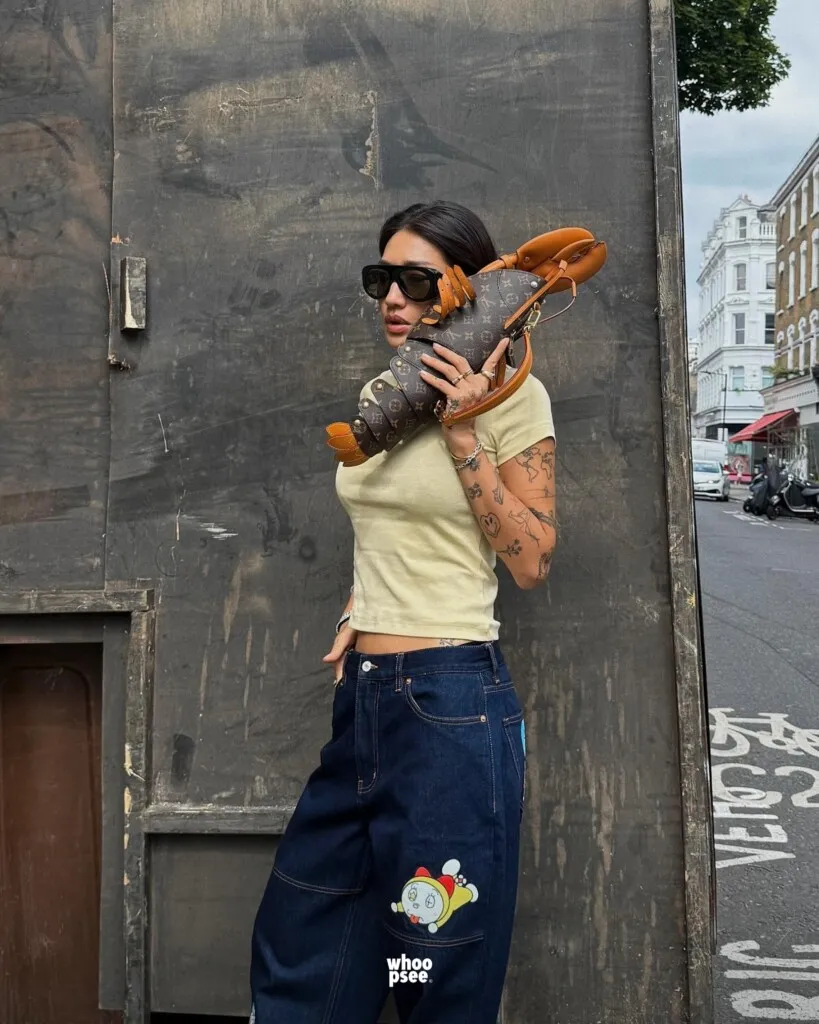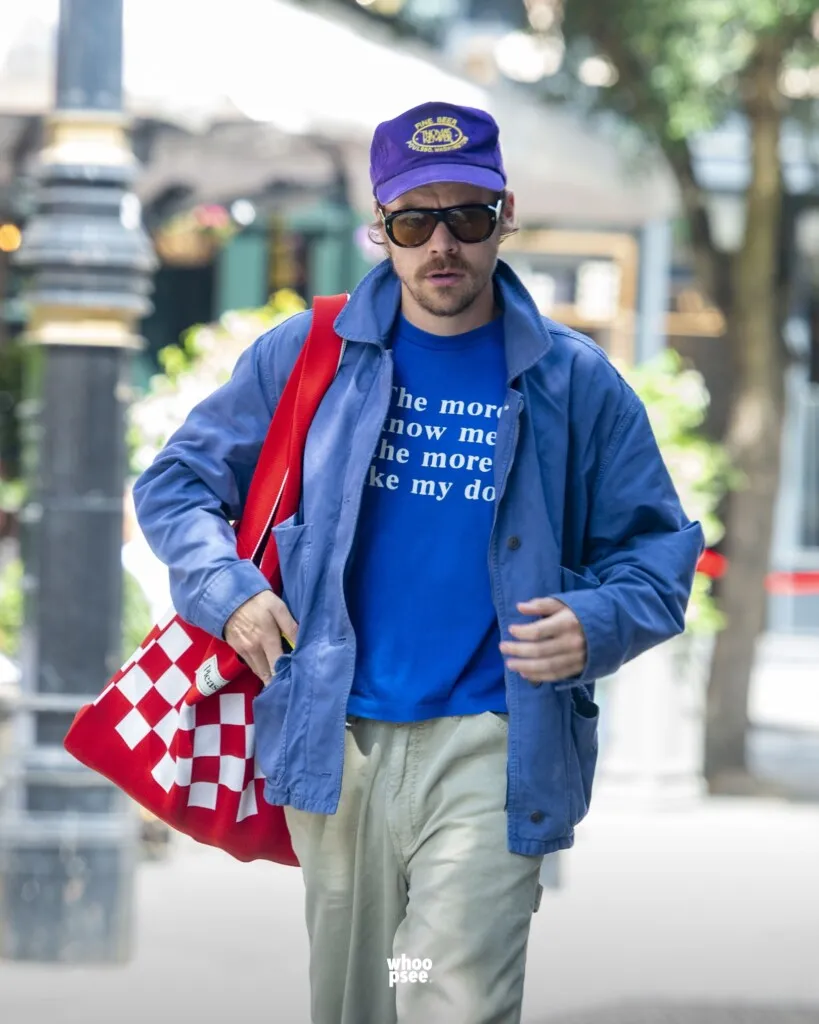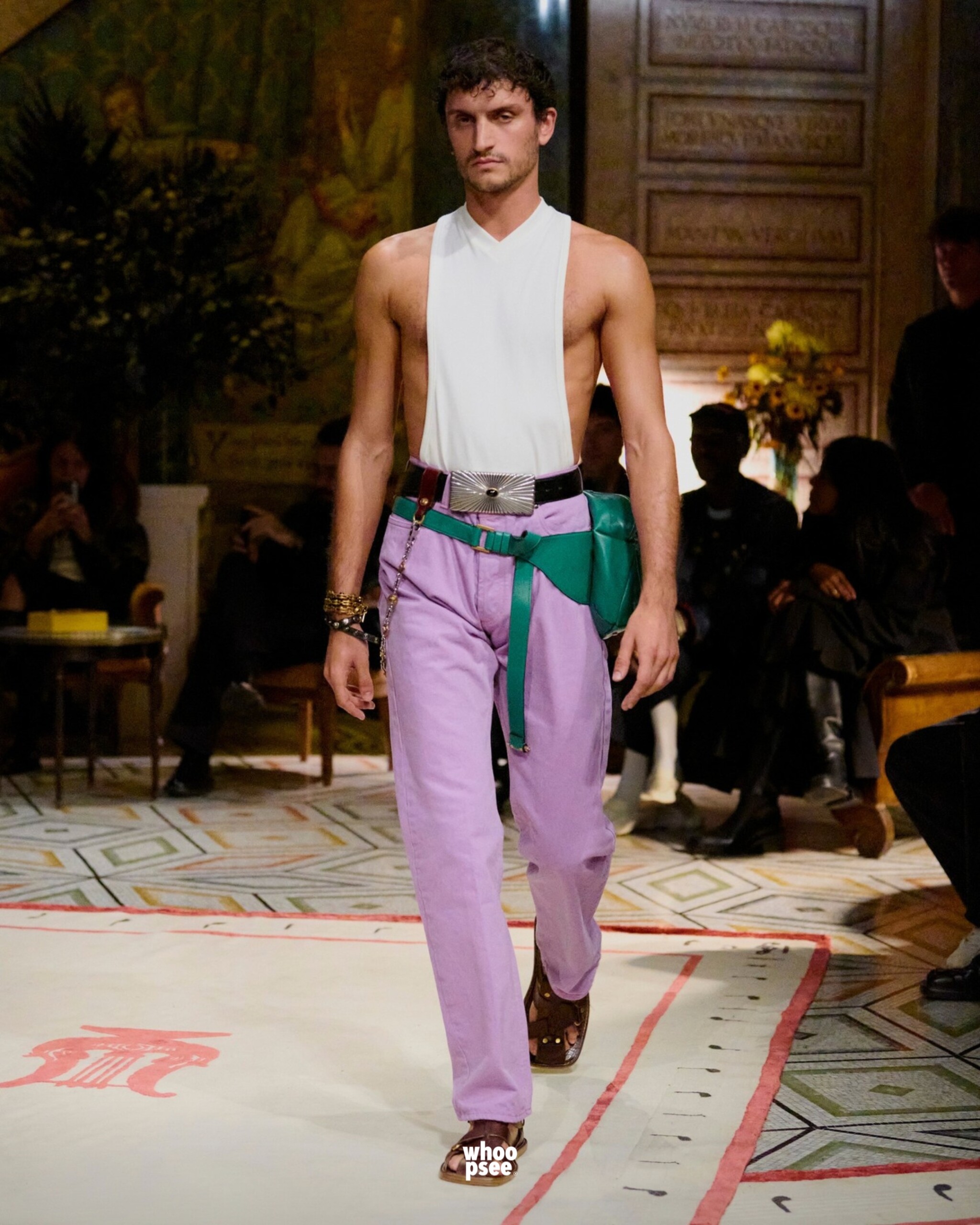
For decades, denim has built its legend around a single color: blue. From the deepest indigo to the faded washes of the ’90s, including black and white, jeans have always been the most democratic item in the wardrobe precisely because they’ve remained true to themselves. Today, however, that certainty is beginning to fade. It’s not a loud revolution, nor is it a nostalgic return to the coral or mint green skinny jeans that filled closets in the early 2010s. This time, colored denim is making a comeback with a different goal: to become a new classic. More sophisticated, more versatile, and less tied to the logic of disposable trends.
The numbers show that change is already underway. According to Trendalytics, searches and conversations about jeans in shades of ecru, gray, powder pink, olive, and brown are on the rise. In particular, olive-colored denim has seen a 90% increase, while denim in shades of brown has risen by 33%. These aren’t flashy colors, but rather a soft, almost dusty palette that seems to be aiming to complement blue without actually replacing it.
And that’s exactly what sets it apart from the past. The new colored denim isn’t meant to be the absolute star of the look. Instead, it acts more like a contemporary neutral: a pair of jeans in cocoa, sand, or sage pairs just as easily as a pair of indigo five-pocket jeans, but completely transforms the look of the outfit. It doesn’t take much to make even the simplest wardrobe feel fresh. After all, the way we buy jeans has changed, too. While just a few years ago the search was entirely focused on “the perfect pair,” today denim has become a category to collect. Different fits, different washes, and different silhouettes coexist in the same closet and are chosen based on mood, occasion, or simply the season. Color is the natural evolution of this process.
It’s no surprise, then, that the standout shades are those inspired by nature and the earth. Butter, ecru, milk, dove gray, tobacco, olive, cocoa, powder pink: warm, comforting shades that blend perfectly with contemporary taste, which is increasingly drawn to relaxed color palettes and monochromatic looks. This is the success of tonal dressing, which continues to dominate both street style and the runways, where outfits play on nuances rather than contrasts. Even the appeal of denim is changing. While blue jeans embodied an American aesthetic of rebellion and everyday life, colored jeans speak a softer language. It’s casual yet refined. Effortless yet thoughtfully put together. It adds character to an outfit without being over the top, offering that sense of novelty that many seek without wanting to completely overhaul their personal style.
There’s also an emotional factor behind the success of this trend. After years dominated by minimalism and minimalist wardrobes, there’s a growing desire to incorporate small elements that can change the mood of what we wear. Color—when kept subtle and sophisticated—becomes a simple way to break out of the routine without sacrificing practicality. It’s a detail that brightens up everyday life rather than just an exercise in style.

With the arrival of fall, this trend will continue, albeit with a shift in intensity. Light tones will give way to burgundy, forest green, chocolate, Bordeaux, and deep grays, confirming that colored denim is not just a summer fad but a new direction for the contemporary wardrobe. Perhaps this is precisely why the trend is so compelling. It doesn’t ask us to abandon blue jeans—a garment too iconic to be replaced. Rather, it invites us to imagine a different version of them—softer, more refined, and closer to how we understand fashion today: not as a constant chase after novelty, but as the art of reinterpreting the great classics through details that seem small but end up changing everything.
[📷 Instagram: versace; acnestudios.com]