The art of tattooing is perhaps one of the oldest and most universal forms of expression: a timeless practice that spans cultures, eras, and generations, constantly evolving in form, style, and meaning. An aesthetic and symbolic heritage that stretches back through time and has continued to evolve over the centuries. It is only natural, then, that technology should eventually enter this realm, seeking to reinterpret its tools and methods, making the practice more accessible and easier.
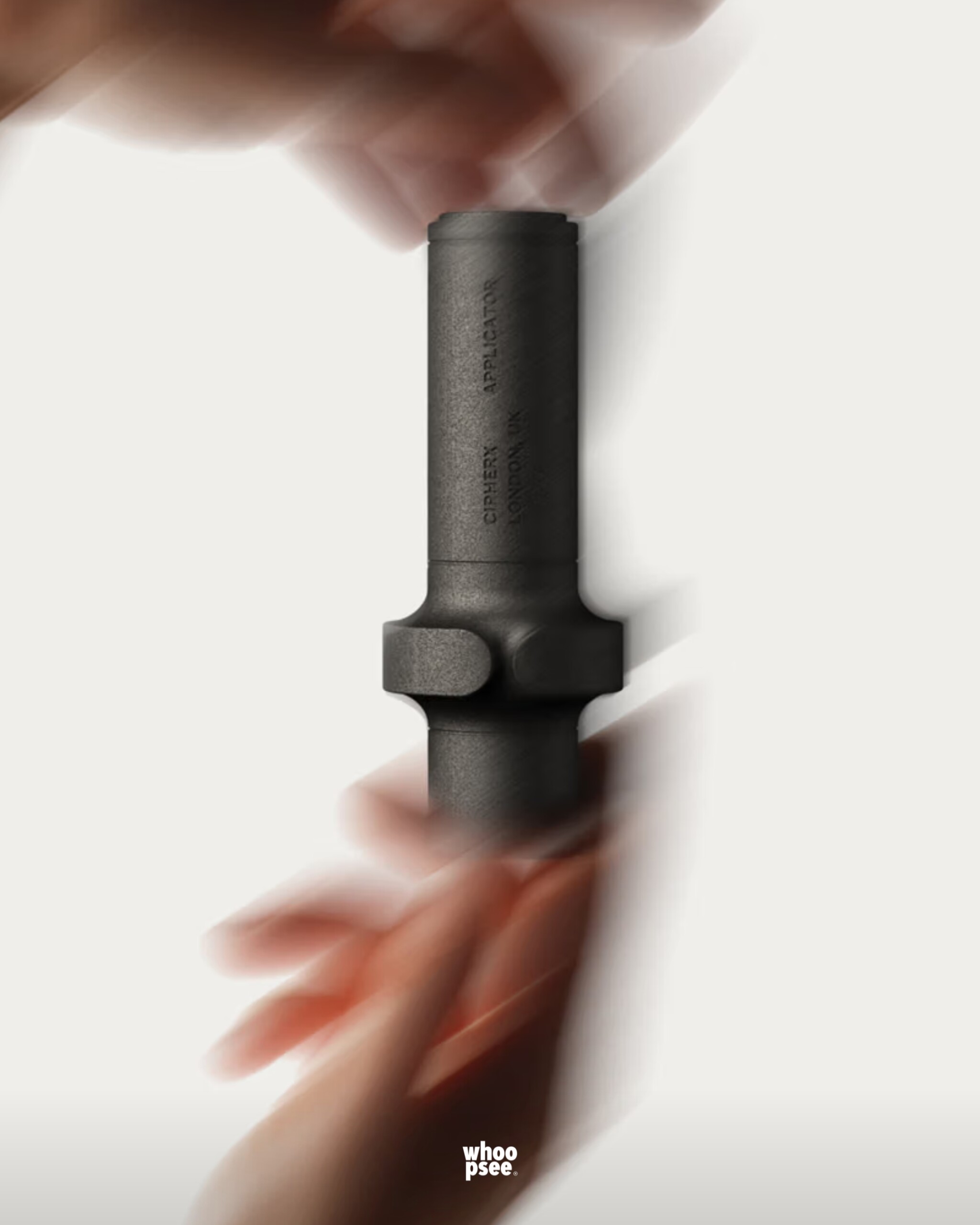
This is precisely where CipherX comes in—a startup that has developed a new microneedle system designed to create tattoos that, according to the company, are virtually painless. The technology was unveiled last week in London and promises to radically change the tattooing experience, at least for smaller designs. The system, called Microdot Tattoo, consists of a loading base, a manual applicator, and a patch on which the chosen design is reproduced using a series of microneedles. The process is simple: the patch is quickly pressed onto the skin using the applicator; the microneedles penetrate the surface layer of the skin, transfer the pigment, and then dissolve. “You can think of the needles as a sandcastle: it stays standing until you pour water on it,” CipherX founder Ferdinand Kohle explains to Hypebeast. The patch remains in place for about 10–15 minutes and is then removed, leaving the pigment on the skin. At first, the design appears very faint; in the following days, however, the color intensifies until the final result is revealed. According to CipherX, the aftercare process is also particularly simple: there’s no need to bandage the tattoo, and the area simply needs to be kept clean for the first 24 hours. This means, at least initially, avoiding activities such as saunas and workouts at the gym.
The idea stemmed from a personal experience. Kohle founded CipherX in December 2020, after working in the design and pharmaceutical industries. It was precisely his fear of blood and needles that led him to take an interest in microneedle technology—already used primarily in facial cosmetic treatments—and to wonder if it could be employed to radically change the way people experience tattooing. What began as a personal question evolved into a much broader exploration of how tattooing could be reimagined through modern engineering, manufacturing, and human-centered design.
After nearly six years of development, the project has now launched. You can book an appointment at the CipherX CX Flagship Store in West London, and the system will also be showcased through select events, pop-ups, and collaborations. For now, the selection of designs is limited to a collection of small illustrations. They range from a smiley face—the first design developed by the company—to a chair. “The chair was just a silly little idea, but it turned out to be one of the most popular,” says Kohle. The goal, however, is not to replace traditional tattoos. Kohle, who leads CipherX alongside former surgeon Karl-Anton Harms, emphasizes that the technology is designed to complement—not replace—existing techniques.
Looking ahead, the company would also like to collaborate with tattoo artists to develop new designs, while taking into account the device’s capabilities and limitations. “The ideal approach is these smaller, iconographic tattoos,” explains Kohle. “A sleeve tattoo is definitely not what we’re aiming for.” During the London presentation, the founders also traced the history of tattooing tools: from ancient stick-and-poke methods to the first electric tattoo machine. CipherX positions itself as the next technological step in this long evolution. “We really are the next fundamentally innovative step in the history of these tools, because our needles are essentially made from the ink itself,” explains Kohle. “They penetrate the skin and immediately deposit the pigment, and the needle itself ends up becoming the tattoo.”
But CipherX’s vision could extend even beyond aesthetics. Kohle envisions possible applications in the medical and diagnostic fields: tattoos capable, for example, of changing color in response to certain conditions, providing information on body temperature, UV exposure, or other bodily parameters. From tattoos as a form of personal expression to tattoos as a technological interface: if CipherX’s vision were to become a reality, the future could see the skin transform not only into a canvas but also into a surface capable of communicating.
[📷 cipherx.tech]