Chanel’s acquisition of Charvet is not merely a strategic move. It is one of those transactions that illustrate how, in the great fashion houses, the future often lies in the past. With the historic Parisian shirtmaker’s entry into the Chanel universe, a chapter spanning nearly two centuries of independence comes to a close for what has been considered the world’s oldest luxury shirtmaker since 1838. But above all, it re-establishes a connection that was forged long before it became financial news.
Because, for Gabrielle Chanel, Charvet was not just any name. It was the shirt shop where she bought shirts for Arthur “Boy” Capel, the great love of her life, the man who, more than anyone else, helped shape her vision of masculine elegance. It was by observing Boy—and effortlessly making his wardrobe her own—that Coco came to understand the power of an impeccable shirt, a perfect collar, and proportions borrowed from menswear to liberate the female form from the conventions of her time. After all, part of Chanel’s aesthetic vocabulary was born right there: in front of the Charvet shirts.
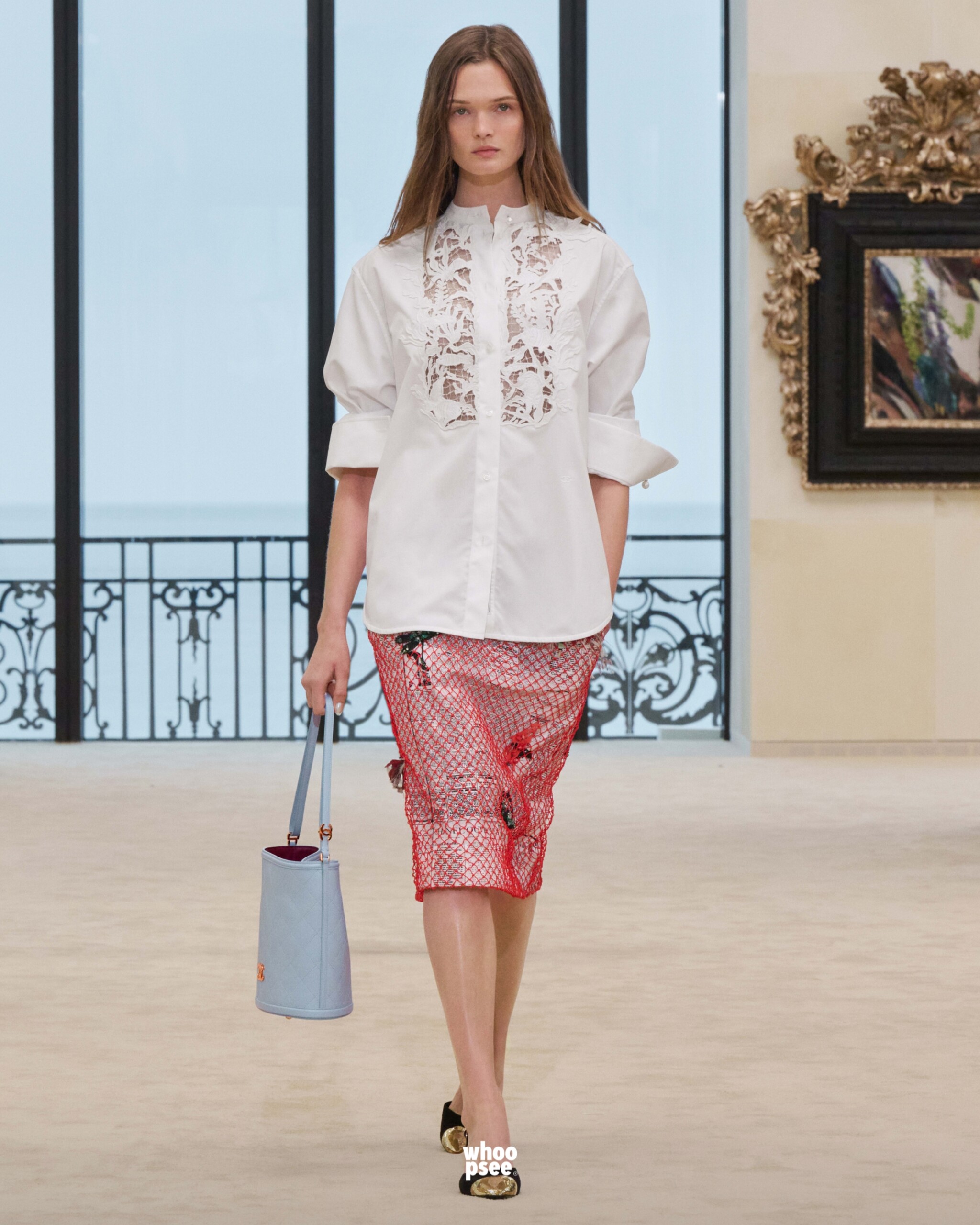
That’s why this announcement carries a symbolic significance that goes far beyond business. It’s as if the fashion house had decided to bring a part of its history back home. A history that Matthieu Blazy had already hinted at in his debut last September, when among the collection’s most sophisticated details were the shirts created in collaboration with Charvet. Not merely a stylistic exercise, but a subtle, almost silent nod to a relationship that spans over a century of French fashion. Anyone who had watched that runway show closely had already realized that this was not a spur-of-the-moment collaboration, but rather the return of an institution to Chanel’s vocabulary.
After all, over the years, Chanel has developed a clear policy of safeguarding exceptional craftsmanship, acquiring specialized manufacturers and maisons to preserve their savoir-faire rather than absorb their identity. Charvet, too, will continue to operate independently, retaining its historic address on Place Vendôme, its workshop, and the discretion that has always been its hallmark.
At a time when many acquisitions are driven solely by market forces, this one tells a different story. It tells the story of an emotional connection that becomes an industrial project. And it restores centrality to an apparently simple object like the white shirt, which for Gabrielle Chanel was never just a piece of clothing, but the symbol of a freedom won by borrowing the elegance of the man she had loved. Today, that story returns to its starting point, transforming an entrepreneurial move into a rare exercise in cultural continuity.
[📷 Courtesy of Chanel]