Today, August 20, 2026, Carla Fracci would have turned 90. She passed away at the age of 84 in May 2021, leaving behind something that goes far beyond an extraordinary career: the image of a woman capable of transforming discipline into poetry, technique into emotion, and dance into a language accessible to everyone. To celebrate what would have been her 90th birthday, we look back on the story of one of Italy’s greatest prima ballerinas, a figure who spanned the 20th century, bringing ballet from the world’s most prestigious stages to television, film, and the popular imagination.
Carla Fracci was born in Milan on August 20, 1936, but her roots, as she loved to recall, lay in the countryside near Cremona, where she had grown up in a simple family, surrounded by love and practical necessities. It is a contradiction that, in a way, encapsulates her entire personality: lighthearted yet always down-to-earth, elegant precisely because she was tenacious, capable of soaring on stage without ever losing touch with reality. At the age of ten, she entered the Ballet School of La Scala. It wasn’t a calling that emerged immediately; at first, dance was above all hard work, exercise, and discipline. She herself would recount that, as a child, she had dreamed of becoming a hairdresser. Then came her encounter with the world of ballet, and, little by little, the realization that behind that almost obsessive repetition of movements, sacrifices, and rehearsals lay the possibility of creating something truly unique. In 1954, she graduated from La Scala, and just one year later, she made her debut in *Cinderella*. In 1958, at just 22 years old, she became a prima ballerina. From that moment on, her career took on an international dimension: London, Stuttgart, Stockholm, New York, and the world’s most important stages became part of her journey. She was a guest artist with the American Ballet Theatre and danced alongside some of the greatest performers of the 20th century, from Erik Bruhn to Rudolf Nureyev, from Mikhail Baryshnikov to Vladimir Vasiliev.
But if there is one character who embodies the name Carla Fracci more than any other, it is Giselle. The young peasant girl in love, from Adolphe Adam’s 1841 ballet—fragile yet incredibly powerful—became her signature role. Fracci’s interpretation is destined to go down in the history of dance, transforming the lightness of her movements into something almost ethereal. Even today, *Giselle* is considered one of the most demanding masterpieces of classical ballet, as it pushes a ballerina to her limits not only because of the extraordinary physical endurance it requires, but also because of the intense combination of dramatic interpretation, emotional depth, and technical precision needed to perform it.
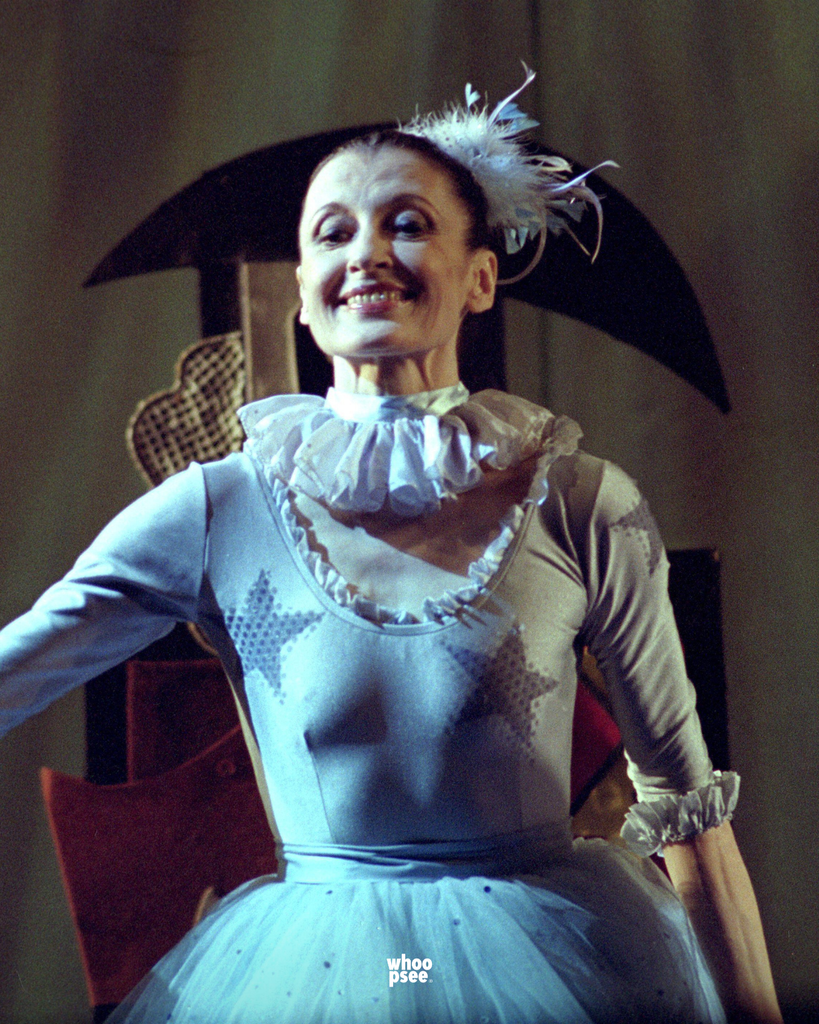
It was also through *Giselle* that one of the most famous artistic partnerships of her career began—her collaboration with Rudolf Nureyev. The two met in the early 1960s and forged a partnership that would last for over twenty years. It was an intense relationship, marked by talent, competition, and mutual respect. For Fracci, working with Nureyev meant dealing with a demanding and unpredictable artist, but it was precisely that challenge that helped propel both of them to new heights of artistic expression. Her fame, however, was not confined to the world of ballet. And it is here that Carla Fracci pioneered something we now take almost for granted: the ability to transform a classical artist into a popular icon, admired by audiences even outside her field, thereby helping to raise the profile of ballet.Long before dance became a television and commercial phenomenon linked to figures like Roberto Bolle—the quintessential example—Fracci brought ballet to television programs, magazines, and even the movies. She took on roles far removed from the more traditional repertoire and also worked as an actress, demonstrating a versatility that helped make her recognizable even to those who had never set foot in a theater.
Even after her marriage to director Beppe Menegatti and the birth of her son Francesco, Fracci continued to work. She collaborated with Menegatti on many artistic projects and continued to expand her repertoire, taking on a constantly evolving range of characters and productions. Her vision of dance was anything but static: it should not be reserved for the few, but should reach as many people as possible. Her style was instantly recognizable, but so was her way of being in the world: disciplined, ironic, proud, and deeply connected to her roots. “I grew up among farmers, in the countryside near Cremona,” she recalled, claiming those roots as a fundamental part of her identity. This statement captures her wonderful paradox: a woman who spent her life on the world’s most important stages, yet never ceased to feel deeply connected to the land from which she came—and to a true and honest humility. La Scala has chosen 2026 as a special year to celebrate her legacy. The Fracci Gala returned to the stage with two performances, drawing from the vast repertoire of roles the étoile had portrayed and featuring the Corps de Ballet, soloists, étoiles, and international guests. The Rome Opera House also celebrated the 90th anniversary of Fracci’s birth by bringing *Giselle* back to Paris in the choreographic version associated with her artistic legacy.
On what would have been her 90th birthday, we remember with admiration and affection a dancer and a woman who spent her life on her toes, yet always kept her feet firmly planted on the ground. This is another reason why she became something more than just a great dancer. An Italian symbol of elegance, discipline, and character—perfectly encapsulated in the words Eugenio Montale used to describe her: an “eternal dancing maiden.”
[📷 IPA]