In recent years, brands have mastered teasers, leaks, and viral campaigns as an integral part of contemporary marketing. But with the arrival of generative artificial intelligence, the relationship between imagination and reality has become much more ambiguous. Today it only takes a few hours for a fan-created concept to become indistinguishable from a real product, fueling expectations, hype, and global conversations even before a brand officially reveals what it is about to launch. This is exactly what happened with the Royal Pop, the collaboration between Swatch and Audemars Piguet also widely discussed here, which has become a case in point of how AI-generated mockups can influence consumer behavior, turn into unintentional marketing tools and, at the same time, create a dangerous gap between what the public imagines and what brands actually produce. In fact, when Swatch finally unveiled the official product on May 13, the surprise was considerable: contrary to what fans had anticipated and speculated, it was not a wristwatch but a bioceramic pocket watch with a lanyard, generating a mix of disappointment and confusion in consumers.
The episode represents perhaps the clearest example of how fake mockups can influence consumer perception and create problems for brands. While fans have been making speculative images of the products they would like to see in the marketplace for years, artificial intelligence has greatly accelerated this phenomenon, making it possible for anyone to create extremely realistic renderings that are easily mistaken for authentic ads.
On Instagram, pages specializing in imaginary AI-generated collaborations – from Stanley Cups reinterpreted by Loewe to hypothetical Nike x Skims capsules with the New York Yankees – garner millions of views and interactions. Influencers and creators revel in building plausible visual universes, often indistinguishable from real advertising campaigns. For an industry like fashion and luxury, based on carefully controlled image construction and launches orchestrated down to the smallest detail, this is a delicate transformation. On the one hand, these images can spread misinformation or generate unrealistic expectations; on the other, they produce a level of hype and engagement that brands would be unlikely to achieve with traditional campaigns.
Then there is a key aspect: the marketing value spontaneously generated by these creations. “The mockups created by the fans pretty much did all the advertising work,” attorney and consultant Frank Seddigh, who has worked with brands such as Gucci and Rhode, told Business of Fashion. “Swatch and Audemars Piguet have gotten free viral visibility that is impossible to buy.” The creators behind these concepts are also beginning to turn their visibility into professional opportunities. Zeynep Aldemir and Okan Boyraz, who run the Instagram pages studio.misoo and thisisokan, respectively, told of being contacted by major brands interested in their work. Aldemir even revealed that she was hired by one of these brands to do a video project, but without revealing the name. “There is no such thing as bad publicity,” Aldemir claims. And this is where the real question for brands emerges: how to relate to this phenomenon?
In many other industries, from sneakers to automotive, fan-created renders are now an integral part of online culture and help fuel discussions and expectations within communities. According to Seddigh, brands should now consider these reactions a natural part of any product launch cycle. “The one thing you can never do with a fanbase is control it,” says marketing consultant Bimma Williams. “The smartest strategy is to find ways to engage and collaborate with it.” Williams cites virtuous examples such as Lego, which for years has been integrating fan ideas within its creative process through dedicated platforms, where community projects can even turn into official products. According to her, even in the case of creators making AI-generated images, brands should prioritize dialogue and positive interaction rather than adopting hostile or repressive attitudes. Some brands already seem to have realized this. In November, Timberland enthusiastically commented on a post by Boyraz imagining a collaboration with streetwear brand Corteiz. Adidas, on the other hand, reacted with an intrigued emoji to an AI-generated concept that hypothesized a partnership with Olympic skater Alysa Liu.
Yet there is also the flip side of the coin. These images can create such high expectations that disappointment is almost inevitable when the actual product does not match what the audience had imagined. Mockups can certainly help generate attention, but what happens when the final product does not meet the fantasies built online? For Williams, the answer lies in the ability of brands to maintain confidence in their identity and creative vision and not be guided solely by the expectations of the network. “In the short term, someone might be disappointed,” he explains, “but that doesn’t necessarily mean it hurts the brand in the long term.”
From a legal perspective, brands could theoretically take action against those who use their trademarks to create fake images. However, many experts believe that in most cases it does not pay to take legal action unless that content is used to sell counterfeit products or causes concrete damage to the brand’s image. Indeed, Victoria Schwartz, a professor at Pepperdine Caruso School of Law, points out that stopping these creators would be complex: “They are simply creations generated by artificial intelligence, not real products. Trademark law mostly intervenes when there is real commercial confusion.” And although the renders generated online have prompted many consumers to imagine a different collaboration, enthusiasm for the Royal Pop launch has by no means died down. On the contrary, the turnout was such that some Swatch stores were forced to close temporarily. Even more interesting is what happened after the launch. Because the official product did not match the watch dreamed up by fans, independent manufacturers have already appeared online promising “conversion kits” to turn the Royal Pop into a wristwatch. On Reddit, some users are even designing 3D printed straps to modify it themselves.
For brands, reactions of this kind represent a valuable form of free market research: they show in real time what consumers really want. Ultimately, the Royal Pop case demonstrates how AI-generated mockups are now more than just creative exercises. They influence expectations, guide conversations, and can even determine the commercial success of a launch. On the one hand they fuel hype, engagement and spontaneous community participation; on the other they expose brands to the risk of disappointing consumers who end up falling in love with products that never really existed.
For brands, ignoring this phenomenon is no longer possible. Fan-created images are simultaneously a form of free promotion, an indicator of audience desires and a potential source of confusion. The real challenge is not to try to control these dynamics-now an impossible feat in the age of generative AI-but to learn how to dialogue with them, turning community creativity into an opportunity instead of a threat. Because it is now clear that the boundary between real and imaginary product is not defined by brands, but by the collective imagination fueled by algorithms.
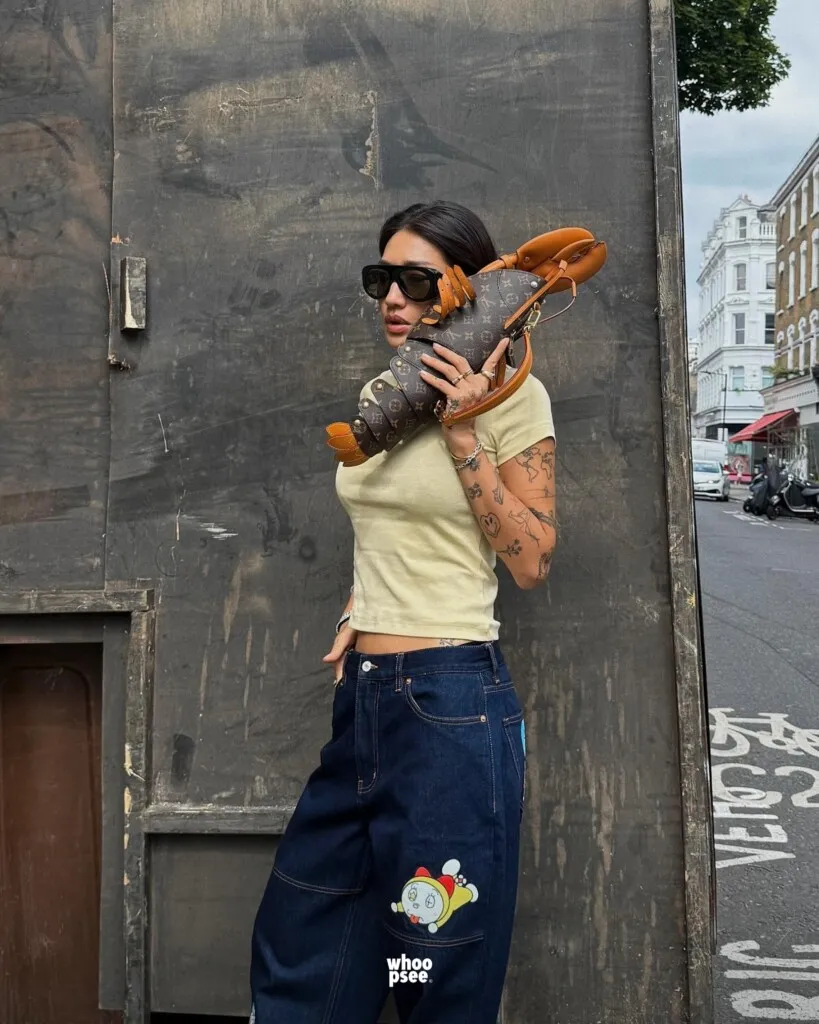
[📷 Instagram: thisisokan]