There was a time when turning on the Italian television was like opening a door to Versailles. Not Hollywood, Versailles. Because while America churned out dreams, Italy created the illusion that those dreams were real, tangible, and could materialize in your living room through a magic that needed no scientific explanation. Do you remember when an episode of “Donna sotto le stelle” was an event? Not just a show—an event. Do you remember “Le Stelle della Moda”?
It wasn’t just a fashion show. It was a display of overwhelming creative power where the Italian fashion system—Valentino, Armani, Versace, Krizia, Dolce & Gabbana, Ferré—wasn’t merely presented; it was celebrated. And the stars of this spectacle were the most influential figures on the planet: the “Big Five” supermodels—Naomi Campbell, Cindy Crawford, Linda Evangelista, Christy Turlington, and Claudia Schiffer—the Valkyries who defined beauty for the rest of the world. It was the 1990s, when an Italian fashion show featuring these names wasn’t just a show—it was a global event.
“Donna sotto le stelle” (Woman Under the Stars), the event broadcast live from the Spanish Steps in Rome from 1986 to 2003 on RAI and later on Canale 5, was the crowning achievement of this excellence: Twelve of Italy’s leading fashion designers presented their collections against a backdrop provided by nature itself. There was no need for special effects when you had Rome, when you had the biggest names in the fashion world. Italy told its story to the world through these programs. And the world listened.
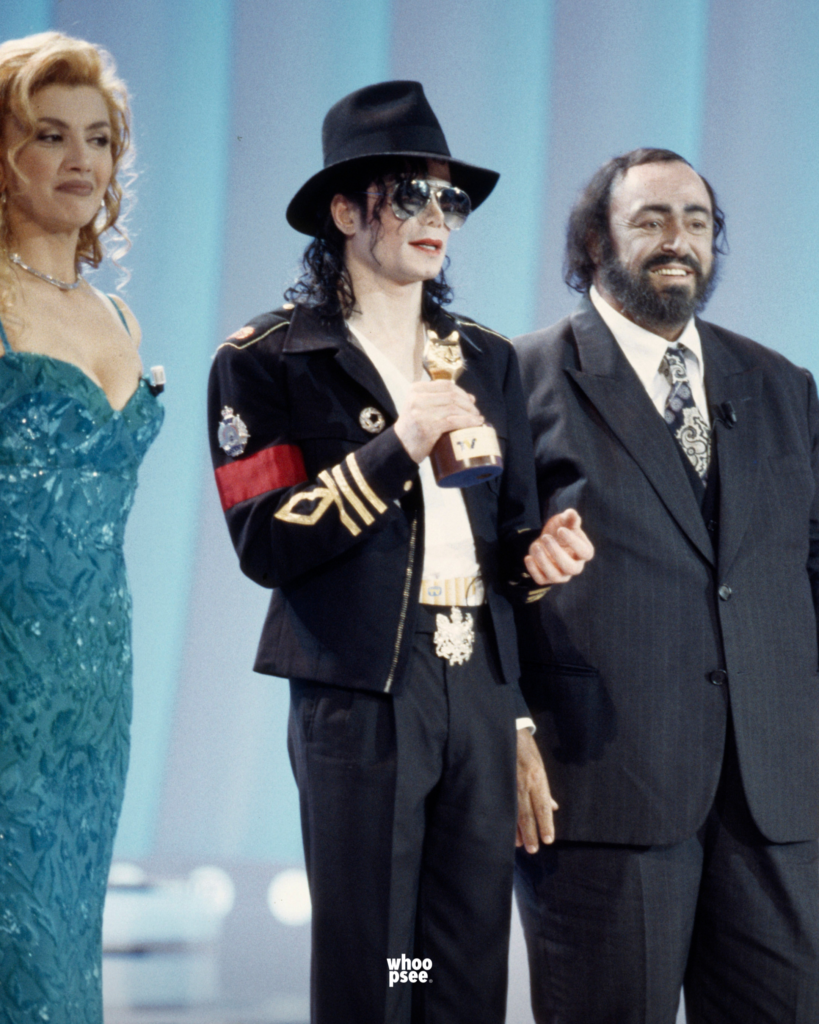
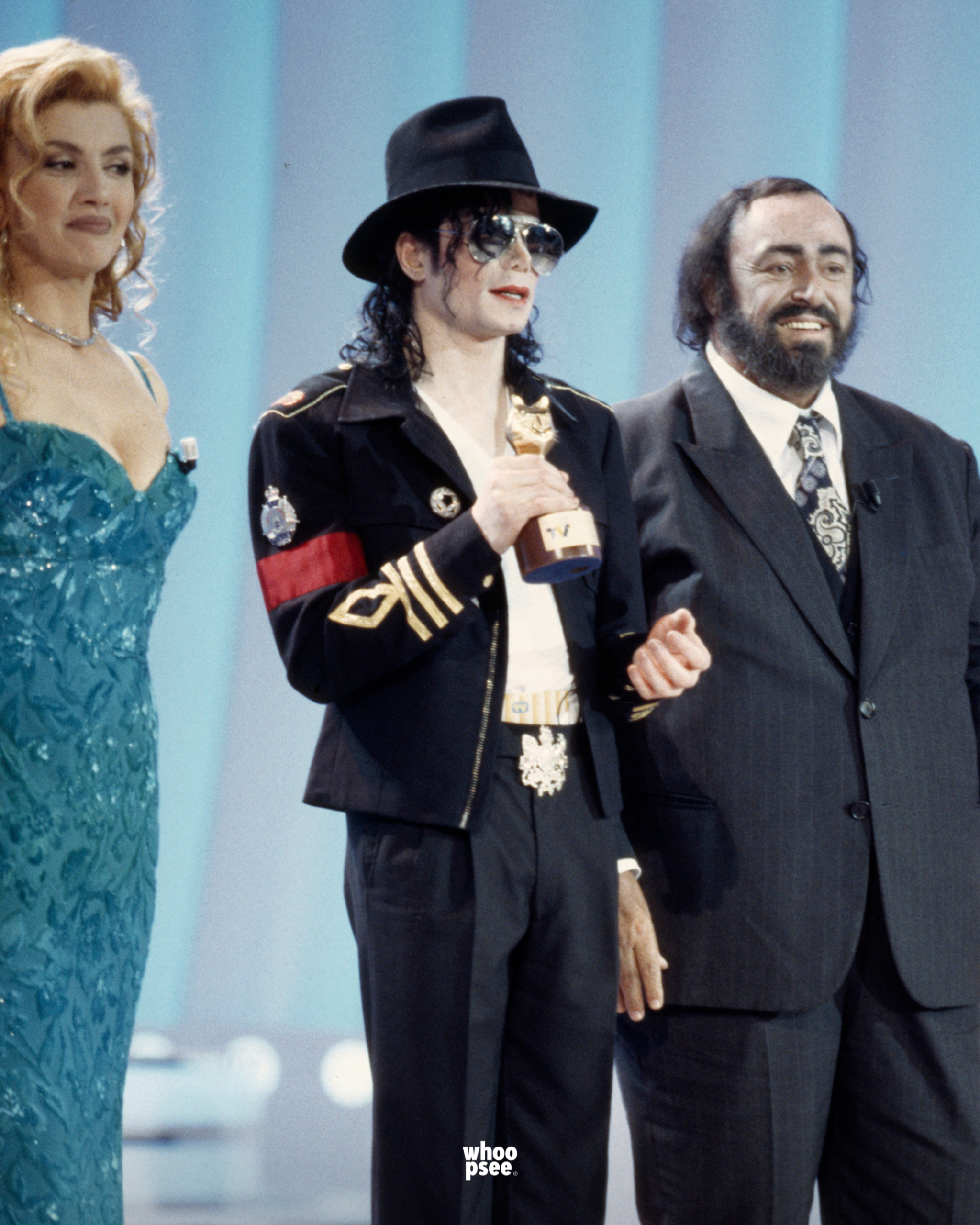
And then there were the Telegatti. Mom, the Telegatti. They were living proof that Italian good taste had a right to sit at the same table as global culture. And when I say “Michael Jackson,” you’re not reading a fantasy. In 1997, the King of Pop took the Telegatti stage alongside Luciano Pavarotti, exuding a confidence that resonated with millions of viewers: Italy was still the place where the impossible could happen. He was there to promote the HIStory World Tour, which would arrive in Italy a few weeks later, but above all, he was there because the Telegatti stage had become a global symbol of television excellence.
But it wasn’t just Michael Jackson. Over the years, major international stars literally lined up to participate: Robert De Niro, Johnny Depp, Sharon Stone, Cher, Elton John, and then George Clooney with Danny DeVito and even Sylvester Stallone. These names weren’t invited just to fill the stage. They came because Italy still had the magnetic power to attract the best the world had to offer. There was a creative team that understood one fundamental thing: entertainment isn’t what you do; it’s what you show. How did Italy stop believing in itself? How did Italy stop teaching people to appreciate beauty?
Do you remember Maestro Manzi? Millions of Italians learned to read and write watching that TV show. But that was just the most obvious level. The deeper level was this: TV taught you about excellence without you even realizing it. You watched Falqui’s variety shows. You watched Mina. You watched Raffaella Carrà. You watched Proietti. And what did you see? Not just a simple TV show. You saw a theatrical spectacle that could make the whole world envious. And you, sitting in your living room, learned without even realizing it what beauty was. What it meant to do a job well. What excellence was—not as an abstract concept, but as a tangible experience.
Then it happened that the networks discovered the most dangerous thing of all: that they no longer needed to spend big to entertain the audience. All it takes is a ready-made format. All it takes is an old story recycled a thousand times. In short, all it takes is mediocrity. Around the year 2000, this conscious choice began to become irreversible. Perhaps it was the looming economic crisis. Perhaps it was the plain and simple creative laziness that sets in when you think you’ve already won. Perhaps it was the fact that, once you discovered you could make money with less effort, there was no economic reason to go back. But suddenly, the big shows began to disappear.
There was a model that worked: the international talent show brought global excellence into the Italian living room, where Italian creativity served as a golden frame for that excellence. The result? Something that was neither completely Italian nor completely international, but a unique alchemy. Then another model arrived: the generic talent show, the reality show, the dating show. That is, the model where the format becomes the boss, and creativity becomes a budget line item. Where the hosts are no longer the magicians of entertainment but the CEOs of a well-oiled machine. This model won out because it costs less. Because it’s easier to copy. Because it doesn’t challenge you. But it lost everything else. And Italy, as a nation, decided that was fine. That there was no need for grand visions. That it was enough to fill the programming schedule with whatever cost the least.
What would make Italy great again on TV? The question is only rhetorical on the surface. Because the answer exists, and it’s not even particularly complicated. We need someone who truly understands that entertainment isn’t just something that happens in a studio. It’s a philosophy. It’s the belief that the audience deserves beauty and wonder, and that Italy has the DNA to create it. We need financial courage. Yes, “Le Stelle della Moda” cost a fortune. So what? We need to rediscover something Italy once had: the idea that beauty is not a luxury, but a necessity. That if the world is watching you, they have the right to see something that transforms them. In short, we need to rebel against this era where gray has become the default color.
Maybe people don’t want beauty anymore. Maybe they want comfort, familiarity, the packaged ordinary. Or maybe, quite simply, no one had the courage to admit they were wrong. Italy once invented the language of television entertainment. And that language spread around the world. Now it’s silent. Listen. And that’s not nostalgia. It’s a real loss. When you watch an old episode of “Le Stelle della Moda” on YouTube, and see what the world was like back then—how it was possible for an idea, a show, to carry that much cultural weight—you ask yourself: isn’t that beautiful? Wouldn’t you want it to come back? Or have you learned to do without beauty? And that, too, of course, is a choice.
[📸 Getty Images; IPA]